
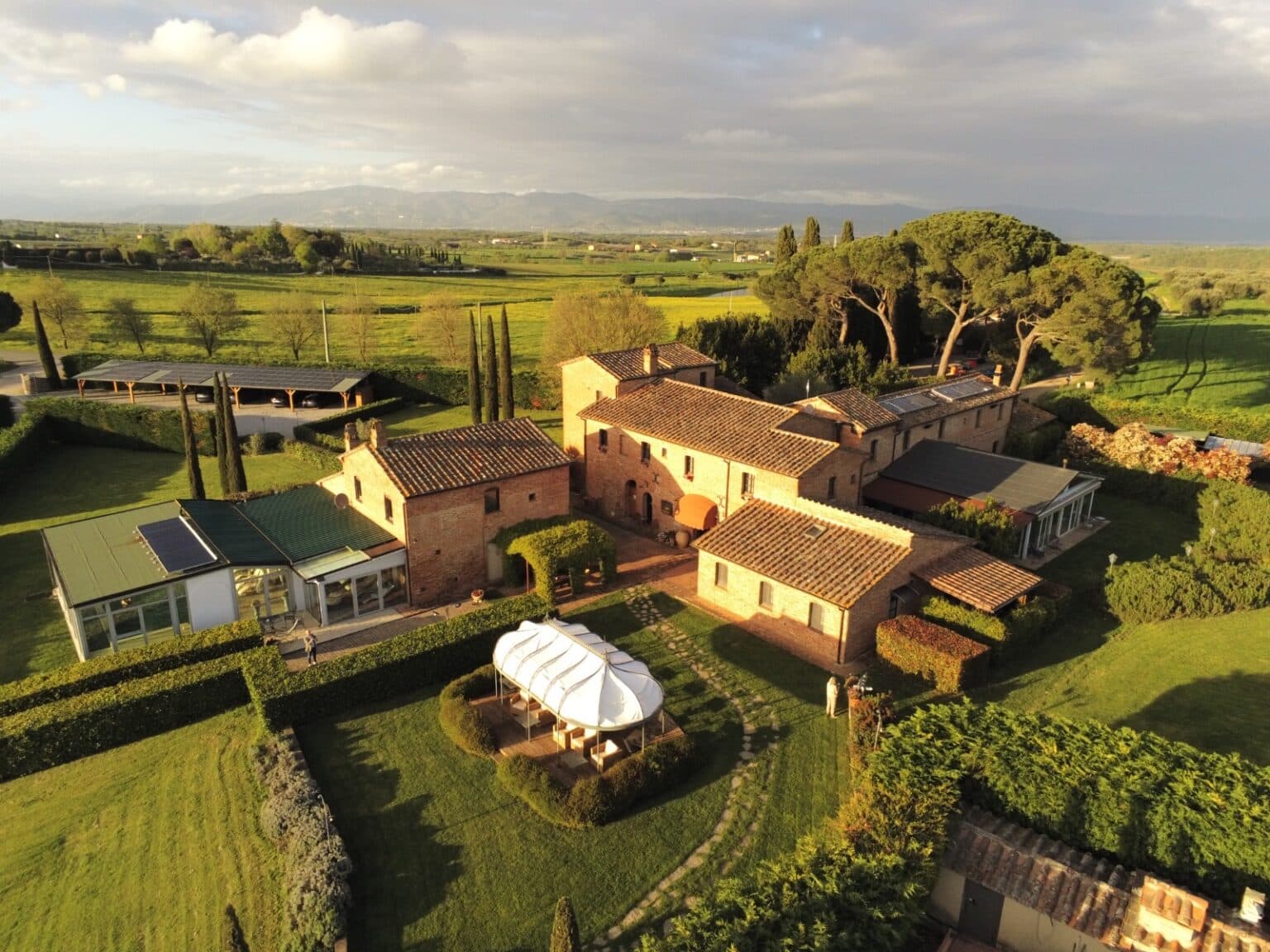

Umbria sits inland between Florence and Rome, and its edge of Lake Trasimeno is close enough to Tuscany that Castiglione del Lago gets treated as a stop, not a destination: a car park by the water, the fortress walls, a photo, back on the road. Which side of the town you see depends entirely on where you leave the car.
In short: Castiglione del Lago is a town on two levels, the lakefront and the walled hilltop above it, and you need to see both to understand the place. This guide covers the Rocca del Leone and what is actually inside it, the covered lakeside walkway most visitors miss, the market that has run for almost five centuries, where parking really works, and how the town changes between August and winter.
It is written for someone staying nearby with a morning to give the town, not a whole day trip built around it. This is Umbria, on the Tuscan border, and a car is effectively required to see anything beyond the town itself. We are in Petrignano del Lago, 5 to 10 minutes away, which is administratively the same municipality: one of our rooms is a good base for coming without rushing.
From island to promontory: why the town is shaped this way
Castiglione del Lago sits on a promontory that was once the fourth island of Lake Trasimeno, the largest of the four. It became mainland when the narrow channel of water separating it from the shore silted up. Before that, in the sixth century BC, Etruscans from Chiusi founded a settlement here called Clusium Novum: Etruscan necropolises still lie under the old town, one in the Vaiano district and another near Villa Strada.
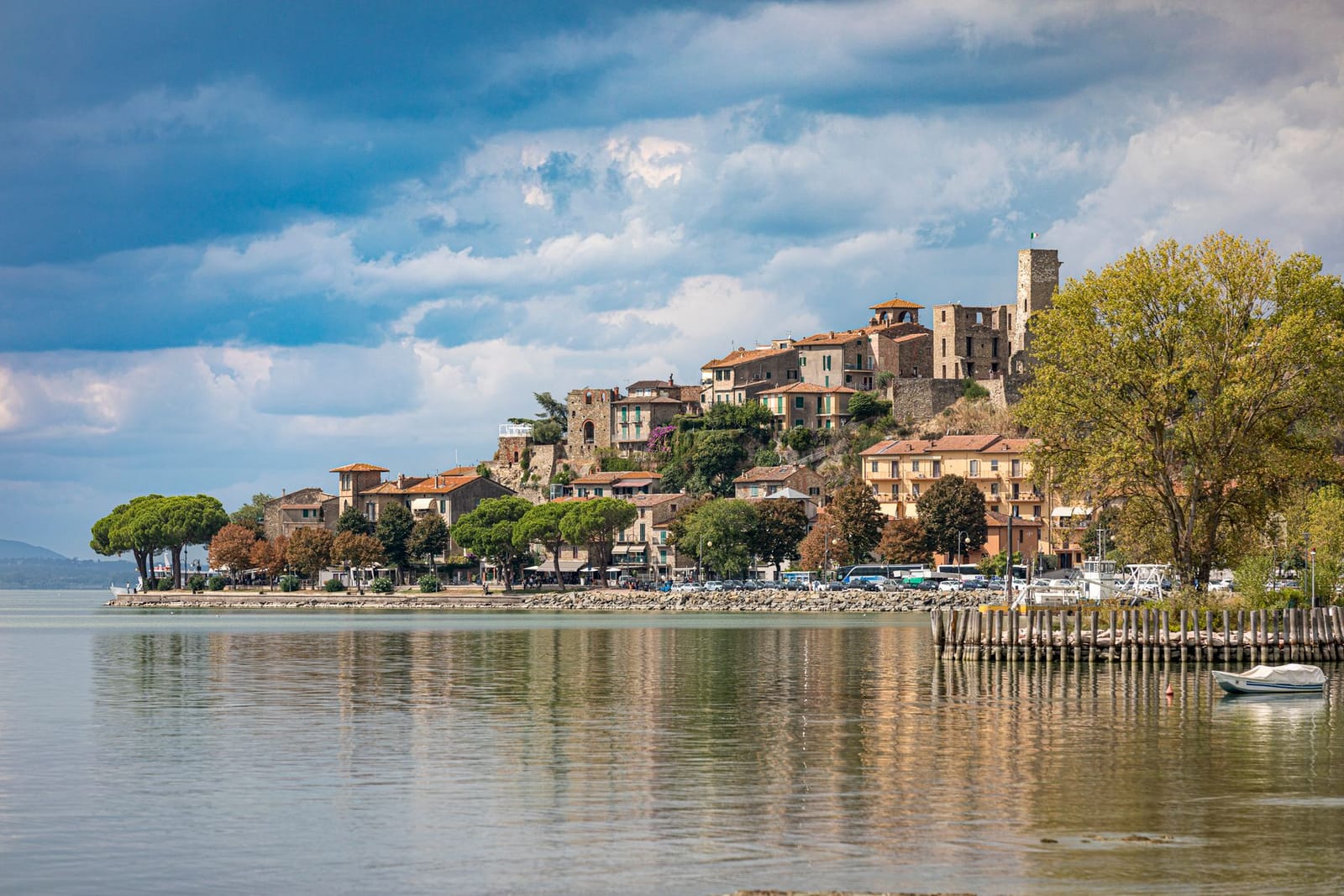
The walls that enclose the town today date to the mid-1200s, built under Emperor Frederick II of Swabia. The municipality now counts 15,173 residents, but the walled historic centre itself holds only a small share of that: most people live in the hamlets around the lake, ours at Petrignano included.
The Rocca del Leone: what is actually inside
The Rocca was built for Frederick II from 1247, almost certainly commissioned to Frate Elia da Cortona. It has an irregular pentagonal plan, a triangular keep 39 metres tall and four corner towers; two were rebuilt as round towers in the 1500s, because a curved shape held up better against cannon fire than a straight wall. The Sienese architect Lorenzo Maitani worked on it in the 1300s, and Perugian lords carried out further work in 1503: the fortress changed hands repeatedly, and each owner added something. Work continued until 1571 under Ascanio della Corgna, who also added an Italian garden.
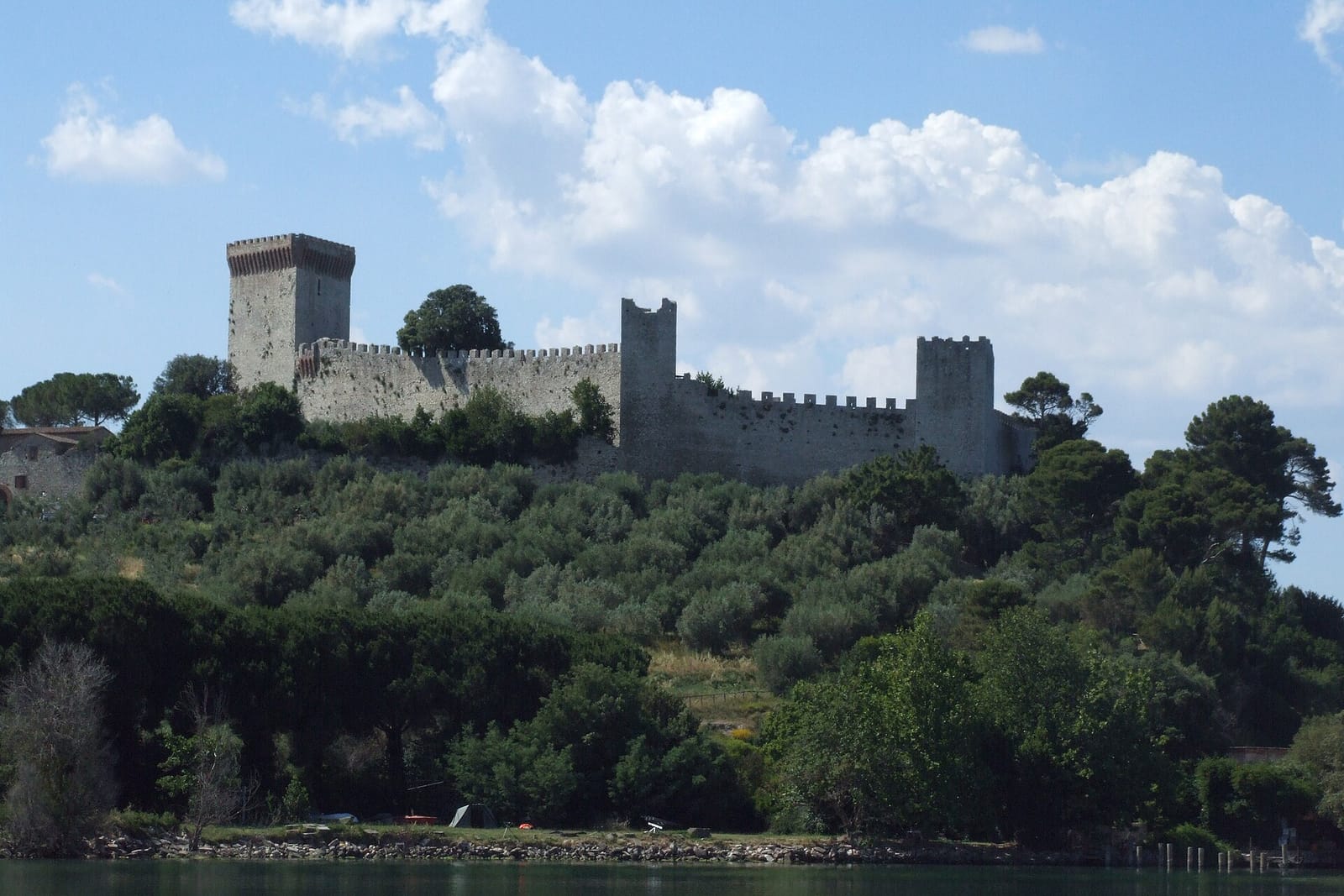
Honestly: inside, the Rocca is largely empty. There are no furnished rooms and no collections; today the interior mostly functions as a natural amphitheatre for performances in the warmer months. Anyone expecting frescoed chambers will be disappointed. Anyone climbing for the walls, the pentagonal plan and the lake view will not be.
The Palazzo della Corgna, and the covered walkway over the lake
The frescoed rooms missing from the Rocca are next door, in the Palazzo della Corgna. Built from 1563 for Ascanio della Corgna, it was the family residence until 1647 and then a ducal residence; the municipality bought it in 1870. From 1574 the rooms were decorated by Niccolò Circignani, known as Il Pomarancio, with frescoes depicting Ascanio's deeds and mythological themes tied to the lake.
The stretch of wall we actually recommend is the covered walkway linking the Palazzo to the Rocca: a corridor with loopholes looking out over the lake, built as an escape route in case of siege. It is a different experience from an ordinary walk along the ramparts, because you walk inside the thickness of the fortification, not on top of it.
The church on via Vittorio Emanuele, and a painting once given to Raphael
On via Vittorio Emanuele, near where the Porta Senese gate once stood, is the church of Santa Maria Maddalena. The current neoclassical building was built between 1836 and 1860 to a design by architect Giovanni Caproni; the portico followed in 1868, the bell tower in 1893. The earlier church, outside the original walls, had been demolished in 1763.
Inside are a fourteenth-century Sienese Madonna del Latte and an 1850 fresco, the Supper at Emmaus, by Mariano Piervittori. But the piece that repays the stop is the Madonna in Trono, a sixteenth-century painting long attributed to Raphael and now given to Eusebio da San Giorgio, a pupil of Perugino's workshop, the same workshop that left work in Città della Pieve, 20 minutes from here.
Two squares, not one
The walled town runs along via Vittorio Emanuele, the main street, lined with shops and the church of Santa Maria Maddalena. It opens into Piazza Mazzini, overlooked by the thirteenth-century Palazzo del Capitano del Popolo. Viale Belvedere runs just outside, along the walls, and is where the lake view genuinely opens up.
Down by the water, there is Piazza Gramsci instead: benches, flowerbeds, a lakefront lined with bars and restaurants. It is not the same square and does not have the same atmosphere. Visitors who only stop there have seen a small slice of the town, even if it is the most photographed slice.
The Wednesday market
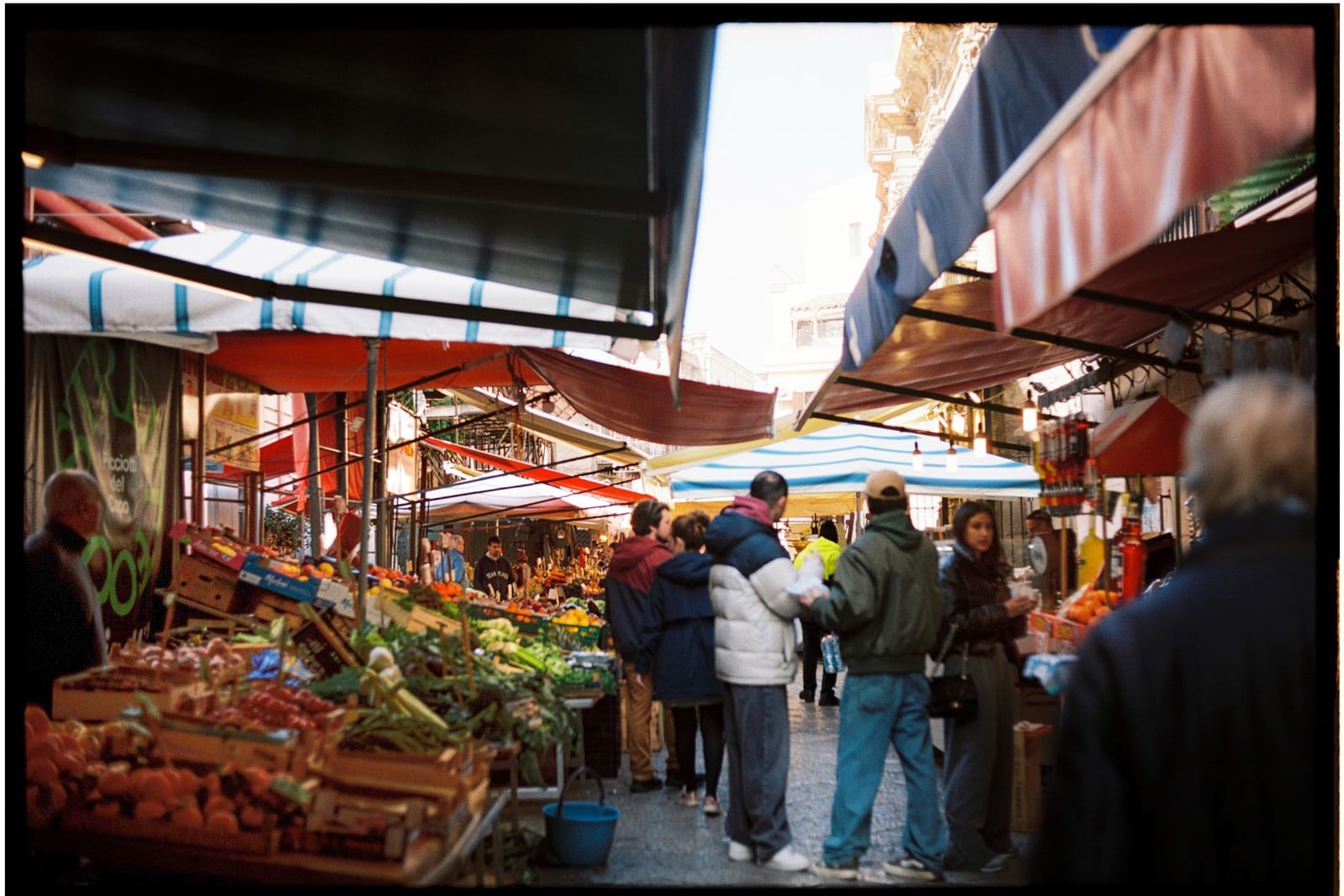
Every Wednesday morning, in a tradition dating back to 1548, the market fills the historic centre. It is not built for tourists: it is where people who actually live here still buy fruit, vegetables and household goods, with the odd clothing stall mixed in. If your stay includes a Wednesday, it is worth building the morning around this rather than the fortress.
Where parking actually works
The paid car parks right on the lakefront are the most convenient, and for that reason the first to fill on summer weekends. The ones outside the walls, towards viale Belvedere and further uphill, fill up much later, even in August, because they involve a short walk uphill that puts off anyone chasing the closest spot. It is not a secret, just a question of who is willing to walk five minutes uphill instead of circling for a space right under the walls.
What to eat: the lake, not the land
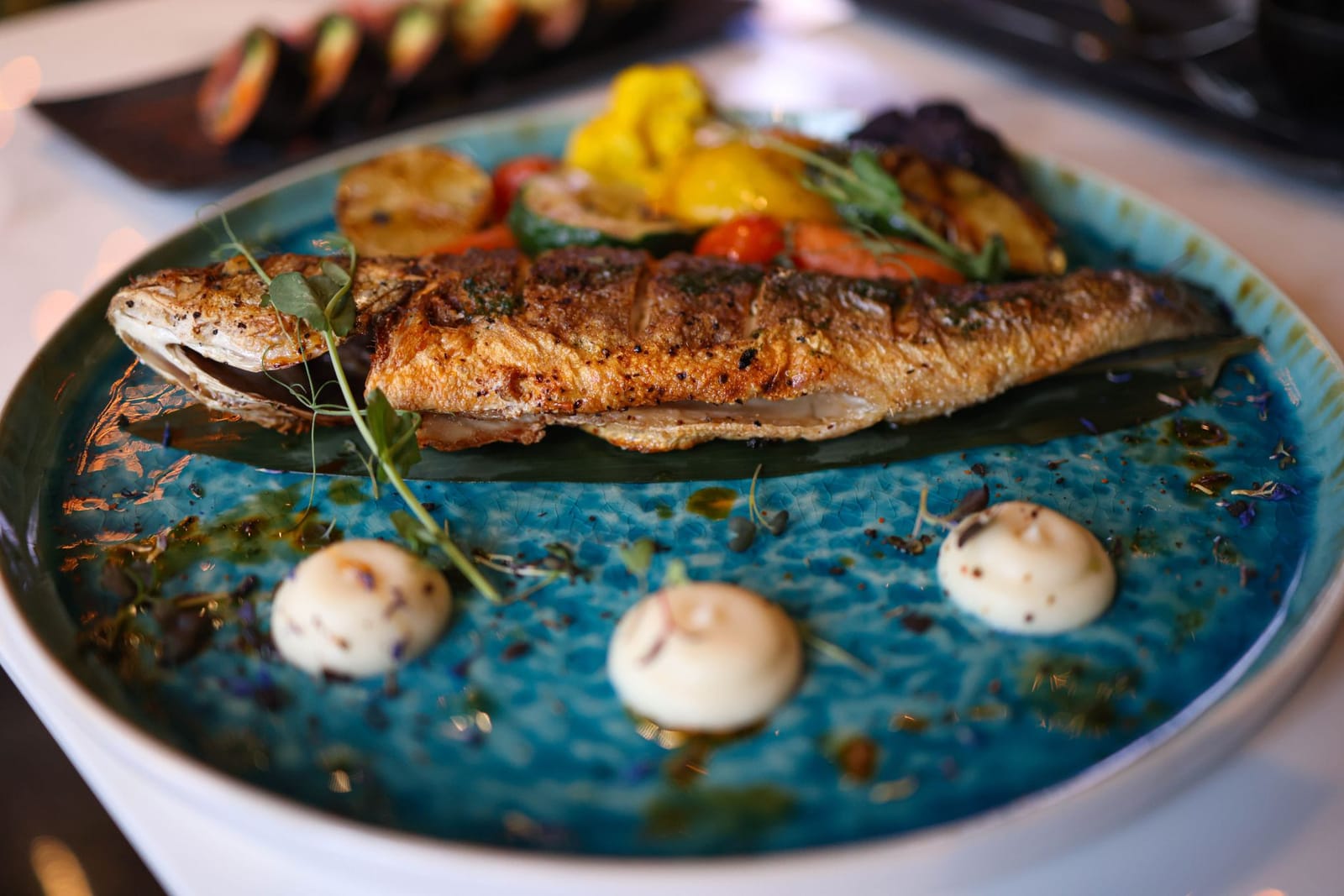
Castiglione's cooking is lake cooking, not Tuscan hill cooking. The signature dish is tegamaccio, a fish stew cooked in an earthenware pot with tomato, garlic, onion and white wine, served over toasted bread. Regina in porchetta is carp cooked with the herbs used in Umbrian porchetta. Brustico, rarer on menus, is fish roasted unscaled over lake-reed embers, then filleted and dressed with oil and lemon: more a village-festival dish than a tourist-menu one.
August, and the rest of the year
In August the lakefront is packed, the Wednesday market mixes with the beach crowd, and late July brings the Rassegna Internazionale del Folclore, an international folk-dance gathering. In mid-July, inside the Rocca, there is the Trasimeno Blues Festival.
The rest of the year the town is not empty, just different. In spring, usually between late April and early May, the old Eleuteri airfield hosts Coloriamo i Cieli, an international kite meeting now in its 25th-plus edition. In December and January, on the lake in front of the town, a Christmas tree drawn on the water is lit: over 160 supporting poles and more than 2,000 perimeter lights, running on 100% renewable energy. Outside those dates, from November to March, many shops in the historic centre close or cut their hours, and via Vittorio Emanuele empties early in the evening.
How much time to allow, and how to get here
From us, Castiglione del Lago is 5 to 10 minutes away. A morning or an afternoon covers the Rocca, the Palazzo and a walk along via Vittorio Emanuele; allow a full day if you add the Wednesday market or a longer stop by the water.
Arriving by train, the station is a kilometre from the centre, open since 1875 on the line connecting Chiusi and Terontola: only regional trains stop there, not the Intercity services. For anyone staying with us, though, a car is still the easiest way, 5 to 10 minutes across the hillside, not a journey to plan around.
If you also want the islands and the other towns on the lake, they are covered in our guide to what to see at Lake Trasimeno. To plan the rest of an Umbria trip, our guide to things to do in Umbria lays out the real drive times, and the surroundings page has the full list of journey times from here. Anyone who prefers two wheels to a car along this stretch of shoreline will find the full route in Lake Trasimeno by bike.
Frequently asked questions
Can you reach Castiglione del Lago by train?
Yes, the station is a kilometre from the town centre, open since 1875 on the line connecting Chiusi and Terontola, though only regional trains stop there, not Intercity services. For anyone staying with us, a car is still the easier way to cover the 5 to 10 minutes from Le Torri di Porsenna.
What day is the market in Castiglione del Lago?
Wednesday morning, in the historic centre, a tradition going back to 1548. It is not aimed at tourists, so expect mostly fruit, vegetables and household-goods stalls rather than souvenirs.
Where should you actually park in Castiglione del Lago?
The paid car parks right on the lakefront are the most convenient, so they fill first on summer weekends. The ones outside the walls, towards viale Belvedere, mean a short uphill walk but fill up much later.
Is it worth going inside the Rocca del Leone?
Yes for the walls, the pentagonal plan and the lake view, not for furnished rooms. The fortress is essentially empty inside; the frescoed rooms are next door in the Palazzo della Corgna.
What do you eat in Castiglione del Lago?
Lake fish dishes. Tegamaccio, a fish stew cooked in an earthenware pot; regina in porchetta, carp cooked with the herbs used for Umbrian porchetta; and the rarer brustico, fish roasted over reed embers.
Is Castiglione del Lago better in summer or off season?
They are two different towns. In summer it is full of life but also of crowds, especially in August; from November to March many shops reduce their hours, but December and January bring the Christmas tree on the water, and spring brings the Coloriamo i Cieli kite festival.
- Rocca del Leone, Wikipedia
- Palazzo della Corgna, Wikipedia
- Castiglione del Lago, Wikipedia
- Eventi - Castiglione Del Lago sul Trasimeno, Comune di Castiglione del Lago
- Luci sul Trasimeno | L'albero sull'acqua, Luci sul Trasimeno
- Tegamaccio del Lago Trasimeno, Umbria Tourism
- Discovering Lake Trasimeno: a journey through history, fishing and unique flavours, Umbria Tourism
- Castiglione del Lago, Umbria Tourism
- Stazione di Castiglion del Lago, Wikipedia
- Una passeggiata a Castiglione del Lago sul Lago Trasimeno, Gente in Viaggio
- Chiesa di Santa Maria Maddalena (Castiglione del Lago), Wikipedia
Bruno e Marisella Batinti
Owners and hosts of Le Torri di Porsenna
Bruno and Marisella Batinti own Le Torri di Porsenna, the abbey they found derelict in 2014 and brought back as a charme agriturismo on the Umbria-Tuscany border. They live here all year: the roads, villages and seasons L'Almanacco writes about are the ones they drive every week.