
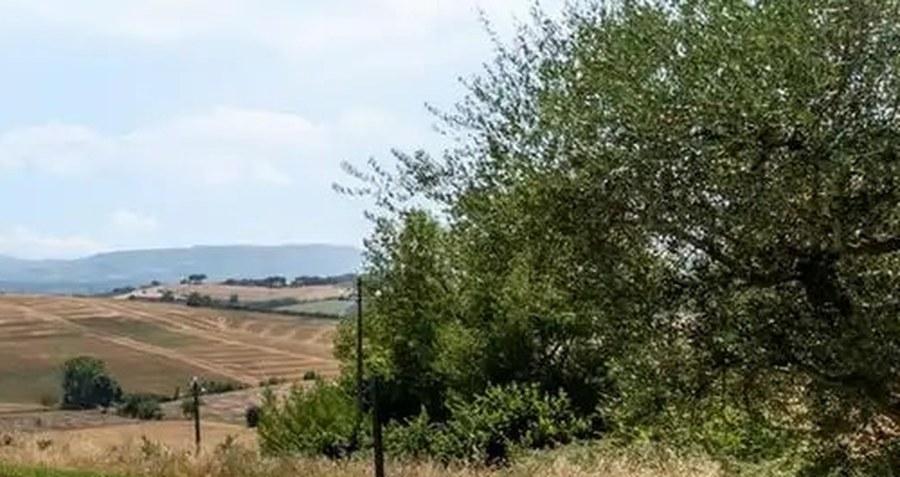

Day three of a four-day stay here is the one day of the whole trip that crosses the border into Tuscany, the day our three-day itinerary does not have room for. It does not open the whole of Tuscany, one day never does, but it shifts the regret we spell out plainly in that shorter itinerary enough to earn a stay of its own, not a stop bolted onto the end of the three-day one.
In short: four days from here add exactly one full day to the classic three, and that day is where Tuscany finally gets in, not eastern Umbria. The rest of the itinerary, the lake on day one, Assisi on day two, Perugia or Orvieto on day four, stays identical to the three-day version. This article explains why the extra day goes to Tuscany rather than Gubbio or Spoleto, how to choose between Cortona, Montepulciano and the Val d'Orcia without stacking them into the same day, and why that third day can just as easily become a spa afternoon instead of another excursion.
It is written for anyone who has already read our three-day itinerary, or for anyone arriving here with one extra night to spend and wanting to know exactly where it goes, not just that it exists. It sits alongside our wider guide to things to do in Umbria, which covers the region beyond these four days.
Why the extra day changes the shape of the trip, not just its length
Umbria sits between Florence and Rome, on the border with Tuscany, and a car is what actually holds a stay like this together, linking the lake, Assisi and the Tuscan towns across the border. In our three-day Umbria itinerary, the first and last days are half-days because of check-in and check-out, leaving a single full day, the one given to Assisi. A fourth day does not just lengthen the list, it adds a second full day, and a second full day is exactly what is needed to cross the border without stealing time from anything else.
That is also why it still does not stretch to everything. With four days you can choose between Perugia and Orvieto, and between Cortona, Montepulciano and the Val d'Orcia, but not have all of them at once, and eastern Umbria, the Gubbio and Spoleto side, stays out regardless of how those choices go. More on why further down.
The first two days, in brief: the lake and Assisi
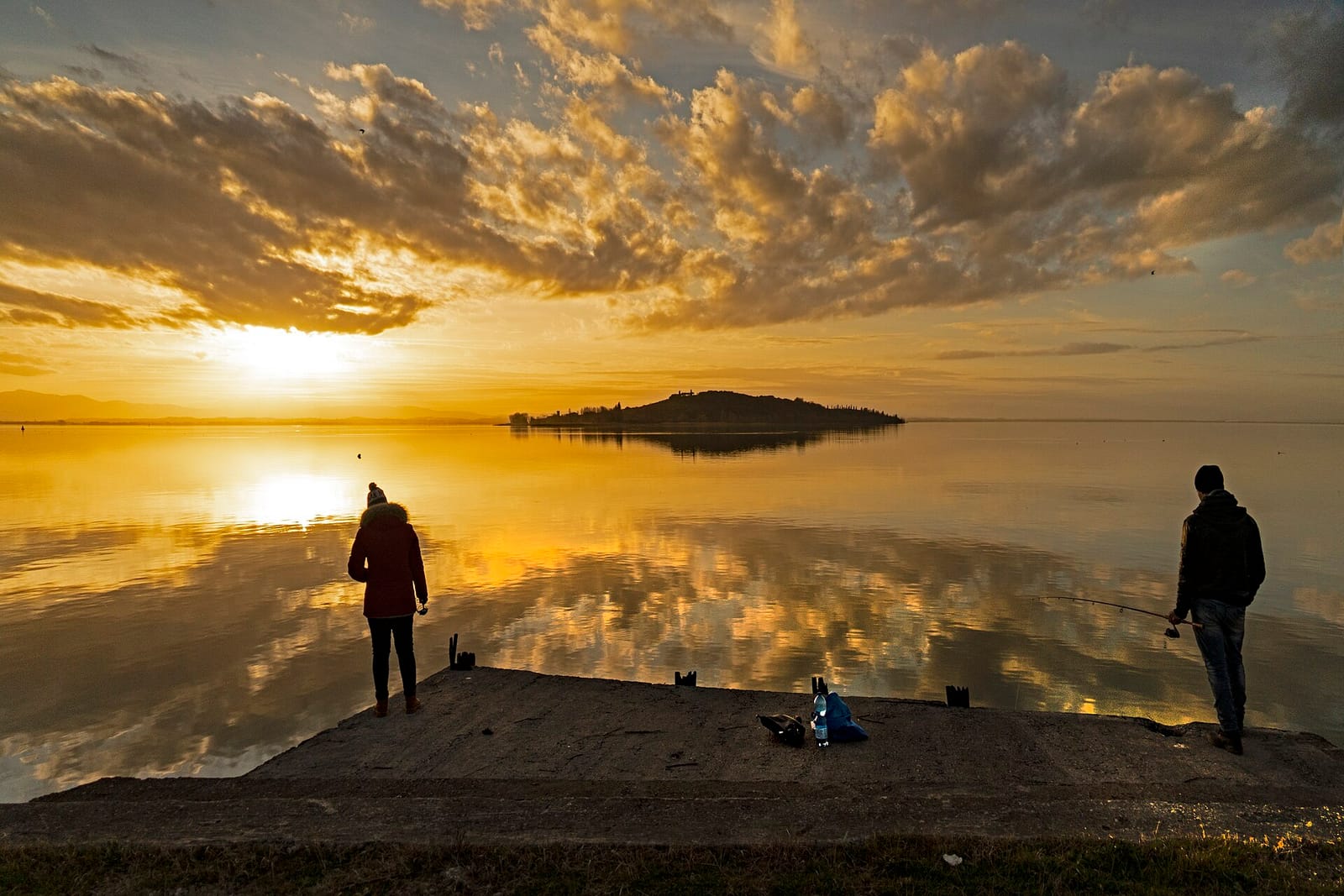
The first two days of a four-day stay are identical to our three-day itinerary, set out there in full. Day one is a half-day by design, since check-in here is at 3pm, and it goes to Lake Trasimeno and Castiglione del Lago, 5 to 10 minutes away, with the Rocca del Leone and the walk along the walls filling a comfortable hour and a half before dinner. Day two is Assisi, an hour away, the only city on this trip given a whole day to itself: the Basilica di San Francesco and the climb up to the Eremo delle Carceri, on Monte Subasio, need unhurried time, and leaving before nine, ahead of the coach groups, still finds the square in front of the basilica empty. The historic centre is a restricted traffic zone, so cars stay outside the walls, at Porta Nuova, linked to the centre by escalators, or the underground car park at Piazza Matteotti.
For the full detail on both days, the islands and lakeside towns included, and exactly where to park in Assisi, our three-day Umbria itinerary covers them in full: this guide moves straight on to the day that four days actually buys.
Day 3: Tuscany, and the rule of picking only one
This is where the four-day itinerary stops being the three-day one with an extra stop tacked on. The third day is the new one, and it is the day Tuscany gets in, not as a detour stolen from another stop, but as a day of its own, with three options to choose one from.
Cortona, 22 minutes away, is the closest and the steepest: an Etruscan hill town, with two museums worth the time, the MAEC and the Museo Diocesano. We cover it in full in Cortona in a Day.
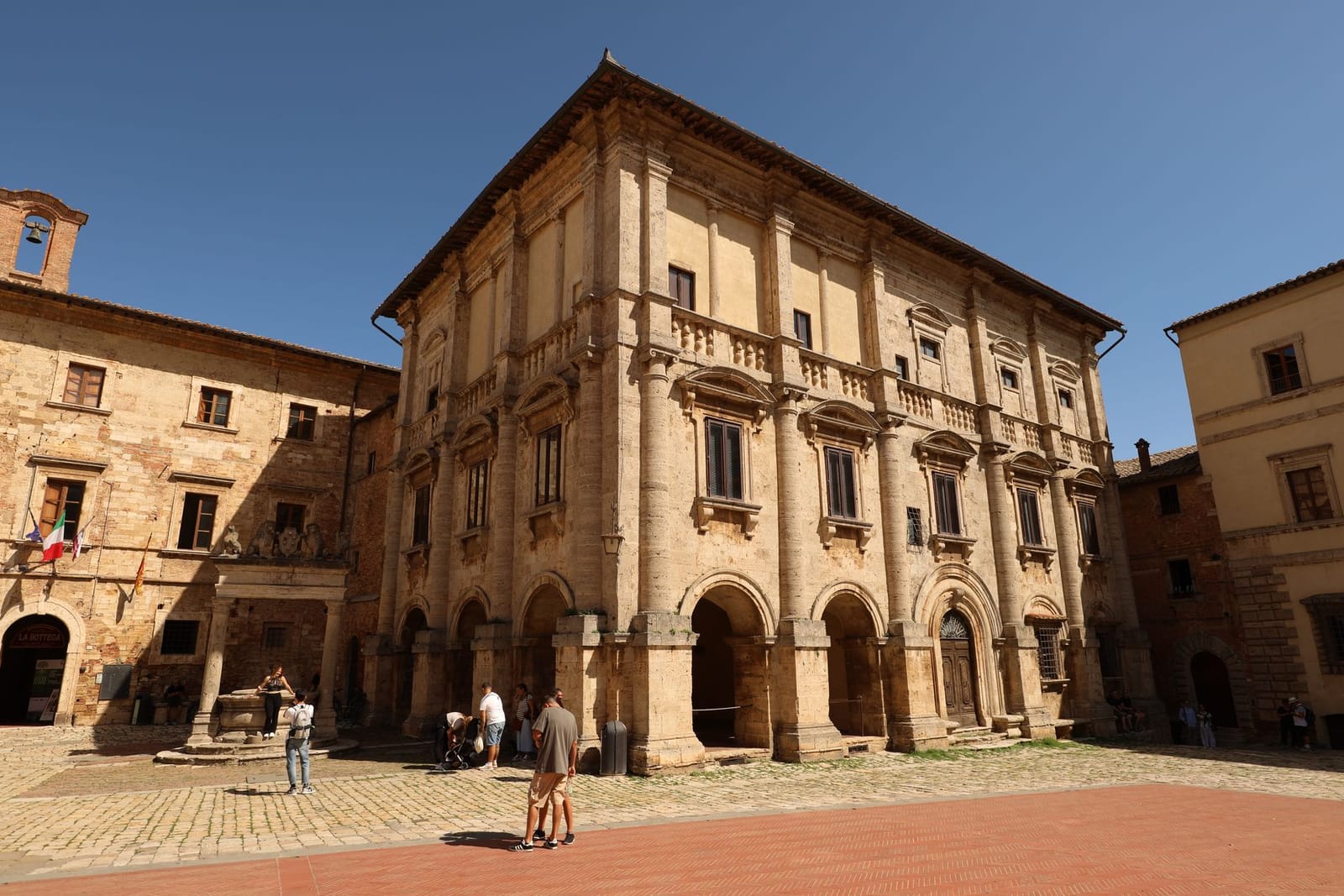
Montepulciano, 30 minutes away, is wine-country Tuscany: cellars cut into the tufa beneath Renaissance palazzi, the Palazzo Comunale tower, the Vino Nobile DOCG. The full guide is in Montepulciano and the Vino Nobile.
Pienza, 46 minutes away, and the Val d'Orcia, 52 minutes away, are the most ambitious of the three: the Renaissance city, Bagno Vignoni, the cypresses on the SR2. We write about it in Pienza and the Val d'Orcia in a Day.
The rule we keep in mind for any trip from here: if it takes more than an hour's drive one way, it stops being a day trip and becomes a journey of its own. All three Tuscan options stay under that threshold, which is also why they fit into a four-day itinerary while eastern Umbria does not. One honest warning, though: if day three follows a full day in Assisi, Pienza and the Val d'Orcia are the longest of the three and the one that asks for the earliest start. Cortona or Montepulciano, both well under half an hour, sit more comfortably after a day already spent on your feet.
Day three can be the spa instead of Tuscany
Almost no itinerary admits this, so we will say it plainly: three consecutive days out, Assisi, a day in Tuscany, then Perugia or Orvieto on departure day, is a lot. Not every guest reaches day three with the same appetite for walking they had on day two, and forcing it does not make the stay better.
The heated indoor pool, the hammam, the Finnish sauna and the relaxation area exist for exactly this: an unplanned afternoon between Assisi and day four is not wasted time in a property with a spa, it is one of the reasons the spa is there. We write more about this in what a spa at an agriturismo actually means. Anyone who takes this route reaches day four, the Perugia or Orvieto day, with fresh legs instead of three outings in a row behind them, and the stay is still a four-day itinerary, just with one Tuscan excursion fewer and one afternoon more.
Day 4: Perugia or Orvieto, departure day
The fourth day is departure day, and here the four-day itinerary changes nothing from the three-day one: check-out is by 11am, so the morning starts with suitcases, not a walk. From there the same choice applies, Perugia or Orvieto, because there is still not enough time for both in one day.
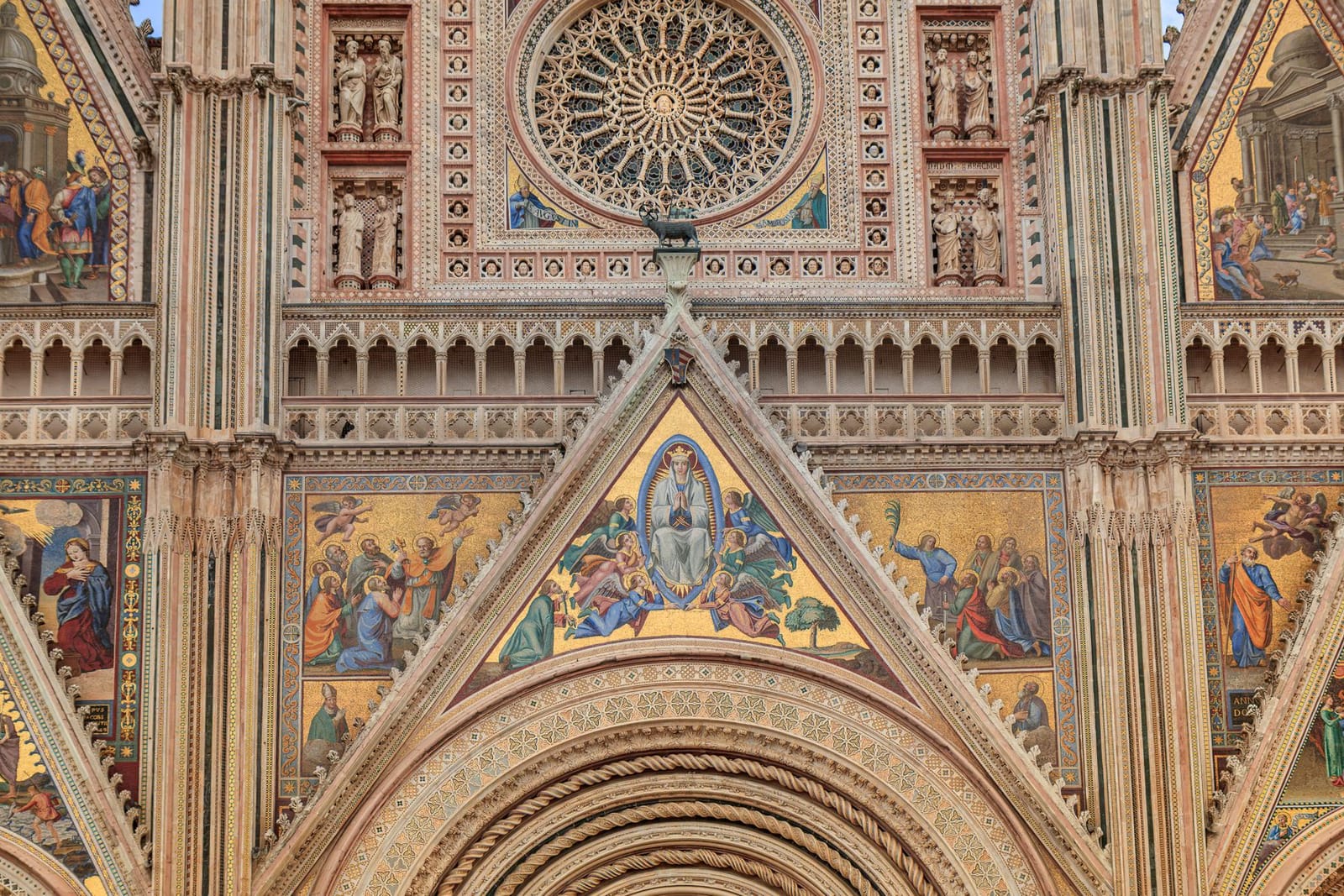
Perugia, 44 minutes away, has the closer medieval centre, easy to cover on foot in a day: park at Piazza Partigiani and go up to Piazza Italia through the Rocca Paolina, the sixteenth-century fortress built over an entire medieval quarter, on a system of escalators in place of the stairs. Orvieto, 54 minutes away, is the tufo cliff and the quiet: park at Campo della Fiera and go up by lift and escalator through the old walls, or leave the car near the train station, down in the valley, and take the funicular up to Piazza Cahen.
By day four you already know these drives: Assisi's parking, the pull of Cortona or Montepulciano, the funicular into Orvieto. That familiarity is the real advantage of the extra day over squeezing a fourth stop into a three-day plan, where every choice is a first attempt made under pressure. The morning itself is unchanged, the same 11am check-out and the same choice between a livelier city and a quiet one that closes the three-day itinerary too, just reached with three days of the region already behind you instead of one.
What four days still do not buy
We are just as plain about this as in the three-day itinerary: four days buy one extra day, not the whole of Umbria. Between Perugia and Orvieto, one still stays out whichever you pick for day four. Of the three Tuscan options, a second one is left out too, because day three only has room for one.
And eastern Umbria, the Gubbio, Spoleto, Todi and Norcia side, is not really part of the conversation here, not because of a driving time we could quote, we do not have a verified one, but because these are places that need a whole day dedicated only to them, there and back, not a fifth stop stolen from a plan that already has Assisi, Tuscany and Perugia or Orvieto in it. We go into that more calmly in our general guide to what the region offers, the right place to plan that trip when the time comes. The full list of distances from here is on the surroundings page.
When the fourth day pays off
April, May, June and September remain the safest months for an itinerary that ties together Assisi, a Tuscan town and Perugia or Orvieto: temperatures that let you walk for hours without stopping for shade every ten minutes, on either side of the border.
Day three adds a constraint the three-day itinerary does not have: Cortona and Montepulciano get busy at the same hours, late morning and early afternoon, so an early start matters twice as much when the morning is already tight between breakfast and the border. If your stay falls on the last Sunday of August and day three is Montepulciano, it is worth staying until evening for the Bravio delle Botti, the barrel race that fills Piazza Grande with locals rather than passing tourists.
By car or by train, with four days like this
Perugia and Assisi share a railway line through Terontola, Orvieto sits on the Florence-Rome line, and Cortona's Camucia-Cortona station is a few kilometres from its centre, so all three legs are technically reachable by train. With four days and stops on both sides of the border, though, a car keeps the plan together far better; anyone weighing up the alternative can read our full guide to how to reach Lake Trasimeno.
Frequently asked questions
Is four days enough to see Umbria?
Enough to see the lake, Assisi, a piece of Tuscany and one of Perugia or Orvieto properly. Not enough for eastern Umbria, the Gubbio, Spoleto, Todi and Norcia side, which stays a separate trip even at four days, as we explain in our general guide to what to see in Umbria.
What is the difference between the three-day and the four-day itinerary?
The fourth day does not multiply the stops, it adds exactly one. In the three-day itinerary Tuscany is left out on purpose; four days make room for a whole day across the border, and the rest of the plan, the lake, Assisi, Perugia or Orvieto, stays the same.
Cortona, Montepulciano, or Pienza and the Val d'Orcia for day three?
Cortona, 22 minutes away, if the day before was Assisi and you want a shorter trip. Montepulciano, 30 minutes away, for the wine cellars and the Vino Nobile. Pienza, 46 minutes away, and the Val d'Orcia, 52 minutes away, only if you leave early: it is the longest of the three, best not attempted on tired legs.
Perugia or Orvieto for day four?
Perugia if you want a lively city that is closer, 44 minutes away. Orvieto if you want a quiet clifftop town and the Pozzo di San Patrizio, 54 minutes away. The same rule as our three-day itinerary applies, do not try both in the same day.
Can day three be spent at the spa instead of in Tuscany?
For anyone who reaches the end of a full day in Assisi with the appetite for walking already spent, yes. The heated indoor pool, the hammam, the Finnish sauna and the relaxation area exist for exactly this, and a four-day stay still works with one Tuscan excursion instead of forcing a second one.
Can you see Gubbio, Spoleto or Norcia on a four-day itinerary from here?
Not comfortably. They are further than everywhere else on this itinerary and need a day dedicated only to them, there and back, not a fifth stop added to a plan that already has Assisi, Tuscany and Perugia or Orvieto in it.
- Limitazioni al traffico, Assisi OnLine
- Mappe e Trasporti Orvieto, Orvieto Viva
- Parcheggi, scale mobili e panorama - Itinerari e escursioni a Perugia, PaesiOnline
- Cortona, Wikipedia
- Vino Nobile di Montepulciano, Wikipedia
- Val d'Orcia, Wikipedia

Bruno e Marisella Batinti
Owners and hosts of Le Torri di Porsenna
Bruno and Marisella Batinti own Le Torri di Porsenna, the abbey they found derelict in 2014 and brought back as a charme agriturismo on the Umbria-Tuscany border. They live here all year: the roads, villages and seasons L'Almanacco writes about are the ones they drive every week.