
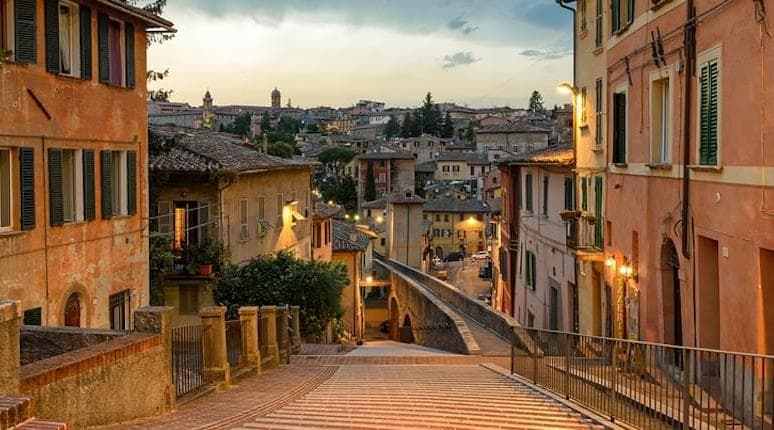

Pick one town a day, not two: Assisi to Norcia alone is about an hour and twenty minutes, a detail lost in "what to see in Umbria" round-ups that list Perugia, Assisi, Orvieto, Gubbio, Spoleto and Norcia in the same breath, as if they all sat within reach of the same day out. Fit it all into three days and you spend more time in the car than in the towns you came to see.
In short: from where we are, in Umbria on the Tuscan border near Lake Trasimeno, Perugia, Assisi and Orvieto are the three Umbrian cities you can genuinely see well in a day, each under an hour's drive. The rest of Umbria, from Gubbio to Norcia, is real and just as beautiful, but it is a separate trip, not something to bolt on at the last minute. This guide keeps the two apart, with the real driving times and an honest reason certain places are better saved for another stay.
This is our list of things to do in Umbria for someone with a few days and a car, staying perhaps in one of our rooms, who would rather know upfront how much time each stop costs than find out once already on the road.
Perugia, the regional capital you can see from a distance
Perugia is 44 minutes from us, and it is the first trip we suggest to anyone visiting for the first time: you can see the shape of the city on its hilltop long before you arrive, and once inside the walls the medieval centre is compact enough to cover on foot in a day.
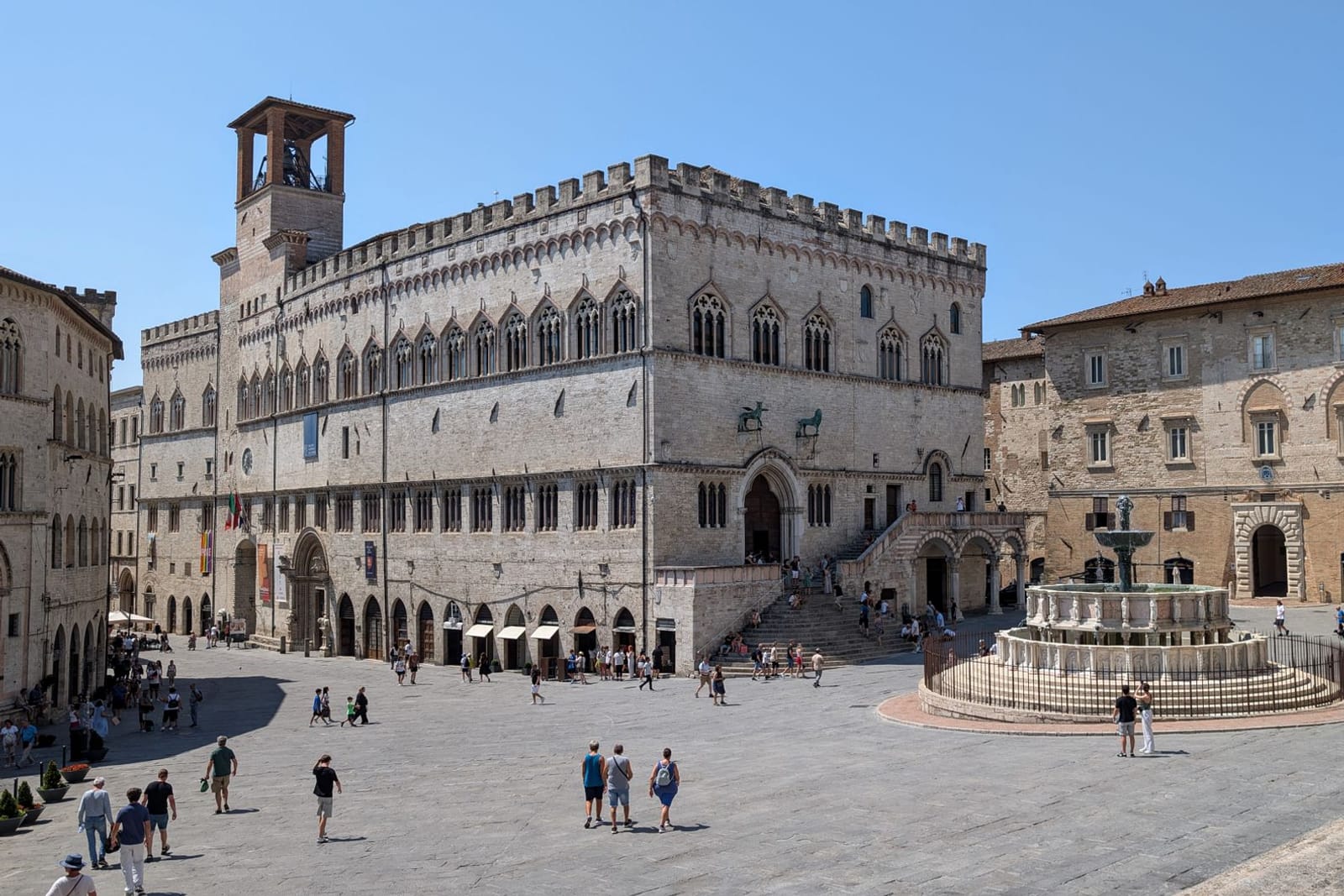
The heart of it is Piazza IV Novembre, with the Fontana Maggiore, built between 1275 and 1278 to a design by Fra Bevignate da Cingoli, its reliefs carved by Nicola Pisano and his son Giovanni. From there, Corso Vannucci climbs up to the Rocca Paolina, the fortress Pope Paul III had built in 1540 over an entire medieval quarter, as punishment after the Salt War revolt. That quarter is open to visitors today, and free: park at Piazza Partigiani and take the escalators that cut straight through the Rocca and come out at Piazza Italia.
Perugia also hosts Umbria Jazz every July and Eurochocolate, one of Europe's largest chocolate festivals, in autumn; both fill the centre with visitors, so avoid those dates if you want the quiet version of the city.
Assisi, and why it pays to arrive early
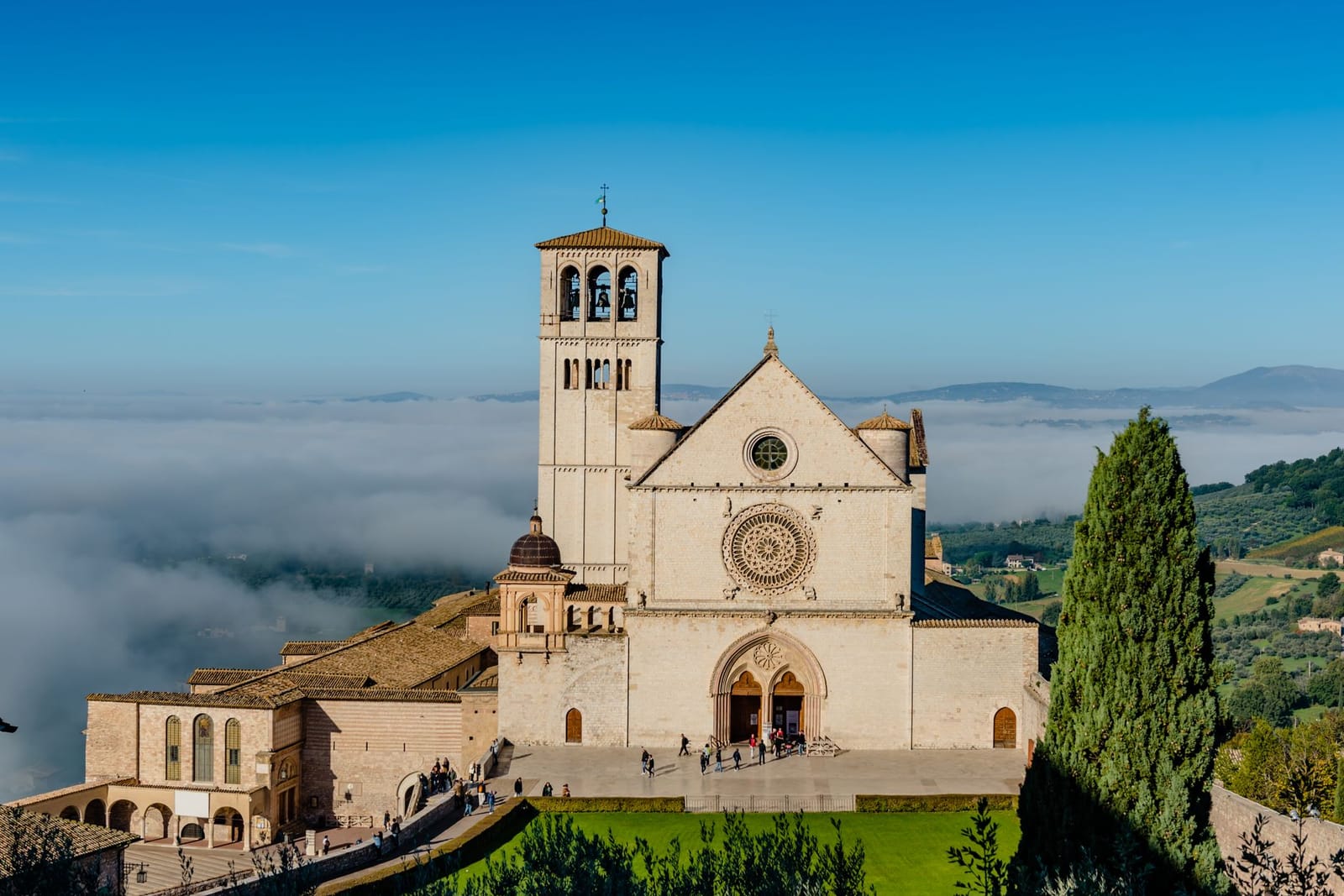
Assisi is an hour from us. At the heart of the pilgrimage is the Basilica di San Francesco, actually two churches stacked one on top of the other: the lower one, begun the day after the saint's canonisation in 1228, holds his tomb in the crypt; the upper one, in the Gothic style, carries Giotto's fresco cycle on the life of Francis on its walls, alongside work by Cimabue. The whole complex is a UNESCO World Heritage Site.
Outside the walls, on Monte Subasio, the Eremo delle Carceri, where Francis retreated to pray among the caves in the woods at around 800 metres above sea level, is reachable on foot or by car from Assisi: a quieter hour than the town itself.
In Assisi, get there early in the morning. It is a pilgrimage town before it is a tourist one, the coach groups arrive by mid-morning, and the square in front of the upper basilica fills up fast. Arrive first and you have the basilica almost to yourself; arrive after midday and you queue.
Orvieto and Civita di Bagnoregio, one step further
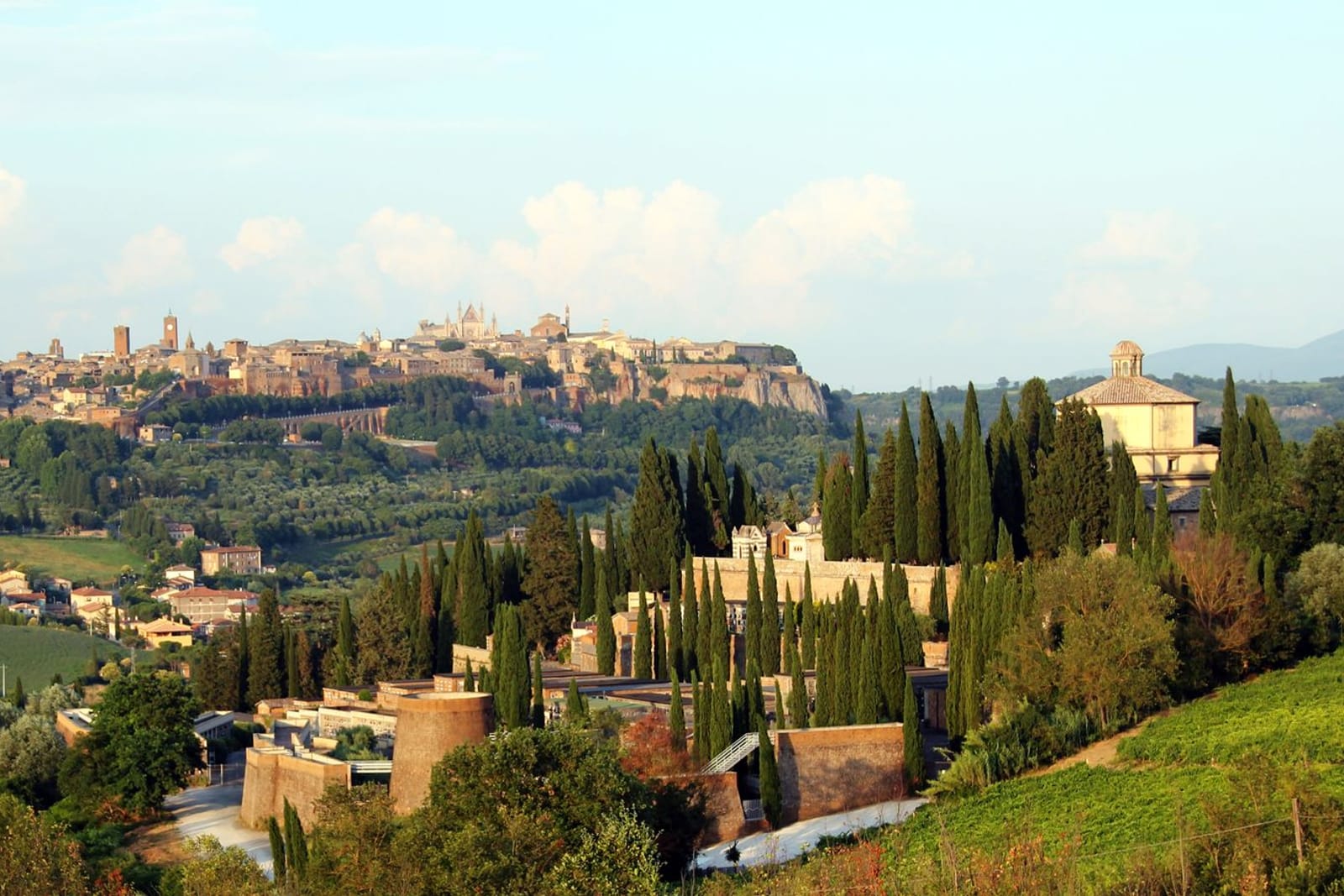
Orvieto is 54 minutes away, perched on a cliff of volcanic tuff you can see from miles off. The Duomo, with its mosaic facade and Luca Signorelli's apocalyptic frescoes in the Cappella di San Brizio, is why most people stop, but the Pozzo di San Patrizio well is what they remember most: dug in the sixteenth century for Pope Clement VII, who had taken refuge in Orvieto after the Sack of Rome in 1527, it drops 54 metres via two independent spiral ramps, one for going down and one for coming back up, so that men and mules carrying water never had to cross paths on its 248 steps. Our separate guide, Orvieto in a day, covers the well and the rest of the town in full.
A little further along, outside Umbria's borders but reachable from the same base, is Civita di Bagnoregio. You can only get there on foot, across a pedestrian bridge around three hundred metres long, built in 1965, because cars cannot cross it. It is a tiny place: by midday in August the bridge becomes a queue and the village fills up fast. Go early morning or late afternoon instead.
Lake Trasimeno, five minutes from here
Lake Trasimeno is 5-10 minutes from the agriturismo, and it is the part of Umbria we know best because it is where we live. We have written a separate guide to it, covering the three islands, the lakeside villages in the order we would revisit them, and the field where Hannibal destroyed a Roman army in 217 BC: you will find it in what to see at Lake Trasimeno. For now, it is enough to say that Castiglione del Lago, the closest village, is also 5-10 minutes away and rewards a morning on its own, with the Rocca del Leone fortress and Palazzo della Corgna looking out over the water. The full list of what is around us, with exact distances, is on our surroundings page.
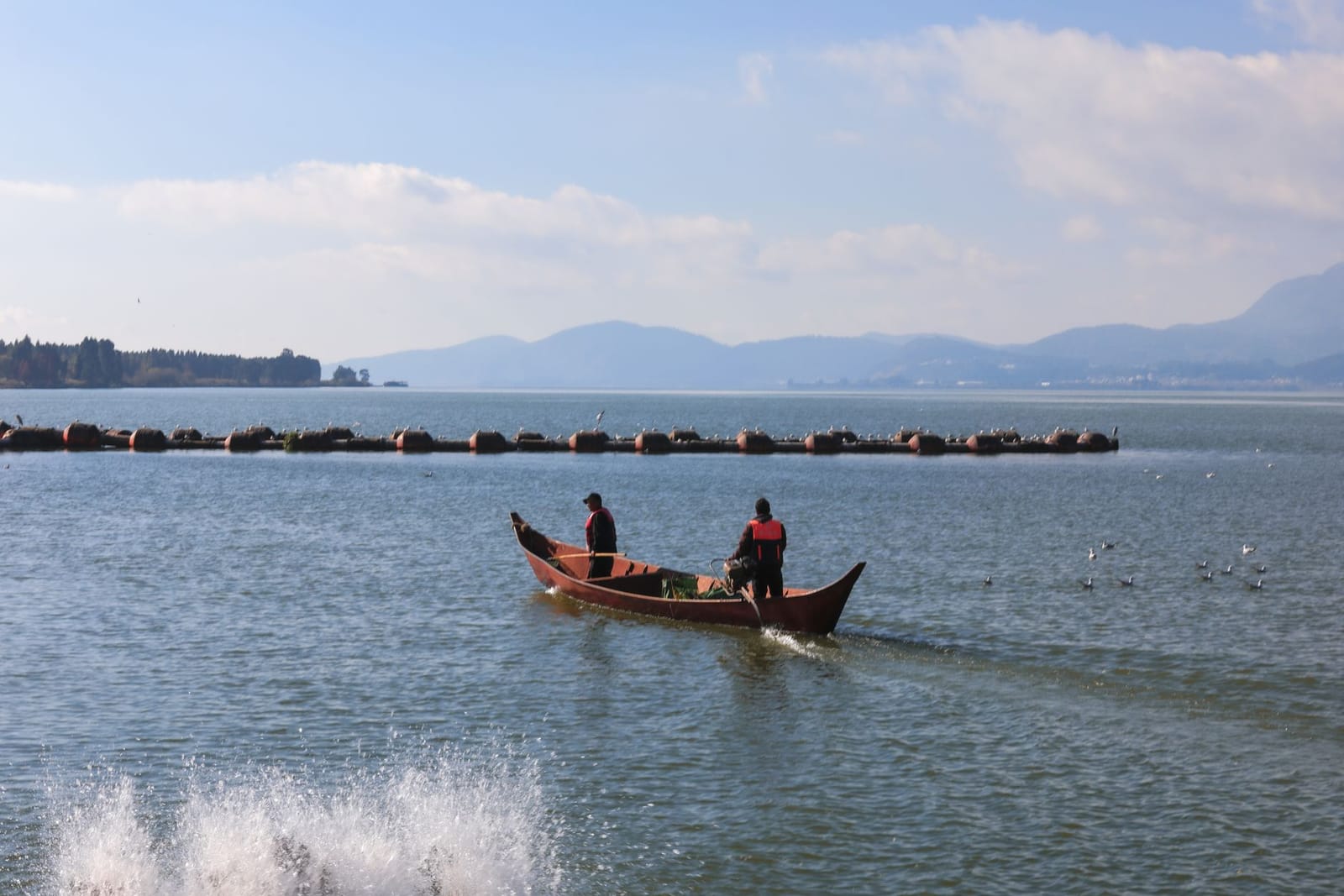
Città della Pieve and the smaller border towns
Città della Pieve is 20 minutes away, a town of red brick that looks lit up even under a grey sky. Pietro Vannucci, known as Perugino, was born here around 1450, the painter who trained Raphael: some of his work still hangs in the churches it was painted for. The centre also has a lane so narrow that two people walking towards each other have to turn sideways to pass, known as Vicolo Baciadonne, and at the end of October the town hosts Zafferiamo, a saffron festival celebrating a crop grown here since the Middle Ages.
It is a half-day place, not a full one: best visited before or after another stop, not on its own.
The other half of Umbria, which is not a day trip from here
Gubbio, Spoleto, Todi, Norcia: these names turn up on every "what to see in Umbria" list, and they earn their place there. Gubbio is one of the best-preserved medieval towns in the region, and every 15 May it holds the Corsa dei Ceri, a race in which three teams run three enormous wooden pillars up to the basilica on the hilltop. Spoleto hosts the Festival dei Due Mondi, between late June and mid-July, when the town fills with opera, dance and theatre. Todi still carries the label "most liveable city in the world", coined in 1991 by a University of Kentucky study. Norcia reopened the Basilica di San Benedetto in October 2025, largely destroyed in the 2016 earthquake, after a nine-year reconstruction.
The honest point is distance: these towns sit in the eastern and southern half of Umbria, beyond Perugia and Assisi, and reaching them is a full day given over to a single stop, drive included. If that side of Umbria is your priority, plan those days on their own with a closer base, rather than squeezing them between breakfast and dinner with us.
Tuscany is one step away, and it is honest to say so
We are in Umbria, not Tuscany: the border runs along Lake Trasimeno's western shore, a few minutes from us, and it is a border you cross without noticing. Cortona is 22 minutes away, Chiusi and Città della Pieve are 20 minutes, Montepulciano is 30 minutes, Pienza is 46 minutes, Val d'Orcia is 52 minutes, and the Val di Chiana, the valley you can see from our hills, sits adjacent to us on both sides of the border.
In practice, this means a trip built around Umbria can easily include a full day in Tuscany without moving your luggage, and the other way round. We have written more about this in Cortona in One Day and Montepulciano and Vino Nobile.
Things to do in Umbria: how many days you need, and how to plan them
To see Perugia, Assisi, Orvieto and the lake properly, without cramming too much into one day, allow at least four nights: one for the lake and its nearby villages, one for Perugia, one for Assisi with the walk up to the Eremo, one for Orvieto. Add a slice of Tuscany and you need at least five.
The practical rule is simple: one stop a day that needs more than an hour's drive, not two. Check-in with us is at 15:00 and check-out at 11:00, so your first and last days are best treated as half days, not full ones: put the closest stop first if you can.
With two days, pair the lake with just one city; our guide to Umbria in two days sets out what to choose and what to leave for another visit. With three, Umbria in three days fits in the lake, Assisi and Orvieto without rushing any of them. With four, Umbria in four days is where a slice of Tuscany starts to fit as well.
When to come
April, May and June are the best months for the art cities: the days stretch out, it is warm enough without stopping you walking for hours between Assisi and Orvieto, and the towns are not yet at the height of summer. July brings Umbria Jazz to Perugia and the Festival dei Due Mondi to Spoleto: come for the festivals, or avoid the dates if quiet is what you want.
September is probably our favourite month for touring Umbria: the heat drops, the cities return to their normal rhythm, and here it is also when we start thinking about the olive harvest, which covers the roughly 450 trees on the property.
From November to March you can still see everything, and with fewer people on the streets, but some sites cut their hours and the short days leave less time for two stops in one day. It is the right season for Perugia and Assisi, less so for touring several hill towns at once.
Getting around Umbria: where the train reaches, where you need a car
Perugia, Assisi and Orvieto are the three Umbrian cities where the train genuinely works, with Orvieto on the Florence-Rome line and Perugia and Assisi sharing a line that starts at Terontola, on the lake's southern shore. For everything else, from Città della Pieve to the Tuscan hills to the other half of Umbria, a car is necessary; if you are arriving from outside the region, how to reach Lake Trasimeno covers the road, rail and nearest airports.
Frequently asked questions
How many days do you need to see Umbria?
It depends what you are after. For Perugia, Assisi, Orvieto and the lake, without rushing, allow at least four nights. Add a slice of Tuscany or the other half of the region, Gubbio, Spoleto and Norcia, and you need at least a week.
What is the best time of year for things to do in Umbria?
April, May, June and September for the art cities, when the heat does not stop you walking for hours. July brings Umbria Jazz to Perugia and the Festival dei Due Mondi to Spoleto, so both cities fill up; from November to March you see everything with fewer people, but some sites cut their hours.
Do you need a car to visit Umbria?
Not for Perugia, Assisi and Orvieto, all three are on the railway. For the smaller hill towns, for the other half of the region and for crossing into Tuscany, yes, a car is genuinely necessary.
Assisi or Perugia, which is better with only one day?
Assisi if you want the Basilica di San Francesco and a town you can cover on foot in a few hours. Perugia if you want somewhere that feels lived in, with shops, restaurants and daily life carrying on around the monuments. They are not interchangeable, they answer two different moods.
Can you visit Gubbio, Spoleto or Norcia in a day from Lake Trasimeno?
Technically yes, but it is a full day given over to a single stop, including the drive there and back. If that side of Umbria is the priority for your trip, it is worth planning those days on their own, or basing yourself closer, rather than squeezing it into a lakeside stay.
What should I see in Umbria if I only have one day, starting from Lake Trasimeno?
One city, not two. Assisi with the climb up to the Eremo delle Carceri, or Orvieto with the Pozzo di San Patrizio, or Perugia with the Rocca Paolina. Each one fills a day well on its own, and trying to fit two into the same day means rushing both.
- Fontana Maggiore, Wikipedia
- Medioevo in Umbria - Portale delle tradizioni medievali in Umbria., Medioevo in Umbria
- Parcheggi, scale mobili e panorama - Itinerari e escursioni a Perugia, PaesiOnline
- Umbria Jazz, Umbria Jazz
- EuroChocolate, Wikipedia
- Basilica di San Francesco in Assisi, Sacro Convento di Assisi
- Eremo delle Carceri, Wikipedia
- Pozzo di San Patrizio, Comune di Orvieto
- PAESE DI BAGNOREGIO E CIVITA, FAI
- Pietro Perugino, Wikipedia
- Zafferiamo - Città della Pieve, Citta della Pieve
- Festa dei Ceri, Gubbio 15 maggio, Ceri di Gubbio
- Festival dei Due Mondi 2026 | Spoleto 26 giugno - 12 luglio, Festival dei Due Mondi
- Todi: la città più vivibile del mondo, La Voce
- La rinascita della Basilica di San Benedetto a Norcia, Ministero della Cultura
- Ferrovia Terontola-Foligno, Wikipedia
- Stazione di Orvieto, Wikipedia
- ..., Rome2Rio

Bruno e Marisella Batinti
Owners and hosts of Le Torri di Porsenna
Bruno and Marisella Batinti own Le Torri di Porsenna, the abbey they found derelict in 2014 and brought back as a charme agriturismo on the Umbria-Tuscany border. They live here all year: the roads, villages and seasons L'Almanacco writes about are the ones they drive every week.