
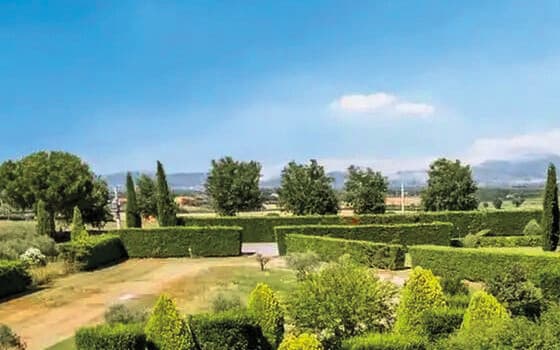

Two different queues arrive in Assisi at the same time: pilgrims stepping off a coach on their way to Mass in the crypt of the Basilica, and tour groups in walking shoes photographing Giotto's frescoes before leaving the same day. By eleven in the morning, in front of the Basilica di San Francesco, the two queues blend into one, and neither quite knows where the other belongs.
In short: Assisi is an hour from us, the longest drive of any destination covered in this almanac, and it is at once the most important Franciscan shrine in Italy and the most visited tourist stop in Umbria. The two things share the same old town without chasing the same thing: this guide separates what belongs to the pilgrimage, such as the Basilica, San Damiano and the August indulgence, from what belongs to a sightseeing visit, such as Rocca Maggiore and the Tempio di Minerva, and covers the dress code, where to park and when the town genuinely fills up.
Le Torri di Porsenna is an agriturismo with a spa in Umbria, roughly halfway between Florence and Rome, a region that in practice needs a car. Assisi's position between the two cities is exactly why so many visitors reach it as a day trip from Rome or from Florence; this guide covers the version of that day that starts an hour away, from one of our rooms, for anyone who wants to know in advance whether they are heading into a pilgrimage or a sightseeing day, because the plan changes a good deal depending on the answer.
Two Assisis on the same hill
It is not a small difference. Those arriving on pilgrimage are looking for Francis's tomb in the crypt, for Mass, for the quiet of San Damiano, perhaps for the Perdono indulgence in early August: religious acts, with their own pace and their own respect, which we can only describe from the outside here. Those arriving as sightseers are looking for Giotto's frescoes, the view from Rocca Maggiore, the Roman temple on Piazza del Comune: interests every bit as legitimate, just different ones.
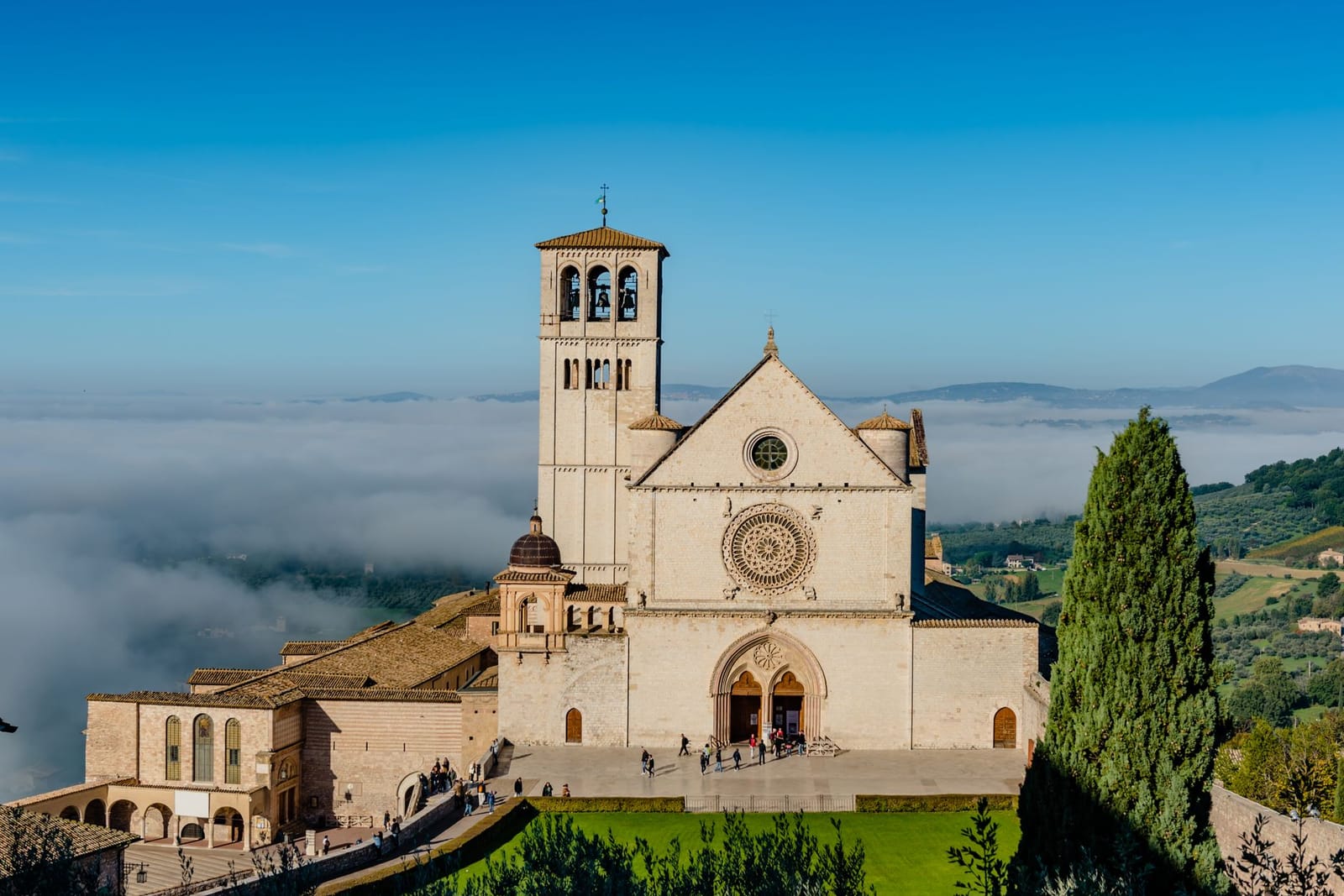
The meeting point between the two Assisis is the Basilica di San Francesco, which pilgrims and sightseers visit in the same way, in the same space, at the same hour. It is also where the two queues collide the most, which is why it helps to know beforehand which one you are, rather than finding out on the doorstep.
The Basilica di San Francesco: two churches, one tomb
The Basilica is really two churches, one built above the other. The lower church, begun the day after Francis's canonisation in 1228, holds his tomb in the crypt. The upper church, Gothic in style, carries Giotto's fresco cycle on the life of the saint on its walls, alongside work by Cimabue. The whole complex is a UNESCO World Heritage Site.
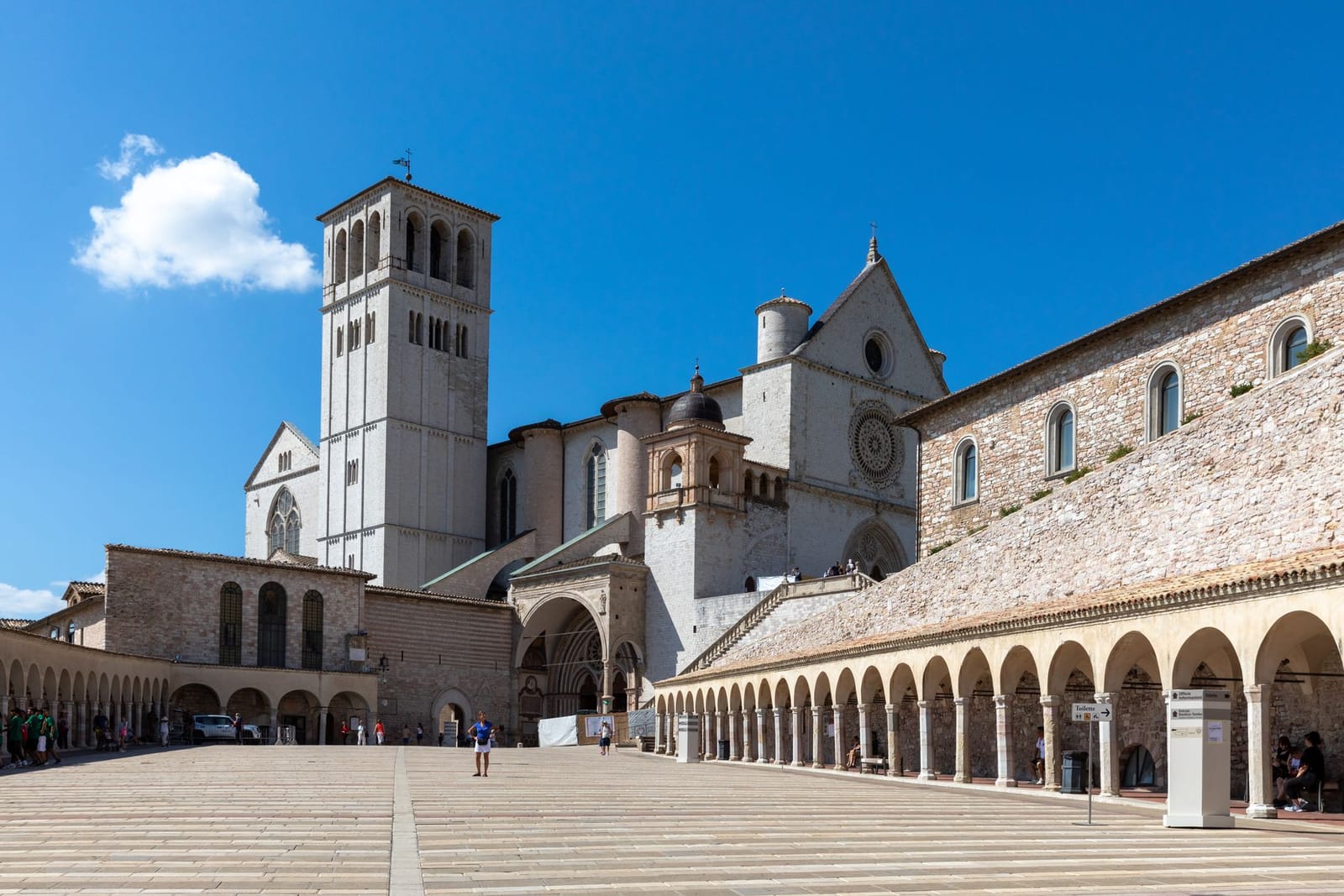
It is also a working church, not a museum: the Franciscan community based there celebrates Mass every day. Entry is free and needs no booking, but strict rules apply inside, stricter than in most Italian churches.
The dress code that catches people out
Shoulders and knees must be covered to get in, for men and women alike, and it is actively enforced, with staff at the entrance who can refuse admission to anyone who does not comply. This is the first honest point in this guide: it happens, especially in high summer, to arrive in shorts or a vest top and find yourself at the door with no plan B, while someone who read the rules beforehand walks straight in. It is worth sorting out before you leave here, not discovering on the doorstep.
Inside, photography is not allowed, in either church or the crypt: a rule meant to protect the frescoes, not a whim. Silence is expected too, especially during services. To a sightseer this can feel strict, but it is the ordinary request of a place where someone else is praying, not visiting.
Piazza del Comune and the Tempio di Minerva, Roman Assisi
A few minutes' walk from the Basilica, Piazza del Comune keeps the side of Assisi that has nothing to do with Francis: the Tempio di Minerva, a Roman temple from the Augustan era, built around 30 BC and probably dedicated to Hercules despite the name it carries today. Its facade, with six fluted Corinthian columns, is one of the best preserved examples of its kind anywhere in the world; in the sixteenth century it was converted into the Church of Santa Maria sopra Minerva. Goethe, passing through in 1786, called it the first intact ancient monument he had ever seen, and was won over by it.
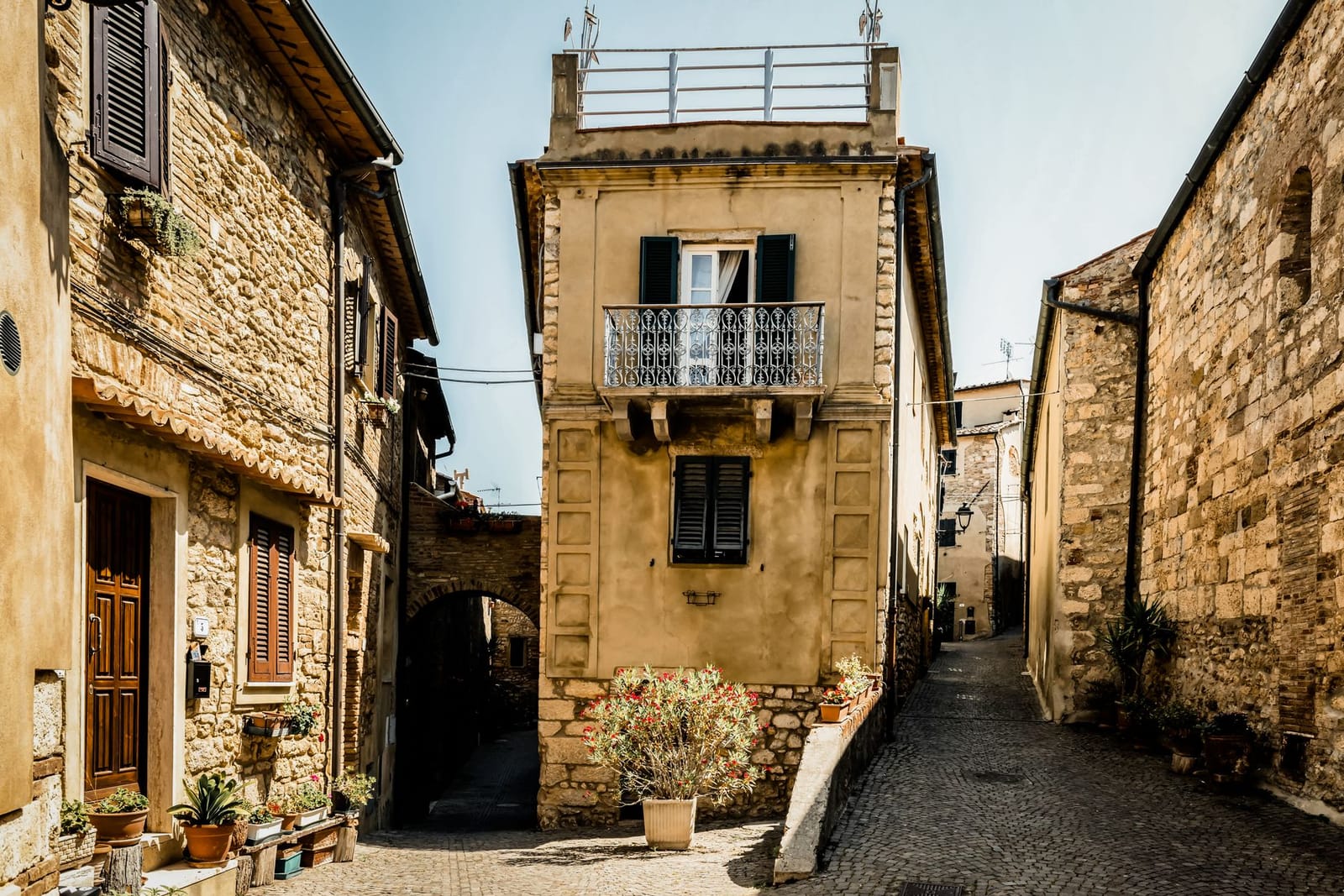
For anyone chasing the sightseeing side of Assisi rather than the religious one, this square is often the best surprise of the day: few people expect it in a town known mainly for the Basilica.
The Basilica di Santa Chiara and the Crucifix of San Damiano
The Basilica di Santa Chiara holds the Byzantine wooden crucifix in front of which, according to tradition, Francis was praying in 1205 when he received the call to repair the church of San Damiano. The Poor Clares brought the crucifix here in 1257, when they moved from San Damiano, and it still hangs above the altar of the chapel dedicated to it.
It is a stop pilgrims rarely skip and many sightseers do not realise they should make: it tells Clare's story, not only Francis's, and sits closer to the Basilica than most people expect.
San Damiano, for anyone looking for quiet
Outside the walls, near Porta Nuova, San Damiano is where Clare founded the order of the Poor Clares and lived in enclosure until her death on 11 August 1253. It is surrounded by olive groves, there are no shops or stalls, and the quiet is real, not just a written rule: it is the part of Assisi visited more by people praying than by people sightseeing.
Anyone who has built the day's pilgrimage around the Basilica and Santa Chiara will find this the most fitting place to close it. Anyone simply looking for an hour of calm after the crowds in the centre, with no religious reason at all, will find it just as well.
The Eremo delle Carceri and Rocca Maggiore, two different climbs
Outside the centre, on Monte Subasio, the Eremo delle Carceri is where Francis withdrew to pray among the woodland caves, at around 800 metres of altitude. It is a different hour from the town, quiet, open to anyone willing to make the climb, not only to those doing it for religious reasons.
On the opposite hill, Rocca Maggiore looks down over Assisi from the top of Colle Asio, at 500 metres: it was razed in 1198 during a revolt against imperial rule and rebuilt in the fourteenth century on the orders of Cardinal Egidio Albornoz. It has nothing religious about it, but it is the highest viewpoint in town, and anyone after the view over the valley more than the pilgrimage usually prefers it to the Eremo.
Both are real climbs, not strolls: anyone with mobility difficulties would do well to weigh them up beforehand, not discover them halfway up.
Restricted traffic, parking, and the days to avoid
The old town of Assisi is a limited traffic zone: drivers park at Porta Nuova, linked to the centre by escalators, or in the underground car park at Piazza Matteotti. Neither is the kind of thing you find by circling in morning traffic at the last minute, and Porta Nuova has the added advantage of being the closest point to San Damiano, for anyone wanting to end the day there.
On any ordinary day, the busiest stretch is late morning, when coach groups arrive: leave the car before nine and the square in front of the Basilica is still empty. Some days, it is the whole town that fills up, not just the square. Calendimaggio, the medieval festival held every year from the Wednesday to the Saturday after 1 May, splits the town into two rival factions competing through processions, songs and games in costume, wonderful to watch but the exact opposite of a quiet visit to the Basilica. On 3 and 4 October Assisi marks the Transito and the feast of Saint Francis, patron saint of Italy since 18 June 1939 by proclamation of Pius XII: days of heavy pilgrim traffic rather than tourist traffic, but crowded all the same. And from noon on 1 August to midnight on 2 August, the Perdono di Assisi, the indulgence granted in 1216 by Pope Honorius III at Francis's own request, brings large numbers of people to the Porziuncola, at Santa Maria degli Angeli in the valley below the town.
How we would spend a day in Assisi
We would start early, before nine, at the Basilica di San Francesco and the Basilica di Santa Chiara, which together fill the first half of the morning well. From there the day splits: anyone following the pilgrimage thread heads down to San Damiano, anyone after the Roman town climbs to Piazza del Comune for the Tempio di Minerva and then on to Rocca Maggiore for the view.
Anyone wanting to add the Eremo delle Carceri as well needs to be honest about timing: on top of everything else, a single day is not enough for all of it, and something has to be chosen before you set off, not decided at the last minute in front of a map. An hour's drive there and an hour back, before you have even set foot in the Basilica, is already half the reason we give Assisi a full day rather than an afternoon borrowed from another plan: we say the same in our guide to what to see in Umbria in three days, where Assisi gets a full day of its own.
An hour is the longest drive of any place we cover in these guides, but Assisi is not the only Umbrian town within a day's reach from here: our general guide to what to see in Umbria puts Assisi alongside Perugia and Orvieto, both closer, and we go into more detail in Perugia in a day, for anyone weighing the two towns up before deciding. The full list of what is nearby, with exact drive times, is on our surroundings page.
Frequently asked questions
Is Assisi more of a pilgrimage site or a tourist destination?
Genuinely both. The Basilica di San Francesco is where pilgrims and sightseers meet; San Damiano and the August indulgence belong more to the first group, Rocca Maggiore and the Tempio di Minerva more to the second. Knowing which group you belong to helps you choose when there isn't time for everything.
Is there a dress code for the Basilica di San Francesco?
Yes. Shoulders and knees must be covered, for men and women alike, and it is actively enforced by staff at the entrance, who can refuse entry to anyone not complying.
How much time do you need to see Assisi in a day?
A full day, not an add-on to another plan. That covers the two main basilicas and one side of the town, either the pilgrimage side or the tourist side; adding the Eremo delle Carceri as well means leaving something else out.
Where do you park in Assisi?
Outside the old town, which is a limited traffic zone. The main car parks are Porta Nuova, linked to the centre by escalators, and the underground car park at Piazza Matteotti.
When is it best to avoid Assisi because of the crowds?
During Calendimaggio, held from the Wednesday to the Saturday after 1 May, when the whole town is caught up in the medieval festival; on 3 and 4 October, for the Transito and the feast of Saint Francis; and from 1 to 2 August, for the Perdono indulgence. Any ordinary day, late morning is the busiest time.
Can Assisi be visited as a day trip from Rome or Florence?
Many visitors do exactly that, since Assisi sits in a region roughly halfway between the two cities. This guide covers the version of that day that starts from Le Torri di Porsenna, an hour away by car, rather than the longer drive from Rome or Florence itself.
- Basilica di San Francesco in Assisi, Sacro Convento di Assisi
- Eremo delle Carceri, Wikipedia
- Limitazioni al traffico, Assisi OnLine
- Checking your browser before accessing. Just a moment..., Italy Planner
- Sacro Convento, Assisi: Visitor Guide 2025, Audiala
- Celebrazione Nazionale SAN FRANCESCO D'ASSISI Patrono d'Italia 4 Ottobre 2026, Assisi OnLine
- Città di Assisi - Celebrazioni Francescane 2025, Comune di Assisi
- Calendimaggio (Assisi), Wikipedia
- Crocifisso di San Damiano, Wikipedia
- Città di Assisi - Rocca Maggiore, Comune di Assisi
- Rocca Maggiore, Wikipedia
- Tempio di Minerva (Assisi), Wikipedia
- La Chiesa di San Damiano, l'oasi di silenzio a due passi da Assisi, PaesiOnline
- Perdono d'Assisi, Wikipedia
- Breve Pontificio con il quale San Francesco d'Assisi e Santa Caterina da Siena vengono..., Santa Sede

Bruno e Marisella Batinti
Owners and hosts of Le Torri di Porsenna
Bruno and Marisella Batinti own Le Torri di Porsenna, the abbey they found derelict in 2014 and brought back as a charme agriturismo on the Umbria-Tuscany border. They live here all year: the roads, villages and seasons L'Almanacco writes about are the ones they drive every week.