
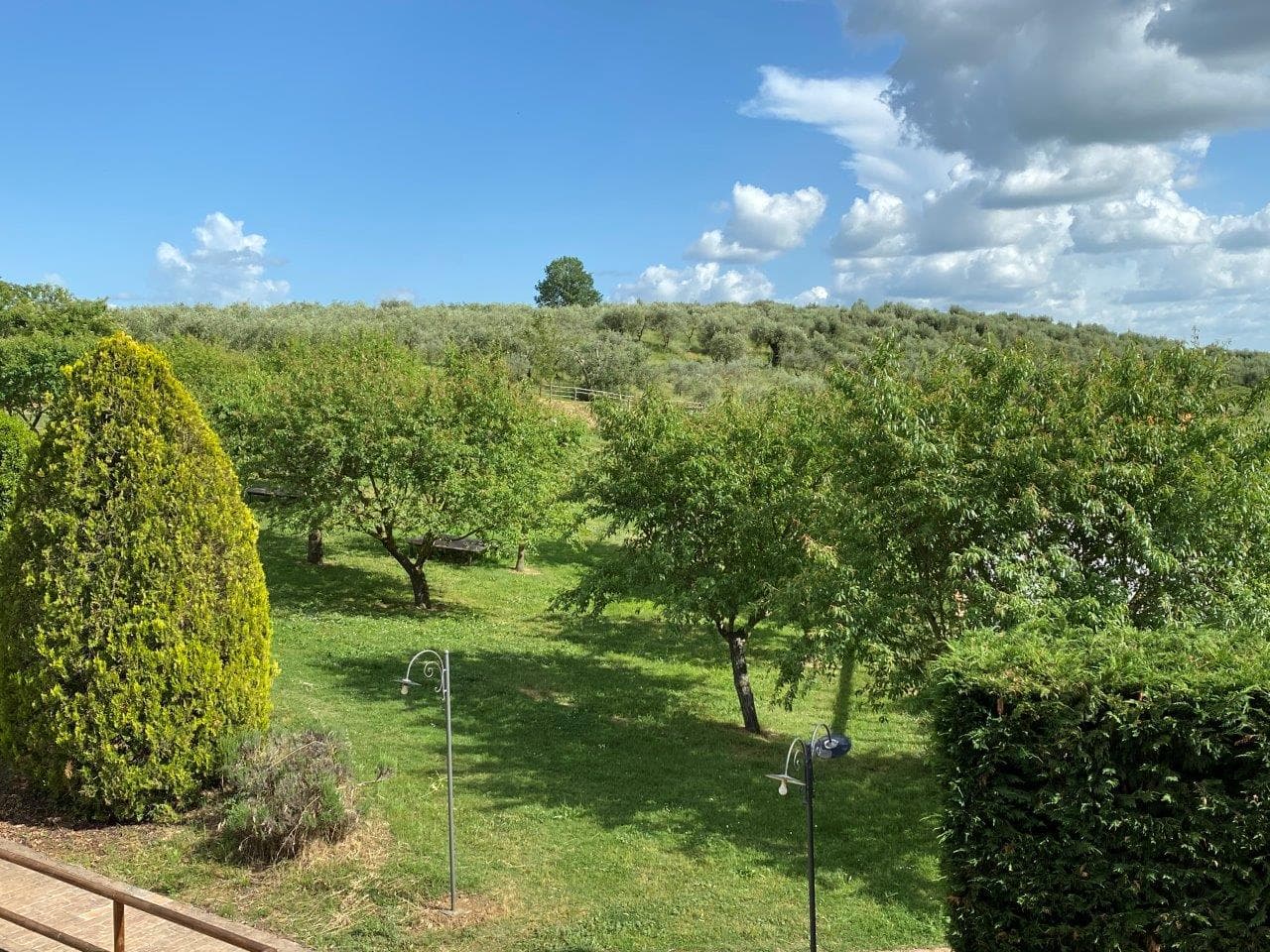

Three days, a suitcase and a list of towns copied from an article read the night before: that is how most people with a short stay arrive here, with Perugia, Assisi, Orvieto, Gubbio and Spoleto marked on the same map as if they were a quarter of an hour apart. The plan holds until halfway through day two, when someone checks the time in a car park and realises the numbers do not add up.
In short: with three days from here you can see Lake Trasimeno well on day one, a whole Umbrian city on day two, and a third on the day you leave, choosing between Perugia and Orvieto because there is not time for both. This article sets out the itinerary day by day, with the real constraints of check-in and check-out, where to park in each city, and what we have deliberately left out.
It is written for anyone with exactly three days, not one more, a car, and a stay booked, or about to be booked, in one of our rooms: knowing in advance what is realistically possible beats finding out while you are already queuing for a parking space.
Why three days in Umbria means choosing, not seeing it all
In our general guide to what to see in Umbria we count at least four nights to see, without rushing, the lake and the three Umbrian cities closest to us: Perugia, Assisi and Orvieto. Umbria sits between Florence and Rome, on the border with Tuscany, and those three cities are the closest part of it to where we are. One night for the lake, one for each city.
With three days available, the lake fits without taking up a whole day of its own, because it is 5 to 10 minutes from where you sleep and slots naturally into arrival day. What does not fit is one of the two furthest cities, Perugia or Orvieto: you have to choose, and later in this article we say how. For a shorter version of this trip, see our two-day itinerary; with one more day to spend, see our four-day itinerary.
Day 1: arrival, Lake Trasimeno and Castiglione del Lago
Check-in here is at 3pm, so the first day is a half-day by design, not by choice: anyone arriving in the early afternoon has only a few hours of light left, especially in autumn or winter.
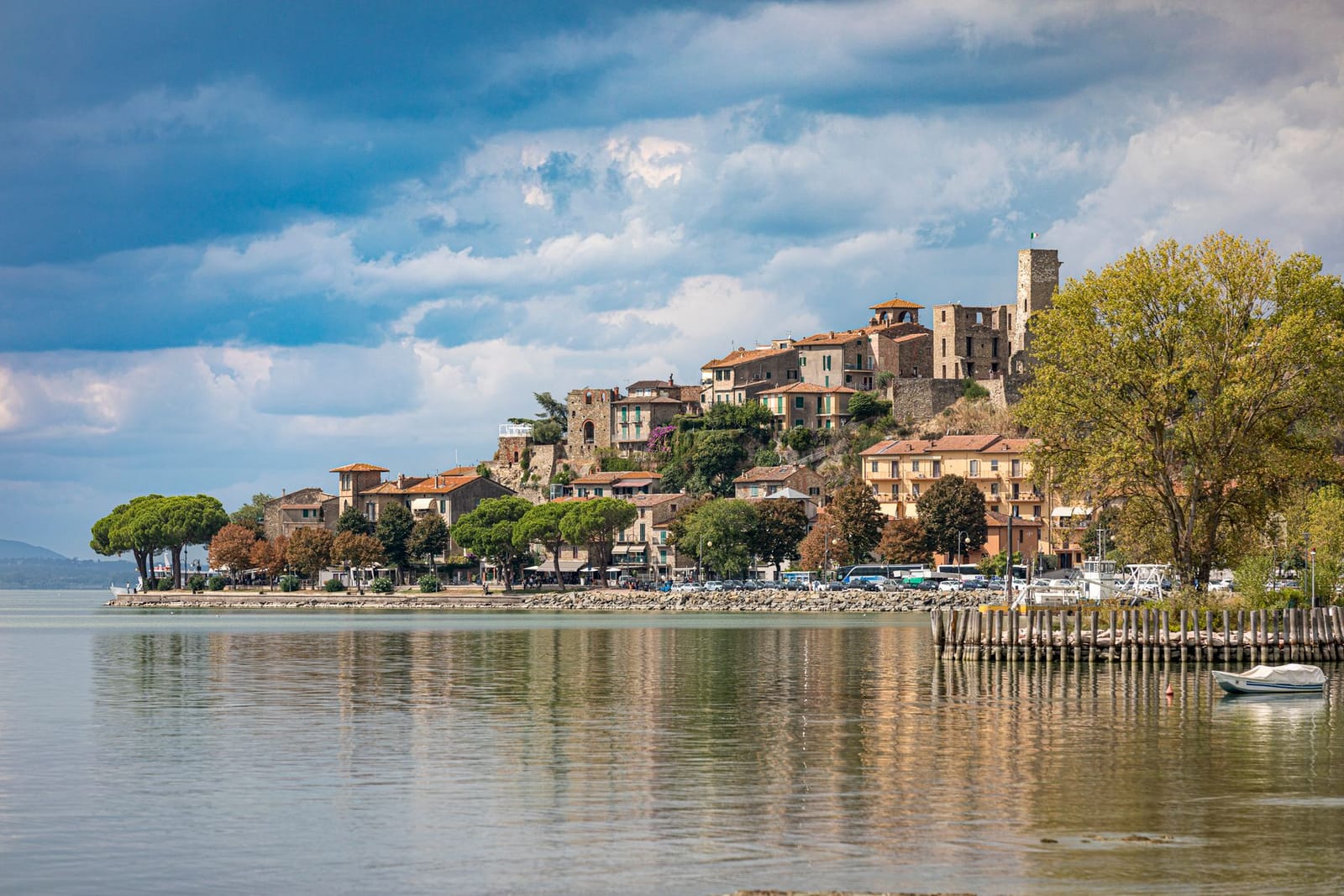
Use them for Lake Trasimeno, 5 to 10 minutes away, and for Castiglione del Lago, at the same distance: the Rocca del Leone and the walk along the walls take a comfortable hour and a half, leaving time and light for a drink looking over the water before heading back for dinner. For the full detail on the islands, the lakeside towns and the best time of year, there is our guide to what to see at Lake Trasimeno. For now it is enough to say this is a first day meant for settling in, not for racing off: the two proper cities come over the next two days.
Day 2: Assisi, a whole day
Assisi is an hour away, the furthest of the three cities in this itinerary, and the only one we give a whole day to without splitting it with anything else. The Basilica di San Francesco and the climb up to the Eremo delle Carceri, on Monte Subasio, need unhurried time, not a couple of hours borrowed from another stop.
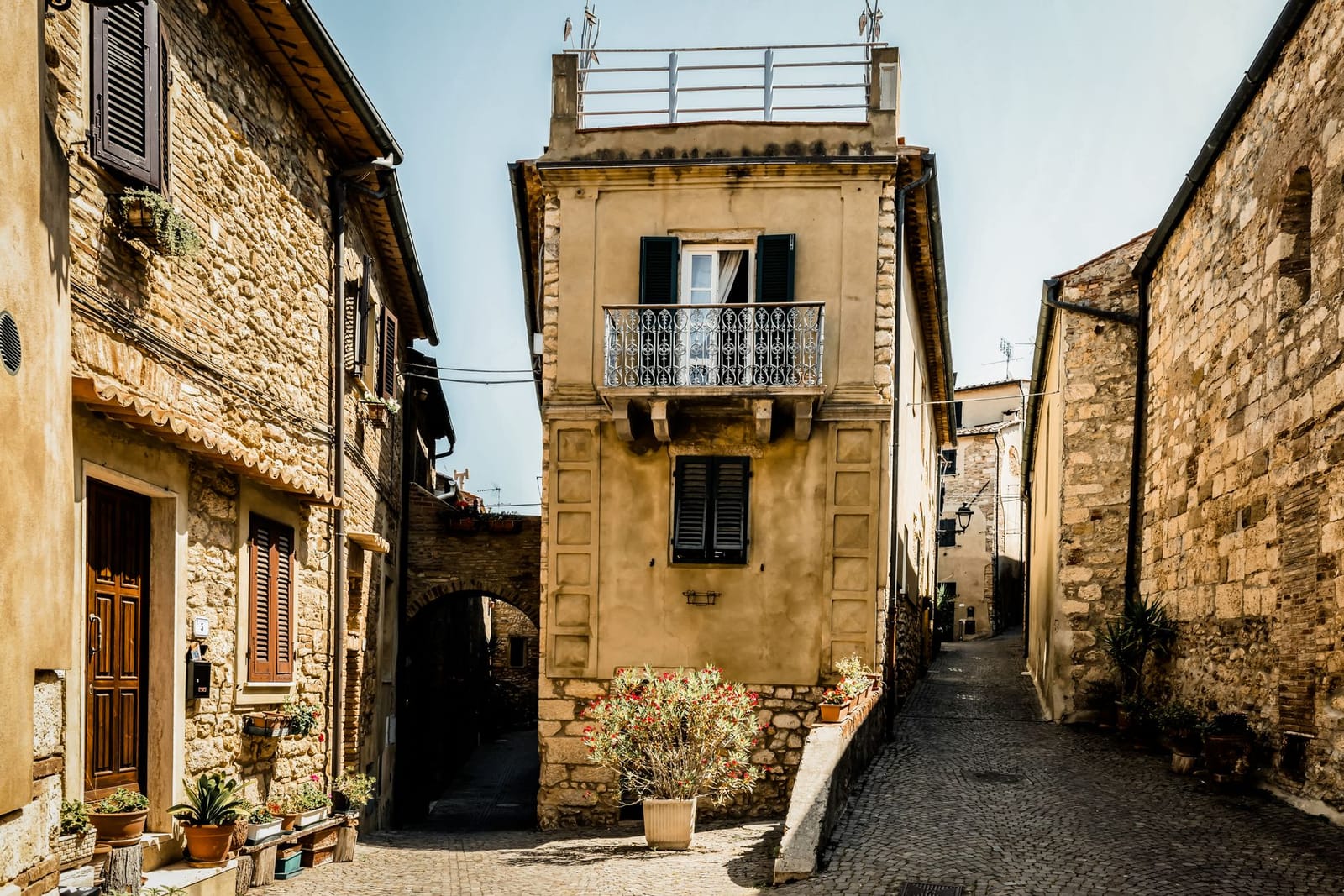
Leave early, before the coach groups arrive mid-morning: anyone who parks before nine still finds the square in front of the basilica empty. Assisi's historic centre is a restricted traffic zone, so cars stay outside the walls. The main car parks are Porta Nuova, connected to the centre by escalators, and the underground car park at Piazza Matteotti, a few minutes' walk from the centre. Neither is something you want to be hunting for in the middle of the morning traffic.
Day 3: Perugia or Orvieto, not both
The third day is departure day: check-out is by 11am, so the morning starts with suitcases, not a walk. After that the day is yours, but it is worth choosing it before you leave, not deciding in the car.
Perugia: the closer, livelier choice for day three
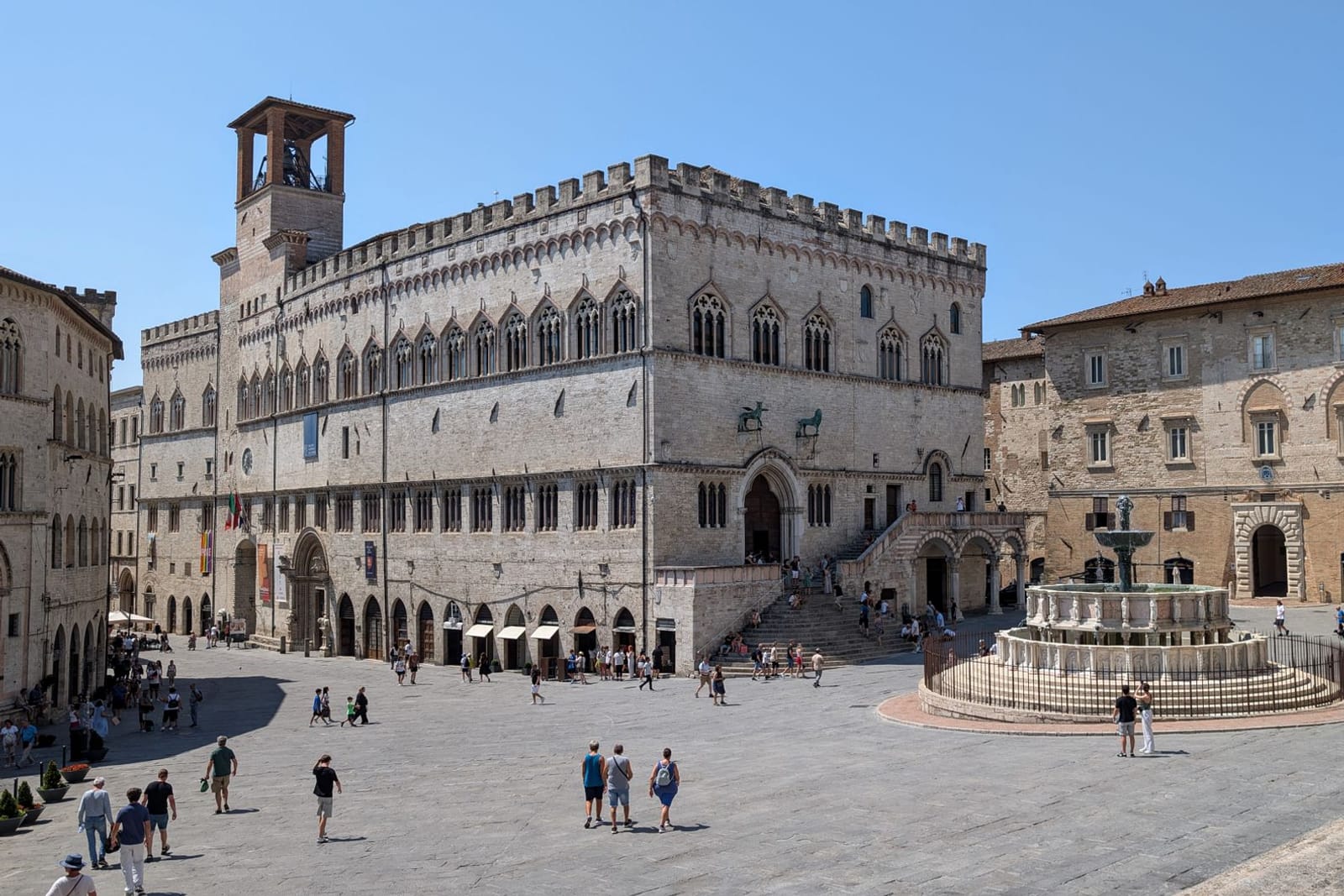
Perugia is 44 minutes away, the closer of the two. The medieval centre is easy to cover on foot in a day, and drivers park at Piazza Partigiani and go up to Piazza Italia through the Rocca Paolina, the sixteenth-century fortress built over an entire medieval quarter, on a system of escalators that runs through the old structure in place of the stairs.
Orvieto: the quiet clifftop choice for day three
Orvieto is 54 minutes away, perched on a tufo cliff visible from a distance. Drivers have two options: park at Campo della Fiera, outside the centre, and go up by lift and escalator through the ancient walls into the heart of the town, or leave the car near the train station, down in the valley, and take the funicular, which climbs in a few minutes to Piazza Cahen. For the fuller day, split across the valley, the cliff and the underground city, see our guide to Orvieto in a day. Civita di Bagnoregio is a short hop from here, but it is outside Umbria's borders: if the plan stays to three days in Umbria, we leave it out on purpose, not by oversight.
The evenings and mornings that shape everything else
Check-in at 3pm and check-out by 11am are not administrative details: they are the two pegs the whole itinerary hangs on. The first day loses the morning, the last loses the afternoon, which is why the middle day, the one with no time pressure from either end, should go to the furthest city.
One practical tip: pack the night before you leave, not on the morning itself. It gives back a genuine half hour on day three, and on an itinerary this tight, half an hour is felt.
One base, not a different hotel each night
Changing where you stay each night, to be closer to that day's destination, looks like a way to save driving time, but in practice it costs more than it saves: it means checking out in the morning instead of leaving straight away, loading the car, and checking in again in the evening instead of settling in.
From here, with Perugia 44 minutes away, Assisi an hour and Orvieto 54 minutes, none of the three stops justifies the switch. Staying in the same place for all three nights keeps the luggage still and gives back the time that would otherwise go into packing.
What is left out over three days, and why
It has to be said plainly: a three-day itinerary leaves out more than it fits in. Between Perugia and Orvieto, one does not make the cut, whichever you choose. Città della Pieve, 20 minutes from here, is left out because it is a half-day that a compressed three-day plan cannot fit without eating into time meant for the two bigger cities.
The Tuscan border is a few minutes from here, and the pull to stretch as far as Cortona or Montepulciano is real: we write about that separately in Montepulciano and the Vino Nobile, for anyone with an extra day to give it. Within these three days, kept for Umbria, we leave it out on purpose.
And the other half of Umbria, Gubbio, Spoleto, Todi and Norcia, is not even part of the conversation here: these are real places that deserve a real visit, but far enough away to need a trip planned specifically for them, not a day stolen from an itinerary that already has three cities to cover. We go into that more calmly in our general guide to what the region offers, the right place to plan that trip when the time comes. The full list of distances from here, for anyone wanting to add other stops, is on the surroundings page.
Which months work for three days
On a three-day plan with no spare day, timing matters more than usual: if one stop is ruined by weather or crowds, there is no fourth day to fix it. April, May, June and September remain the safest months, with temperatures that let you walk for hours around Assisi and Perugia without stopping for shade every ten minutes.
July brings Umbria Jazz to Perugia: if your third day falls in those dates, the centre fills up in a different way than usual, an experience in its own right but not the quiet Perugia you would expect from a compressed itinerary. In that case, within these three days, Orvieto is the better choice.
By car or by train, with three days like this
Perugia and Assisi share a railway line through Terontola, on the lake's southern shore, and Orvieto sits on the Florence-Rome line, so all three stops are technically reachable by train. In practice, with the first and last days already shaped by check-in and check-out, a car holds the plan together far better, and our guide to how to reach Lake Trasimeno covers the routes in without one.
Frequently asked questions
Is three days enough to see Umbria?
No, three days is enough to see one part of Umbria well, the lake and two of the three closest cities. For the rest of the region, including the eastern half with Gubbio, Spoleto and Norcia, you need more days, as we explain in our general guide to what to see in Umbria.
Perugia or Orvieto for the third day?
Perugia if you want a lively city that is closer, 44 minutes away. Orvieto if you want a quiet clifftop town and the Pozzo di San Patrizio well, 54 minutes away. Do not try both in the same day, there is not enough time to see either one properly.
Is it worth hiring a car for a three-day Umbria itinerary?
Yes. Perugia and Assisi are reachable by train from Terontola station and Orvieto is on the Florence-Rome line, but a car makes the first and last days, the ones tied to check-in and check-out times, far more flexible.
Where do you park in Assisi?
Outside the historic centre, which is a restricted traffic zone. The main car parks are Porta Nuova, connected to the centre by escalators, and the underground car park at Piazza Matteotti, a short walk from the centre.
Can you add a day in Tuscany to this itinerary?
Not within these three days, which stay focused on Umbria. Cortona is 22 minutes away and Montepulciano 30, so the temptation is real, but a proper day in Tuscany deserves a day of its own, not an add-on squeezed between two Umbrian cities.
How should you split the three days from Le Torri di Porsenna?
A light first day, given over to the lake and to arriving. A full second day in Assisi, the furthest city, which needs unhurried time. A third day, the day you leave, in Perugia or Orvieto, both closer and better suited to a flexible half-day.
- Limitazioni al traffico, Assisi OnLine
- Mappe e Trasporti Orvieto, Orvieto Viva
- Parcheggi, scale mobili e panorama - Itinerari e escursioni a Perugia, PaesiOnline

Bruno e Marisella Batinti
Owners and hosts of Le Torri di Porsenna
Bruno and Marisella Batinti own Le Torri di Porsenna, the abbey they found derelict in 2014 and brought back as a charme agriturismo on the Umbria-Tuscany border. They live here all year: the roads, villages and seasons L'Almanacco writes about are the ones they drive every week.