
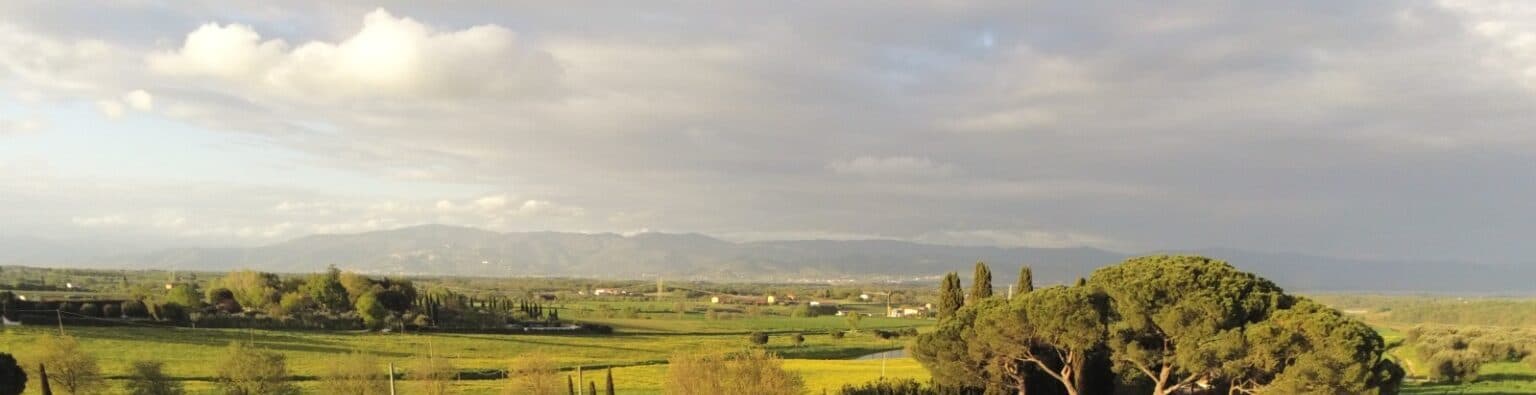

A booking enquiry that landed in the spring had a question tacked on at the end: does the train to Chiusi get you anywhere near us? Another, a few weeks later, asked whether hiring a car at the airport made sense for a three-night stay. They are the same question asked two different ways, and it is the question this guide tries to answer before any other.
In short: outside the lakeside towns of Castiglione del Lago and Passignano, you need a car here, and we are saying it plainly because it is the single most useful thing in this article. This guide covers the motorway exits that genuinely lead to Lake Trasimeno, the two historic railway lines that cross the area and which stations actually matter, the nearest airports with real road distances to the lake, and the practical difference between arriving in a town and arriving at a countryside property like ours.
Umbria sits inland, between Florence and Rome, and this stretch of it borders Tuscany, a few minutes from what to see at Lake Trasimeno. It is written for anyone still deciding how to travel, train plus taxi, flight plus hire car, or their own car the whole way, who would rather have the real numbers before booking than after landing.
By car: the exits that actually get you here
Coming from the north, take the A1 motorway, exit at Chiusi-Chianciano Terme, then follow the E45 towards Perugia to the Castiglione del Lago exit, and from there the signs for Petrignano del Lago. Coming from the south, the same A1, but exit at Orvieto instead, then the same E45 towards Perugia to the same Castiglione del Lago exit. Coming from the east, from the Ancona area, the E45 towards Perugia leads straight to Castiglione del Lago. These are the directions we give our own guests, and they hold for any starting point on mainland Italy.
The last stretch, from Castiglione del Lago to Petrignano del Lago, is a handful of minutes on hillside roads: five or ten, depending on exactly where in town you set off from. It is also the stretch where it helps to have the written directions to hand, not just the address typed into a sat nav: Petrignano is a hamlet, and satellite navigation sometimes confuses it with the centre of Castiglione, adding an unnecessary detour right at the end.
The two railway lines that cross the lake, and where they actually lead
Two historic lines cross this corner of Umbria. The first is the Florence-Rome line, opened in 1862: it is the line the Chiusi-Chianciano Terme station sits on, served every day by regional and InterCity trains. The second is the Terontola-Foligno line, opened in 1866, on which the Passignano sul Trasimeno station sits, about 700 metres from the town's historic centre.
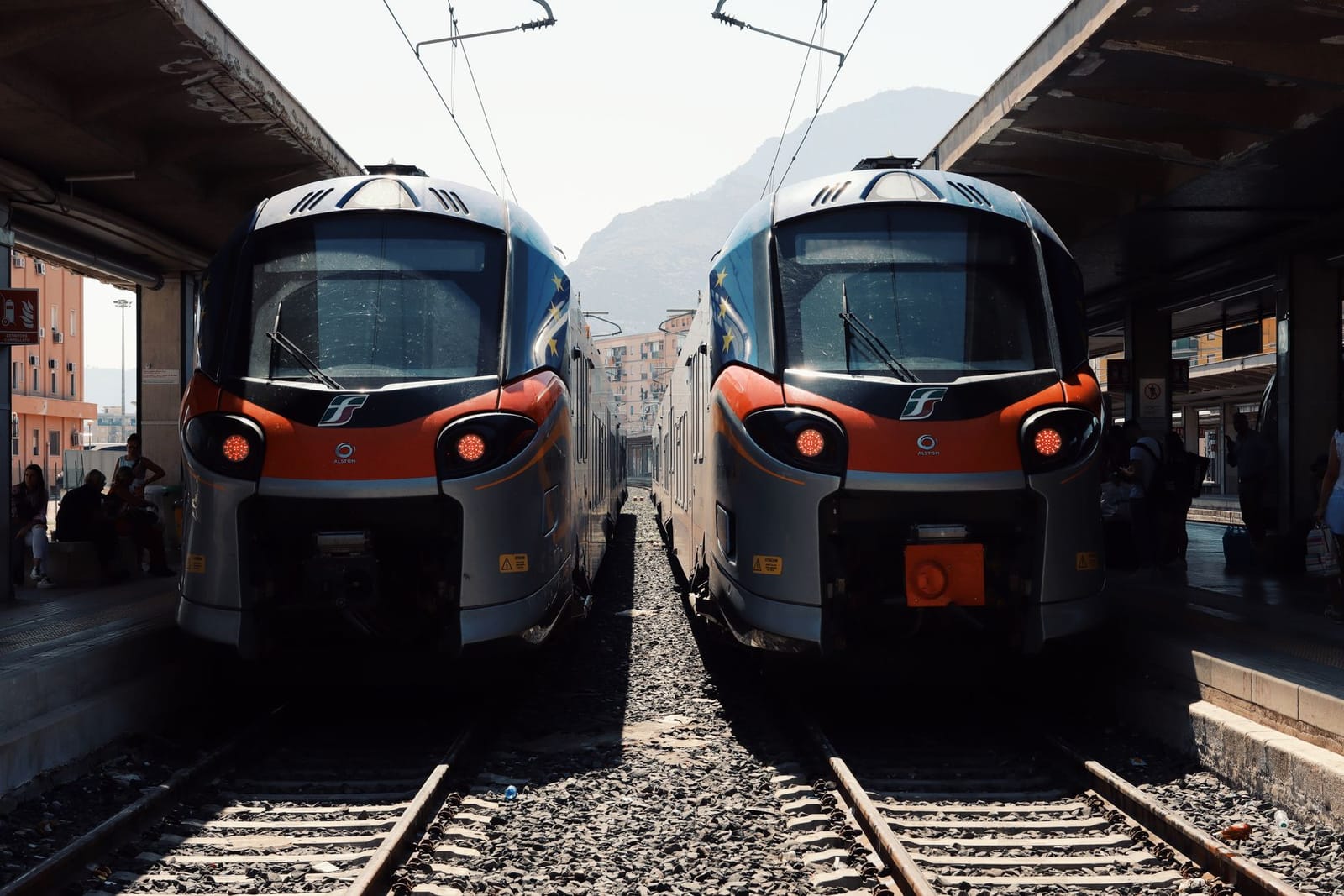
For nine years, until 1875, the Terontola-Foligno was actually part of the Florence-Rome route itself. Then the opening of the short connecting line between Terontola and Chiusi demoted it to the cross-country link it still is today, running towards Perugia on one side and towards Cortona and Tuscany on the other. That same connecting line, opened in 1875, also gives the lake a third direct stop of its own: the Castiglione del Lago station, a kilometre from the historic centre, served only by regional trains, never by InterCity services.
From the station to us: the part the ticket does not cover
A train ticket only solves part of the journey. Anyone getting off at Chiusi-Chianciano Terme finds a station already 20 minutes by car from here, the same distance as Città della Pieve: convenient for anyone travelling on the Florence-Rome line, but as far from our hillside as it is from the old town of Chiusi itself, which sits on a hill above the station. Anyone getting off at Passignano, on the shore opposite ours, finds a station just 700 metres from the town, the most convenient in the whole area for anyone without a car, but still on the wrong side of the lake to reach us within a day without one. Anyone getting off at Castiglione del Lago finds the station a kilometre from the centre and 5 to 10 minutes by car from here: the closest of the three, but still not walking distance.
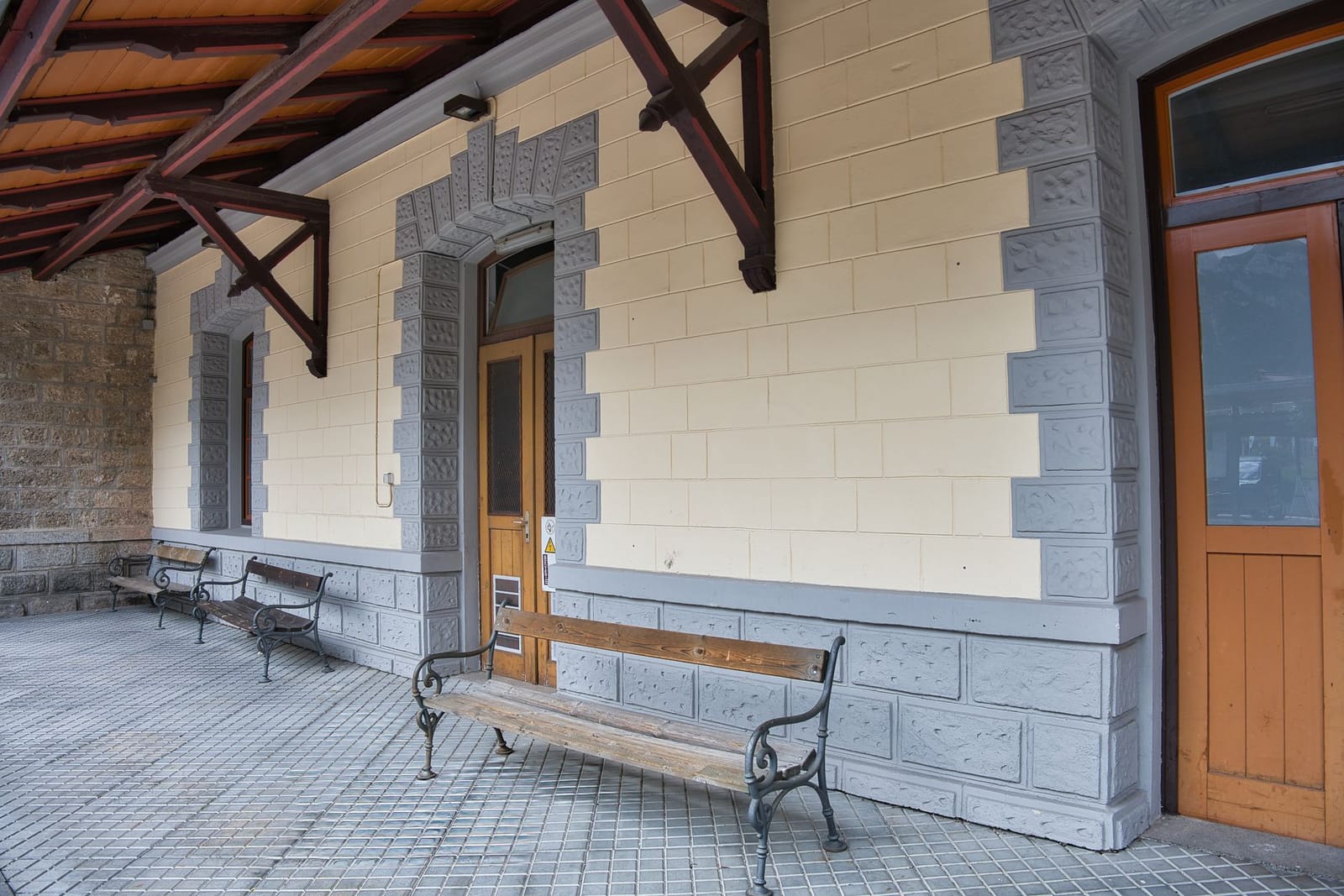
None of the three stations removes the need for a car or a taxi booked in advance. We do not run a shuttle service from any station: anyone arriving by train needs to plan for a taxi, a chauffeured transfer, or a hire car picked up somewhere else, not a lift waiting on the platform.
The nearest airports, and what that means in practice
The closest airport is Perugia's, officially the Umbria International Airport San Francesco d'Assisi, which sits between Perugia and Assisi. The lake's own tourist consortium puts it at about half an hour's drive from Lake Trasimeno. The closest point of the lake to us, though, is Castiglione del Lago, on the far side from the airport: the road distance between the two works out at roughly 48 kilometres and 51 minutes, on top of which come the 5 to 10 minutes that separate Castiglione from here. It is a small airport, with a limited number of routes compared with the bigger hubs, so check with whoever is organising the trip whether your own departure point is connected before ruling it out.
The other useful airports are further away and a bigger undertaking. From Castiglione del Lago, Florence's airport is roughly 128 kilometres away, a good hour and a half by car. Rome Fiumicino is roughly 205 kilometres, just over two hours; Rome Ciampino roughly 188, about two hours; Pisa roughly 201, again just over two hours. These numbers matter before booking a flight: the difference between Perugia and one of the three larger airports is not ten minutes, it is a good extra hour of driving on top of the flight itself.
A lakeside town is one thing, a country house another
Castiglione del Lago and Passignano are both easy to explore on foot once you have arrived: shops, restaurants, the fortress, the lakefront, all within a few minutes' walk of the centre or the station. For anyone staying inside one of these two towns, with no other stops planned, a car really might not be needed for the whole trip.
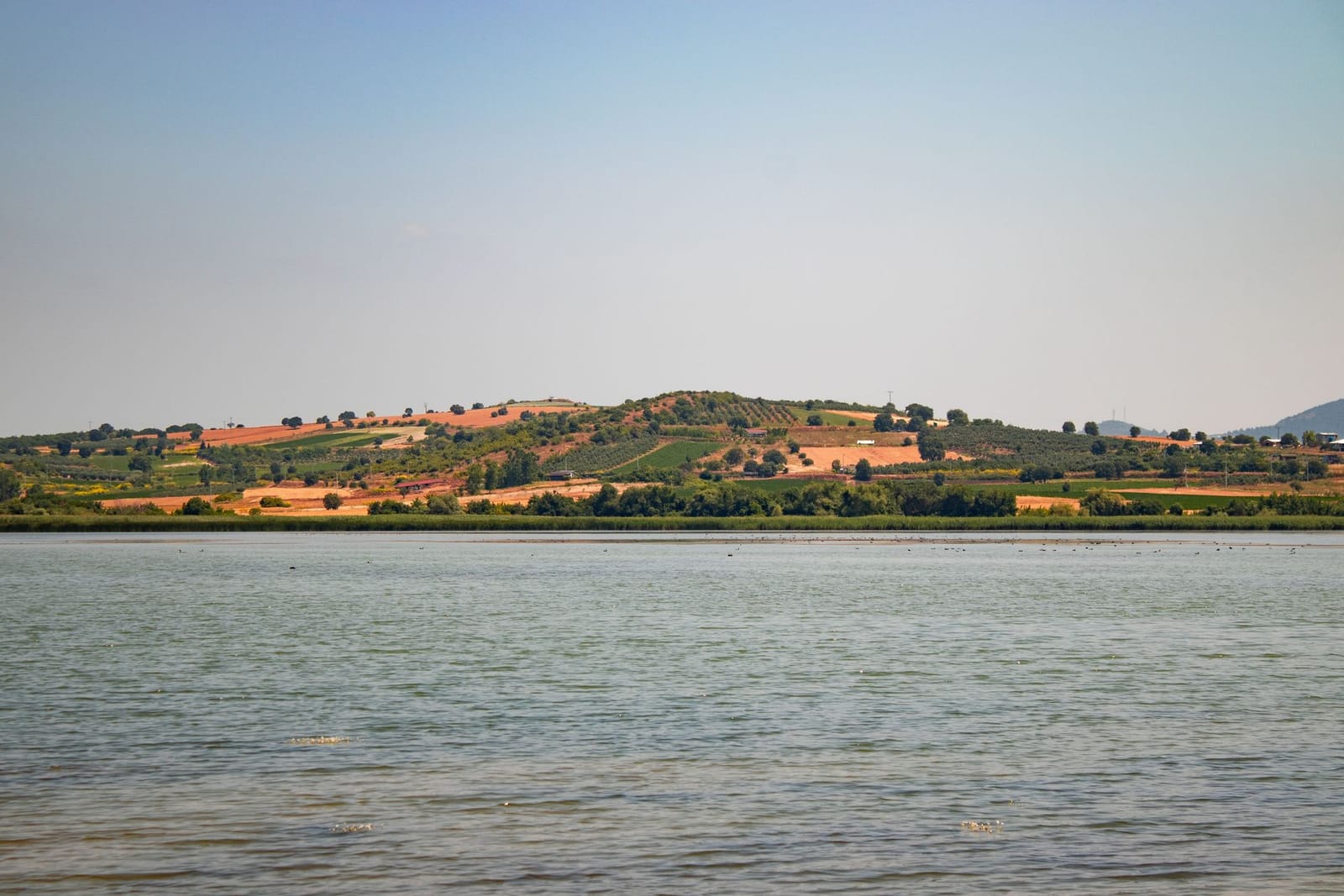
We are a different proposition. Le Torri di Porsenna sits in the countryside, in the hamlet of Petrignano del Lago, among olive groves and hills, 5 to 10 minutes from Castiglione and the lake but outside any built-up centre with shops or bus stops. The same is true of most agriturismi in this border area, not only of us: sleeping inside a town's walls is one thing, sleeping in the countryside around it is another. Anyone looking for a stay where everything is within walking distance will find it in Castiglione or Passignano, not with us.
What you genuinely can and cannot do without a car
This is the least comfortable part of this article, and also the most useful, so here it is plainly. Without a car, arriving by train, you can see one town properly: Castiglione del Lago or Passignano, depending on where you get off, on foot from the station. You cannot do a full circuit of the lake in a day, you cannot reach our rooms or most of the agriturismi in the area, and you cannot comfortably add Cortona, Montepulciano or Perugia to a multi-day stay: they are places we cover elsewhere on this blog, including our guide to things to do in Umbria, but all of them stay out of reach without a car.
Whoever struggles most with this are groups relying purely on trains to move around every day, anyone not comfortable driving narrow hillside roads with limited signage, and anyone who arrives without booking a taxi or a hire car for the last stretch in advance, hoping to find a lift once they get off. Anyone who books a car, even just for the length of the stay, gets something in return: an area that is genuinely quick and easy to get around, with real distances far shorter than they look on a map.
Hiring a car: what to check yourself
We are not naming car hire firms, opening hours or prices here: they change by season and by airport, so check directly on the arrival airport's website or through your own travel agent before you leave; a page like this one goes out of date faster than a train timetable.
What we can say with certainty is about us, not the airports: once hired, a car here is useful from day one. There is no town centre near us to explore on foot while the car sits parked for a few days; you will use it for shopping, for dinner out, for every outing, even the five or ten minute ones.
Once you have arrived: the pace the car sets from here on
Even after check-in, the car remains how you get around every day. The lake is 5 to 10 minutes from us, Castiglione del Lago the same, Chiusi 20 minutes, Perugia 44: short distances, but all of them by car, not on foot or by bus. The practical rule we give our own guests is simple: even for a quick evening trip to the lake, plan on the car, do not expect to walk there from the countryside around us.
It is not a marketing choice: these are the real distances of this corner of hillside on the Umbria-Tuscany border, with few direct roads between one town and the next. Anyone who accepts that before setting off, bringing a car or hiring one on arrival, gets something concrete in return: you can see in a single day places that would otherwise need a night's stay each, as we cover for example in our guide to Perugia in a day.
The last stretch: a practical tip more than a rule
Whether you arrive in your own car, a hire car, or after a train journey followed by a taxi, the final stretch of road towards Petrignano del Lago follows real hillside, with bends and rises and falls, not the straight run of a plain. It is not a difficult stretch, but tackle it with a bit of daylight left if your travel plans allow it, especially if you do not already know the area.
The advice we give most often is simple: bring the written directions with you, motorway exit plus E45 exit, as well as the address typed into your sat nav. It helps most when arriving late in the evening, when it is easier to miss a turn that would be obvious in daylight. To plan the rest of the trip, our surroundings page lists every real distance from here, including those to the rest of this border area.
Frequently asked questions
Can you get to Le Torri di Porsenna without a car?
In theory, yes, arriving by train at Chiusi-Chianciano Terme, Castiglione del Lago or Passignano and arranging a taxi for the last stretch. In practice it is awkward: we do not run a shuttle from any station, and the final stretch is still hillside road.
What is the nearest airport to Lake Trasimeno?
Perugia's airport, San Francesco d'Assisi, between Perugia and Assisi. The lake's tourist consortium puts it at about half an hour's drive from Lake Trasimeno; the road distance to Castiglione del Lago, the closest point to us, works out at about 51 minutes for 48 kilometres.
Which motorway exits lead to Lake Trasimeno?
From the A1, exit at Chiusi-Chianciano Terme coming from the north, or at Orvieto coming from the south, then the E45 towards Perugia to the Castiglione del Lago exit. Coming from the east, from the Ancona area, the E45 towards Perugia leads straight to the same exit.
What is the nearest railway station to Le Torri di Porsenna?
Castiglione del Lago, 5 to 10 minutes by car from us, though only regional trains stop there. Chiusi-Chianciano Terme, on the historic Florence-Rome line with InterCity services too, is 20 minutes away. Passignano, on the far shore of the lake, is the furthest of the three for reaching us.
How far are the Rome and Florence airports from Lake Trasimeno?
By road distance to Castiglione del Lago, roughly 205 kilometres and just over two hours to Rome Fiumicino, roughly 188 kilometres and about two hours to Rome Ciampino, roughly 128 kilometres and a good hour and a half to Florence.
Should you hire a car at the airport or wait until later?
We will not name car hire firms, opening hours or prices here, because they change by season and by airport and are best checked directly before you travel. What we can say is that once you are with us, a car is useful from day one.
- Lake Trasimeno - Where is it | Lago Trasimeno Consorzio URAT, LagoTrasimeno.net
- ..., Rome2Rio
- ..., Rome2Rio
- ..., Rome2Rio
- ..., Rome2Rio
- ..., Rome2Rio
- Stazione di Chiusi-Chianciano Terme, Wikipedia
- Chiusi-Chianciano Terme railway station, Wikipedia
- Stazione di Passignano sul Trasimeno, Wikipedia
- Ferrovia Terontola-Foligno, Wikipedia
- Stazione di Castiglion del Lago, Wikipedia

Bruno e Marisella Batinti
Owners and hosts of Le Torri di Porsenna
Bruno and Marisella Batinti own Le Torri di Porsenna, the abbey they found derelict in 2014 and brought back as a charme agriturismo on the Umbria-Tuscany border. They live here all year: the roads, villages and seasons L'Almanacco writes about are the ones they drive every week.