

Castiglione del Lago's market is on Wednesdays. Magione's is on Thursdays, Tuoro sul Trasimeno's on Fridays, Passignano sul Trasimeno's on Saturdays. None of those days change from one year to the next. The lake's village food festivals, known locally as sagre, are a different matter: they shift by a few days each season, and searching online for next year's exact date usually turns up only last year's.
In short: the lake's weekly markets have a fixed day that never moves, the village sagre do not, and the Palio delle Barche, the lake's rowing and boat-carrying contest, always falls on the last Sunday of July in Passignano sul Trasimeno, not in Castiglione del Lago. This guide sets out the markets' fixed days, how the Palio actually works, the summer fish sagre, and what to expect on arrival at each.
It is written for anyone planning a stay around a day of the week, not around a date that might no longer hold by the time they arrive.
We are in Umbria, five to ten minutes from the lake's southern shore, close enough that most of these villages are a short morning trip rather than a day's outing. For the rest of what the region offers beyond the lake, our guide to things to do in Umbria covers the wider picture.
The market rota, a different village each day
Our nearest market is Castiglione del Lago's, 5 to 10 minutes away: it runs every Wednesday in the old town, a tradition dating back to 1548. We cover it in more depth, parking included, in Castiglione del Lago: a guide to the old town.
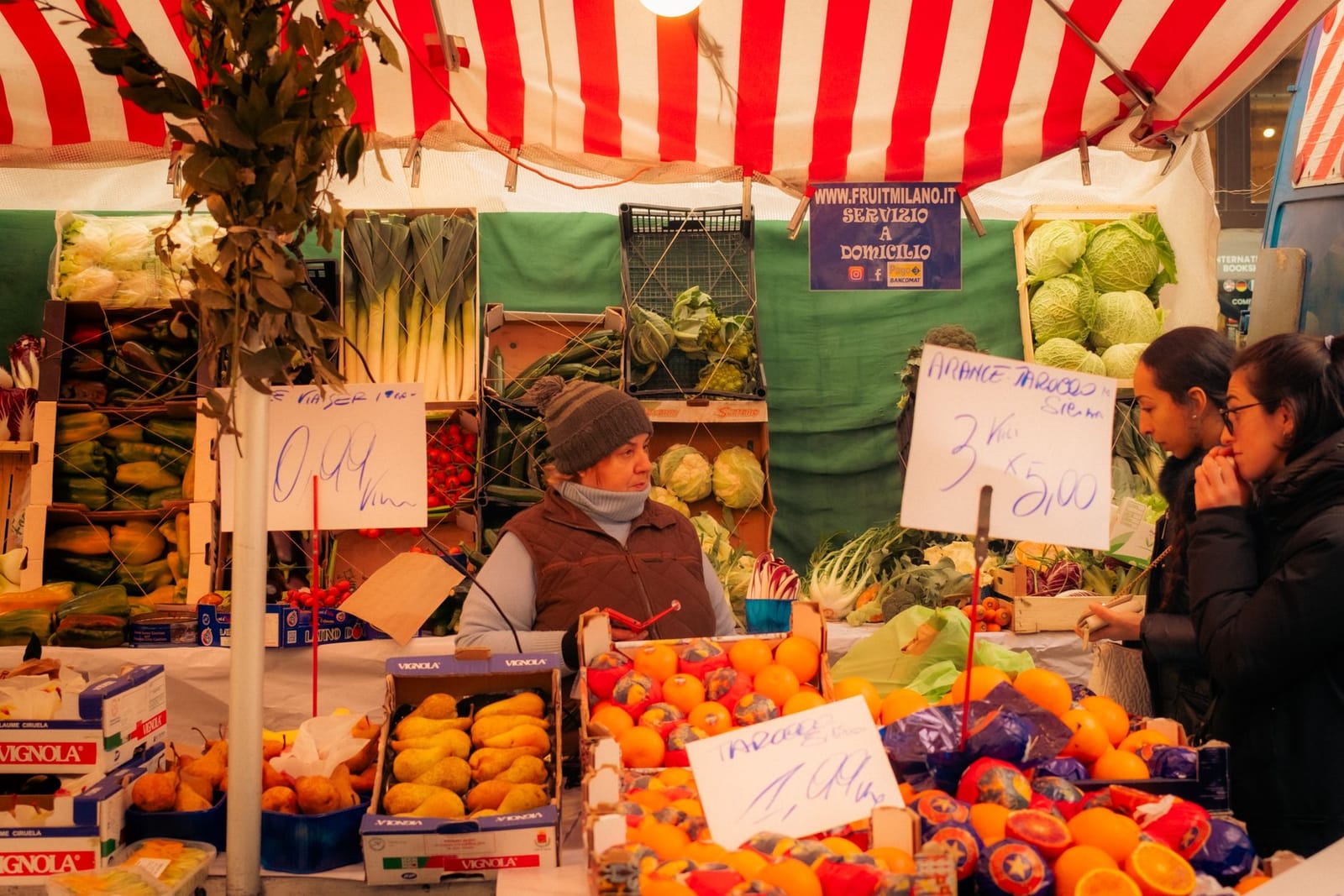
The lake's three other main villages each have their own day, and none of them clash: Magione on Thursdays, in Piazza Matteotti; Tuoro sul Trasimeno on Fridays; Passignano sul Trasimeno on Saturdays, in the old centre that climbs up from the harbour. These are working ambulant markets in the fullest sense: fruit, vegetables, cheese, a few stalls of clothes and household goods, aimed at people who live there year round, not at a visitor hoping to photograph an artisan farmers' market. Anyone expecting curated stalls and zero-kilometre branding, the kind built for tourists, will be disappointed. Anyone who wants to see how a lakeside village actually shops finds exactly that.
How long a market lasts, and how to plan the morning
Magione's market, the only one where we have exact hours, runs from 8am to 1pm. The others keep roughly the same rhythm: an early start and a fold-up in the early afternoon, so a market has to be the first stop of the day, not a detour on the way to lunch.
One practical rule follows from this: with a single day free, plan on seeing one market, not two, since none of the four falls on the same day as another. Catching more than one means a stay of at least a week that spans several weekdays, not a weekend.
No booking is needed for any of them. You simply arrive, park at the edge of the old town, and walk the few minutes to the stalls, exactly as you would in any working Italian village.
The Palio delle Barche in Passignano: always the last Sunday of July
The Palio delle Barche is the lake's single most important fixed event, and it earns that description: it falls every year on the last Sunday of July, without exception, with the medieval-style taverns and side events running through the whole week before. In 2026 it is the 43rd edition.
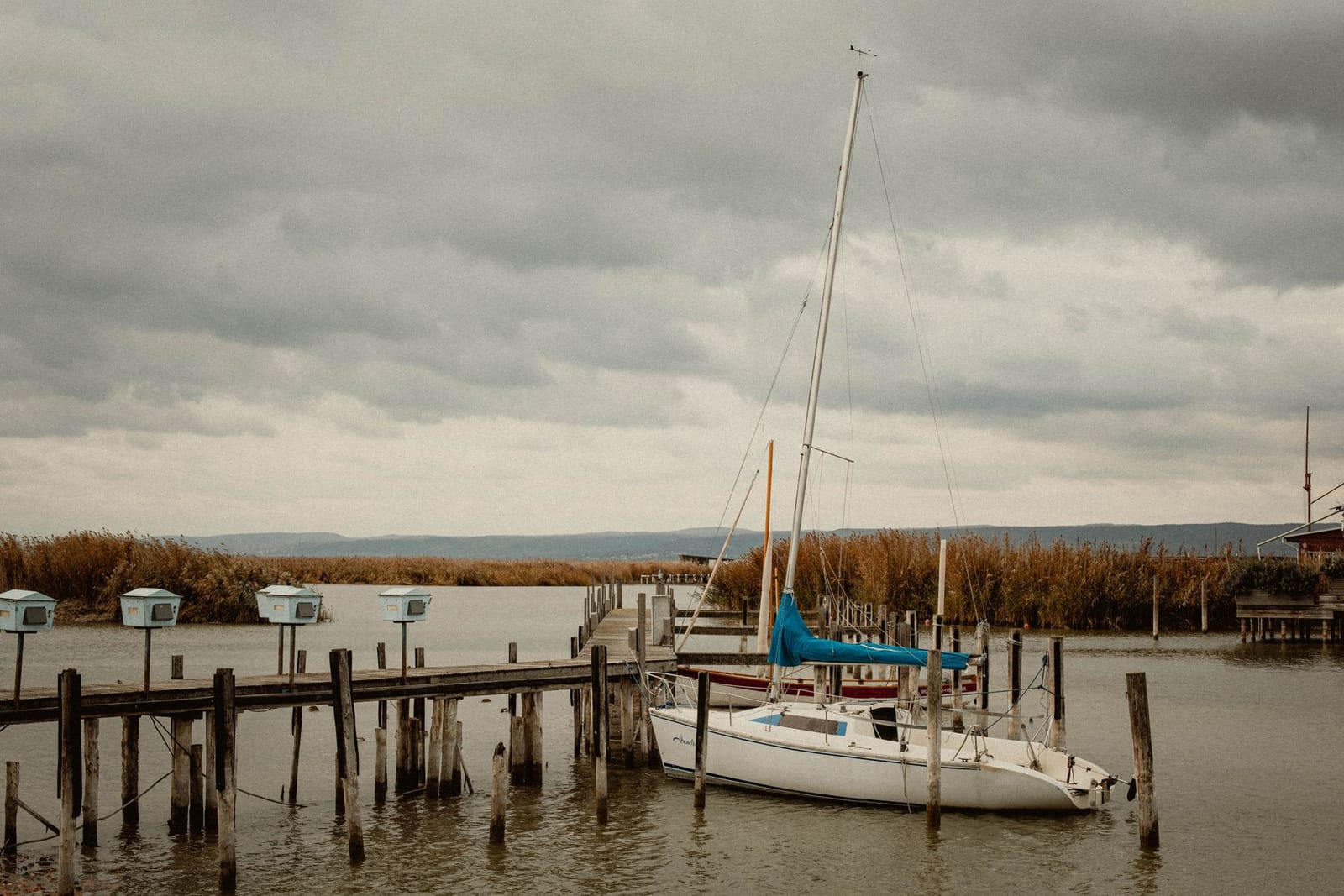
It re-enacts an episode from 1495, when a small army of Sienese troops and exiled Perugians from the Oddi family occupied Passignano's castle. Pursued by the Baglioni and Della Corgna militias, the invaders hoisted their boats onto their shoulders and tried to escape across the lake towards the islands.
Today's race involves the town's four historic districts, or rioni: Centro Storico, Centro Due, Oliveto and San Donato, with at least 160 competitors across three stages. First a rowing race out to a buoy and back to the town dock, with two rowers and a flag-bearer per boat. Then the boat is handed to a land crew who carry it on their shoulders through the steep alleys and steps of the old town. Finally the flag-bearer returns to the boat for the last stretch on the water. It is a loud, physical spectacle that fills the whole afternoon.
Not Castiglione del Lago's festival
Worth saying plainly, because it is a mix-up that comes up often: the Palio delle Barche belongs to Passignano, not to Castiglione del Lago. Castiglione has its own calendar of events, from the Trasimeno Blues Festival in late July to the International Folklore Festival, through to the illuminated Christmas tree on the water in winter, but none of those is the Palio delle Barche. Anyone booking a Castiglione weekend expecting to see boats carried through the streets there has come to the wrong village.
The fish sagre: a season more than a date
Unlike the Palio, the smaller villages' fish sagre have no fixed date. The Festa del Giacchio in San Feliciano, the 44th edition in 2026, is held every year between late July and the first days of August, but the exact start shifts from season to season. The same goes for the smaller lakeside sagre elsewhere, such as the shrimp and fish festival in San Savino, which usually lands later in August.
We are not publishing a single edition's dates here: they change every year, and a wrong date left on a page that stays online is worse than no date at all. Anyone staying with us between late July and August who wants to catch one of these sagre should check the relevant village's pro loco calendar in the days immediately before, not months in advance.
What you actually eat, from the giacchio to the fagiolina
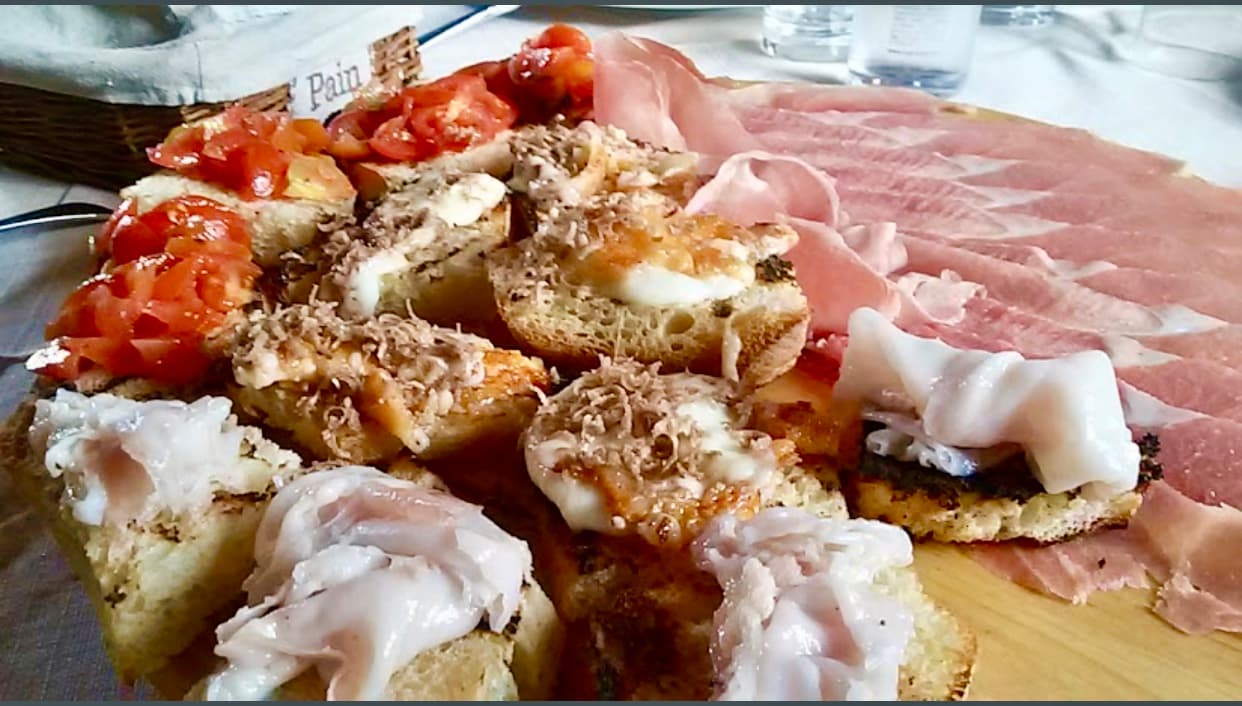
The giacchio that gives San Feliciano's festival its name is a circular cast net, once used by Trasimeno fishermen for surface fish; the sagra still demonstrates the technique alongside serving the lake's fish. The most sought-after dish is grilled skewers of persico reale, or pike-perch. Alongside it is usually fagiolina del Trasimeno, a small, old bean variety that holds Slow Food presidium status, plus dishes covered elsewhere on the lake such as regina in porchetta and tegamaccio.
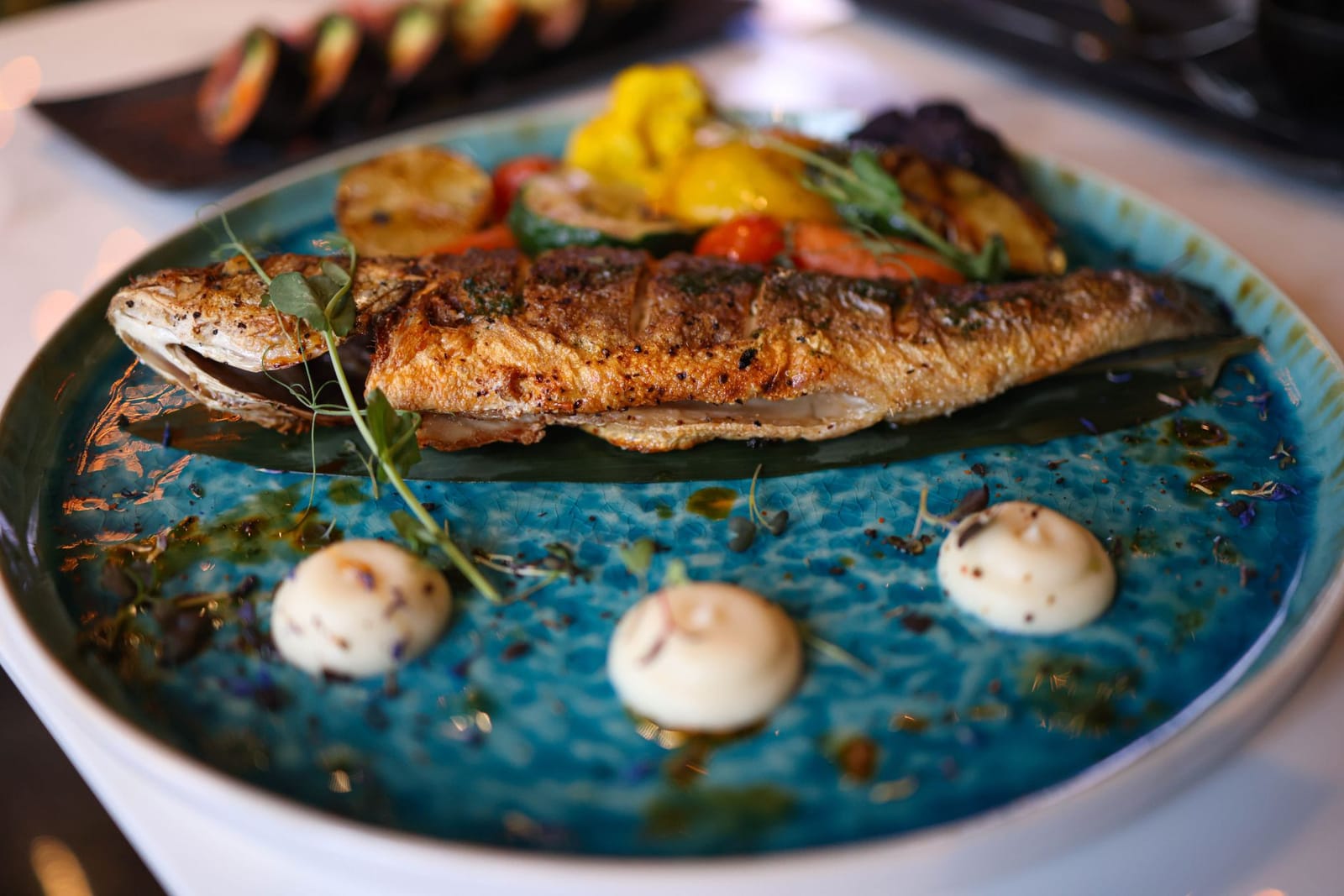
Anyone after the exact recipe for tegamaccio or brustico will find it in our guide to Castiglione del Lago. Here it is enough to know it is the same lake cooking, served sagra-style: generous portions built to feed a few hundred people in one evening, not a table-service menu.
Sagra or market: what to expect on arrival
The two are genuinely different, and it helps to know that before you turn up. A market is a morning visit: you walk the stalls and buy, with nothing to book and no fixed time to "start" at. A sagra works differently, from a covered or open-air stand that opens in the evening: you order and pay at the till, collect your plate, and find a seat at a shared table with other diners. It is not a restaurant, and arriving with that expectation helps.
The Palio delle Barche is a third thing again: a spectacle to watch standing along the route or from the dock, not a meal. The neighbourhood taverns that run through Palio week do work like sagre, though, with shared tables and a set menu.
Parking, and the one day to avoid in Passignano
Said plainly: the last Sunday of July is the worst day to visit Passignano if quiet is what you are after. The old town fills up hours before the race, the car parks near the harbour empty out fast, and the alleys the crews run through are closed off for safety. Anyone who wants to watch the Palio should plan on arriving early and walking; anyone after a calm afternoon on the lake is better off choosing another day, or another village.
For the weekly markets the problem is much smaller. A few minutes on foot from a car park on the edge of town is enough, and the crowd is that of an ordinary village mid-morning, not an event.
Building two days around the lake's fixed calendar
With two nights, the simplest combination is to set one day around a market, any one of the four, and spend the other on a calmer visit to one of the lake's villages or the countryside behind it. Staying with us over a Wednesday makes it easy to pair Castiglione's market, 5 to 10 minutes away, with the rest of the day spent between the fortress and the lakefront.
Anyone planning a stay specifically for late July has one fixed point to build around first: Palio Sunday in Passignano. Everything else, markets included, gets built around that day, not the other way round, because it is the one lake event that never moves.
For the rest of the lake's calendar, islands and ferries included, our fullest guide remains What to see on Lake Trasimeno. For the autumn olive and truffle sagre, which belong to a different season and a different guide, see What to do in Umbria in autumn. For dinner, our restaurant cooks the same lake dishes these sagre celebrate all year round, not only in festival week, and anyone wanting the exact distances from here to plan the rest of the trip will find them on our surroundings page.
Frequently asked questions
Which market is closest to Le Torri di Porsenna?
Castiglione del Lago's, on Wednesdays, 5 to 10 minutes from us. It is the oldest market on the lake, a tradition dating back to 1548. We cover it in more detail in Castiglione del Lago, a guide to the old town.
Is the Palio delle Barche held in Castiglione del Lago?
No, in Passignano sul Trasimeno. It is a common mix-up, since both villages sit on the lake, but the Palio was born in Passignano and is raced only there, always on the last Sunday of July.
When is the Palio delle Barche in 2026?
The last Sunday of July, as every year. In 2026 that falls on 26 July, for the 43rd edition. The taverns and side events start a few days earlier, in the last week of the month.
What day are the other weekly markets around the lake?
Thursday in Magione, in Piazza Matteotti, from 8am to 1pm; Friday in Tuoro sul Trasimeno; Saturday in Passignano sul Trasimeno. None of these days overlap with another.
Do you need to book to go to a lakeside sagra?
Usually not. Village sagre such as the Festa del Giacchio run from a food stand, you queue at the till, collect your plate and sit at shared tables when one is free, rather than a reserved restaurant table.
When are the Trasimeno fish sagre held?
Between July and August, though the exact dates shift every year. The Festa del Giacchio in San Feliciano always falls between late July and the first days of August, never the same day twice. Check nearer the date rather than planning months ahead from last year's calendar.
- COMUNE DI PASSIGNANO SUL TRASIMENO (PG), Comune di Passignano sul Trasimeno
- Palio delle Barche | Passignano sul Trasimeno, Palio delle Barche
- Medioevo in Umbria - Portale delle tradizioni medievali in Umbria., Medioevo in Umbria
- Il Palio delle Barche di Passignano s/T, Rione Centro Due
- Mercato a Magione, mercato di Magione, mercato settimanale Magione, giorni di mercato M..., Italia Mia
- ᐅ Orari di apertura Mercato Settimanale | Piazza Matteotti, Orari di Apertura 24
- Mercato a Tuoro Sul Trasimeno, mercato di Tuoro Sul Trasimeno, mercato settimanale Tuor..., Italia Mia
- Mercato a Castiglione Del Lago, mercato di Castiglione Del Lago, mercato settimanale Ca..., Italia Mia
- Festa del Giacchio 2026, Pro Loco San Feliciano
- Sagra del gambero e del pesce del lago Trasimeno 2026, Sagr.it
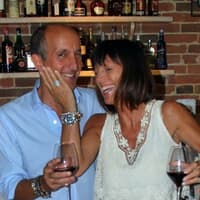
Bruno e Marisella Batinti
Owners and hosts of Le Torri di Porsenna
Bruno and Marisella Batinti own Le Torri di Porsenna, the abbey they found derelict in 2014 and brought back as a charme agriturismo on the Umbria-Tuscany border. They live here all year: the roads, villages and seasons L'Almanacco writes about are the ones they drive every week.