

From here to Città della Pieve, in Umbria, it is 20 minutes by car. From here to Chiusi, already in Tuscany, it is the same 20 minutes. On paper it looks like the same trip made twice. In the kitchen it is not: in the Umbrian villages around the lake you still find norcina, truffle and fagiolina; 20 minutes to the west, towards Chiusi or Cortona, the first course is almost always a plate of pici made without egg, and the main course comes from the Val di Chiana.
In short: the border between Umbria and Tuscany runs a few minutes from here, and crossing it changes the pasta, the cured meats, the cheese, the beef, the oil and the wine that end up on the table. This guide covers what genuinely changes crossing that line: pici and hand-rolled pasta, prosciutto di Norcia and Tuscan pecorino on the same board, Chianina beef that does not sit on one side only, norcina and truffle, what happens to lake fish once it reaches a kitchen, the bean and the saffron still tied to Trasimeno, oil that carries two different protected names a few kilometres apart, and the wine of both sides.
It is written for someone sitting down to eat here who wants to know why the menu changes register from one course to the next, not for someone after a list of village festivals. We are in Umbria, a short drive from the Tuscan border; a car is the only practical way to cross between the two.
Pici, the pasta that stops at a bend in the road from here
Pici are Sienese, born out of the peasant tradition of the Val di Chiana: soft wheat flour, water, a pinch of salt, and no egg, which was once kept for wealthier tables. They are hand-rolled into long, irregular, porous strands that hold a sauce the way no machine-extruded pasta can.
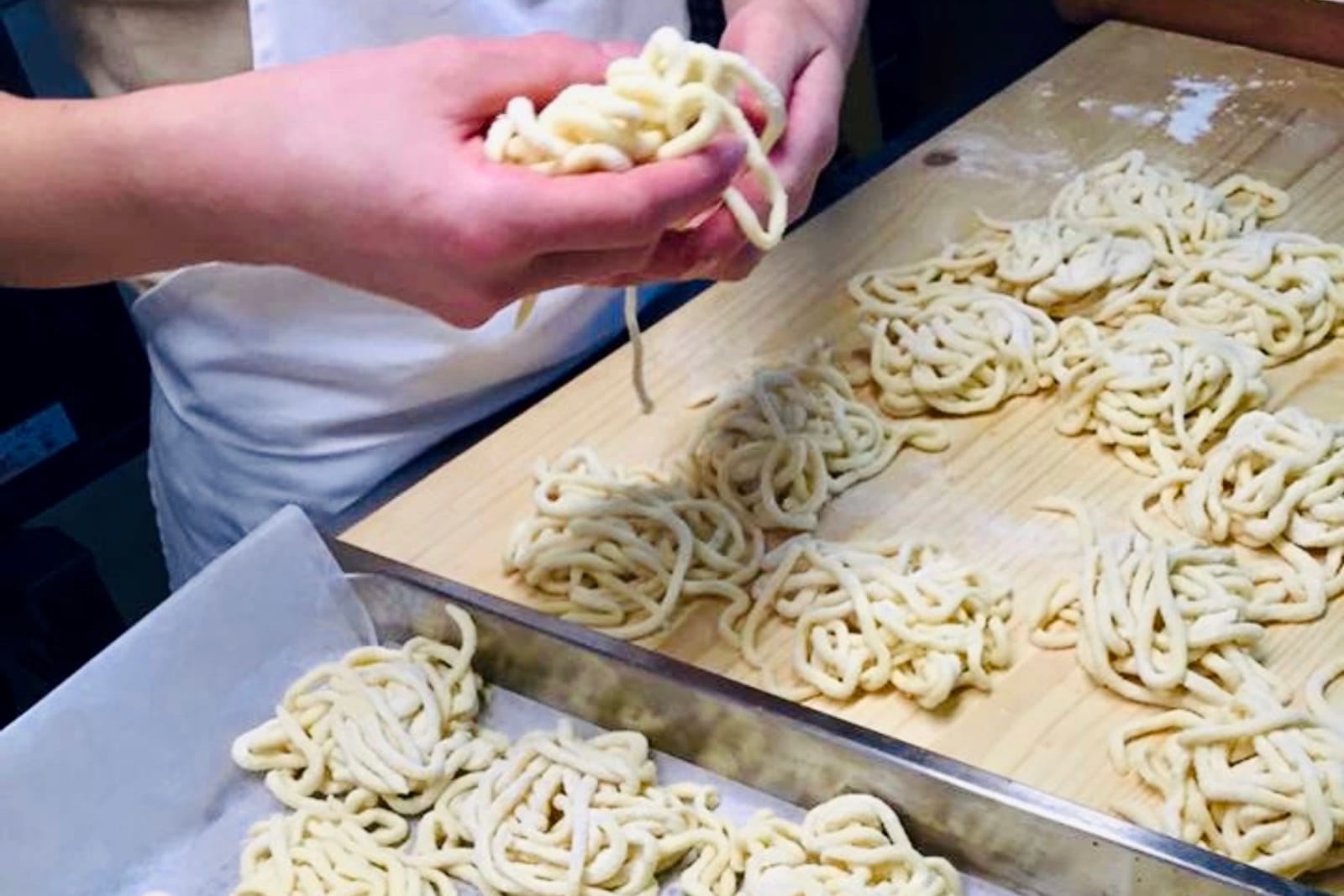
Our own menu carries nine versions: with aglione (a giant, mild Tuscan garlic), with tomato, with Tuscan ragù, with breadcrumbs (alle briciole), carbonara, carbonara with truffle, cacio e pepe, ubriaco on a white ragù, and alla gricia. The last two, to be honest, are neither Umbrian nor Tuscan: carbonara and gricia both trace to Rome, and the fact that they end up on a plate of pici says something about how loosely this kitchen actually respects the border it is describing.
Aglione della Val di Chiana, the giant garlic almost free of allicin's sharpness that gives pici all'aglione its name, is catalogued in Slow Food's Ark of Taste. Its historic growing area sits in a few fractions of the comune of Montepulciano, 30 minutes from here.
Umbrian cured meat and Tuscan cheese on the same board
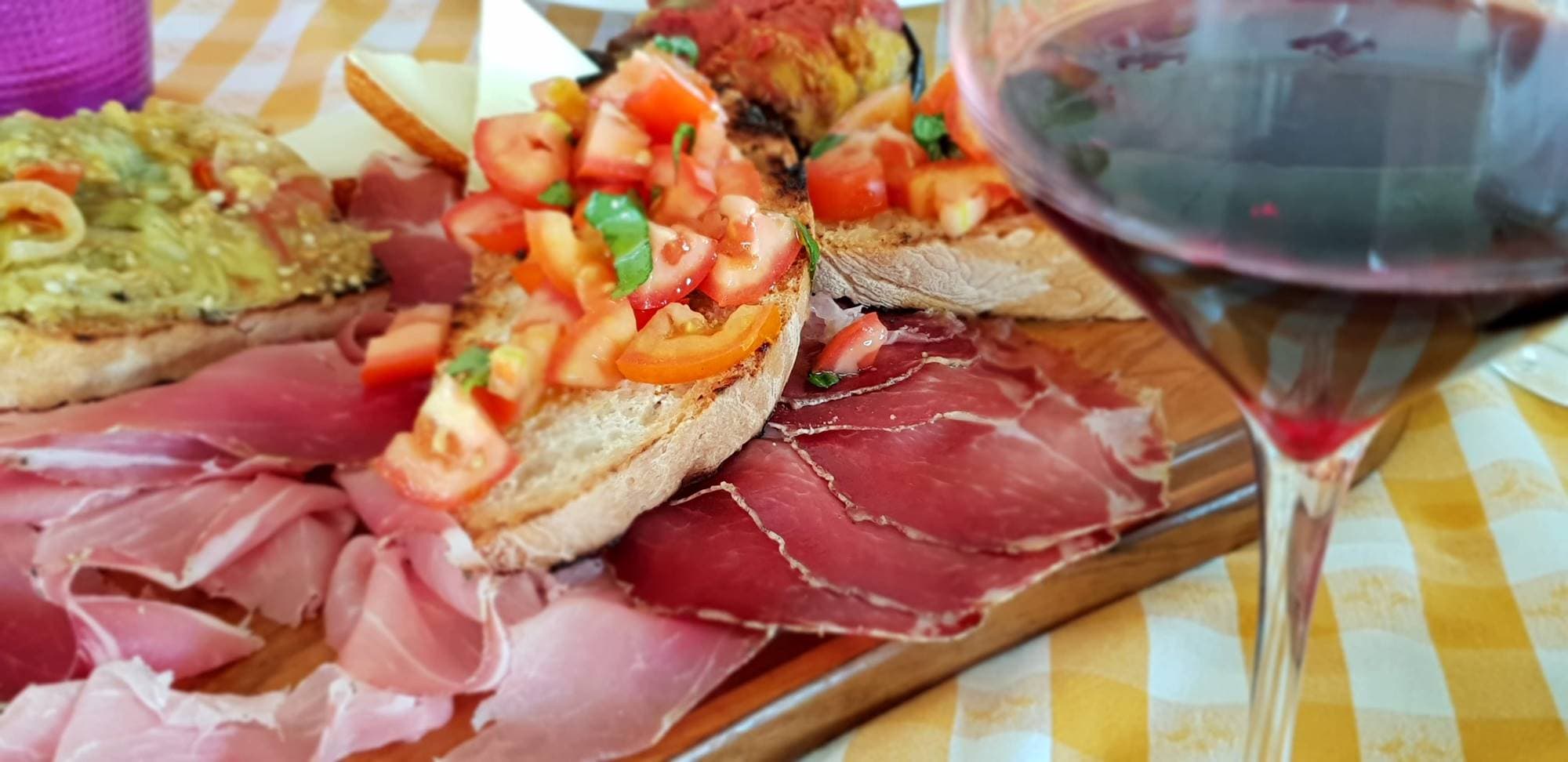
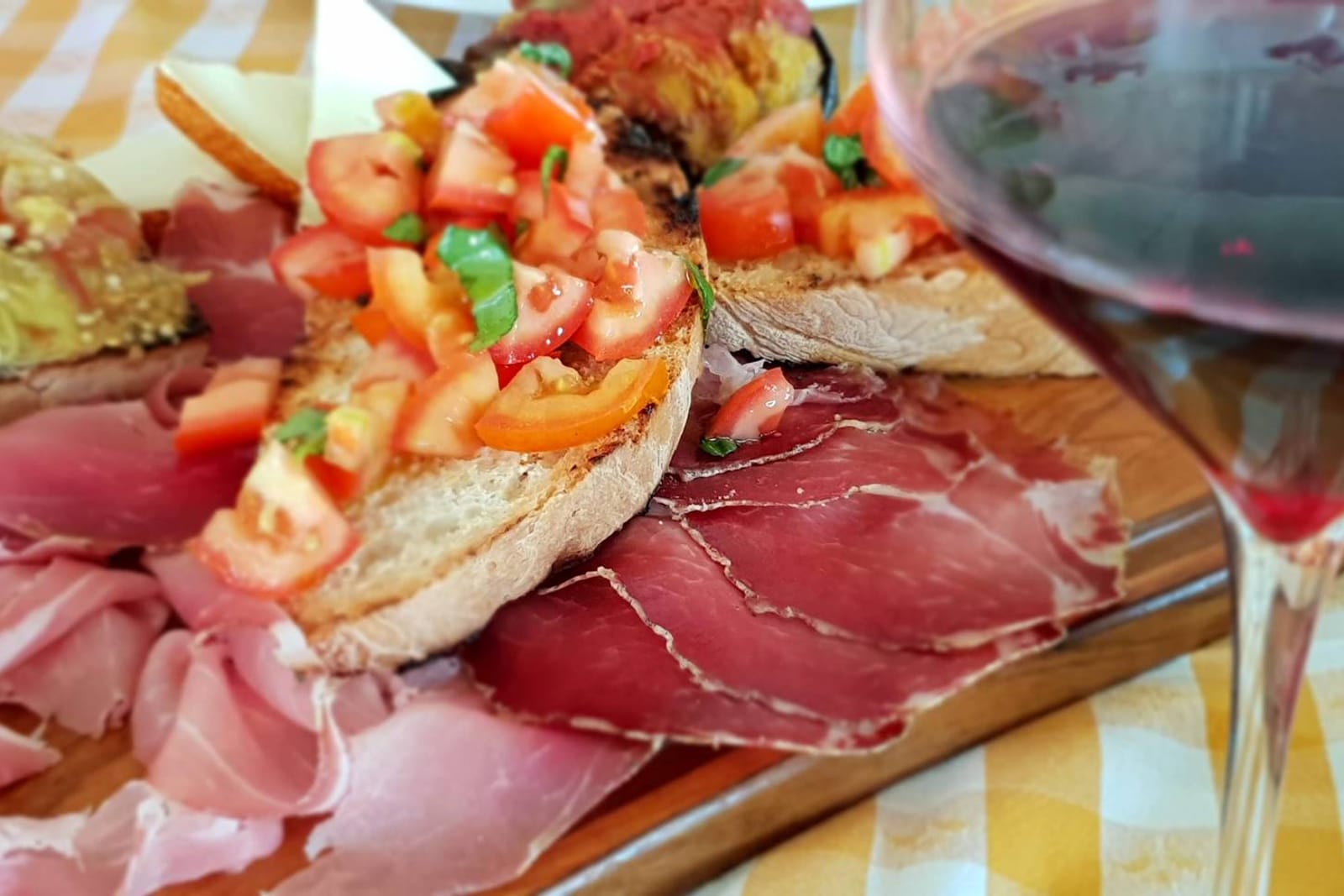
Our Tagliere delle Torri, the house charcuterie board, combines crostini, bruschette, prosciutto di Norcia, Tuscan cured meats and pecorino from Pienza: the border on a single wooden board. Prosciutto di Norcia carries PGI status, and its rules reserve production to a defined area, the comuni of Norcia, Preci, Cascia, Monteleone di Spoleto and Poggiodomo, above 500 metres, with at least twelve months of ageing.
On the Tuscan side, the name everyone reaches for is Pienza, but a common assumption needs correcting: pecorino di Pienza does not carry its own protected designation. The protection that exists is the broader Pecorino Toscano PDO, covering a much wider area across Tuscany, Umbria and Lazio, within which Pienza, however celebrated, is just one comune among many. Our own cheese board lists it correctly as "pecorini D.O.P.", without tying it to a single town.
Chianina beef, which does not recognise the border
"Chianino" comes from the Val di Chiana, the valley straddling the provinces of Arezzo and Siena that gives its name to the Chianina breed, now raised in Umbria and Lazio too. Beef that reaches the table as Fiorentina or tagliata, when the age and provenance are right, falls under the Vitellone Bianco dell'Appennino Centrale PGI, reserved for Chianina, Marchigiana or Romagnola cattle between 12 and 24 months old.
Our own Chianina beef appears in several forms: the Fiorentina (the classic bone-in T-bone steak), tagliata cut several ways, straccetti with rocket and cherry tomatoes, and fillet with truffle or with vino nobile, the latter a reduction named after Nobile di Montepulciano, which we come back to below.
Norcina, truffle, and how far things really travel
Alla norcina is the Umbrian way of dressing a first course with crumbled sausage, often guanciale and truffle: the name comes from norcineria, the pork-butchery craft that made Norcia synonymous with cured meat across Italy. On our menu it turns up on taglierini, alongside a version with artichoke hearts and guanciale from Cinta Senese, the Tuscan pig breed named after the area south of Siena.
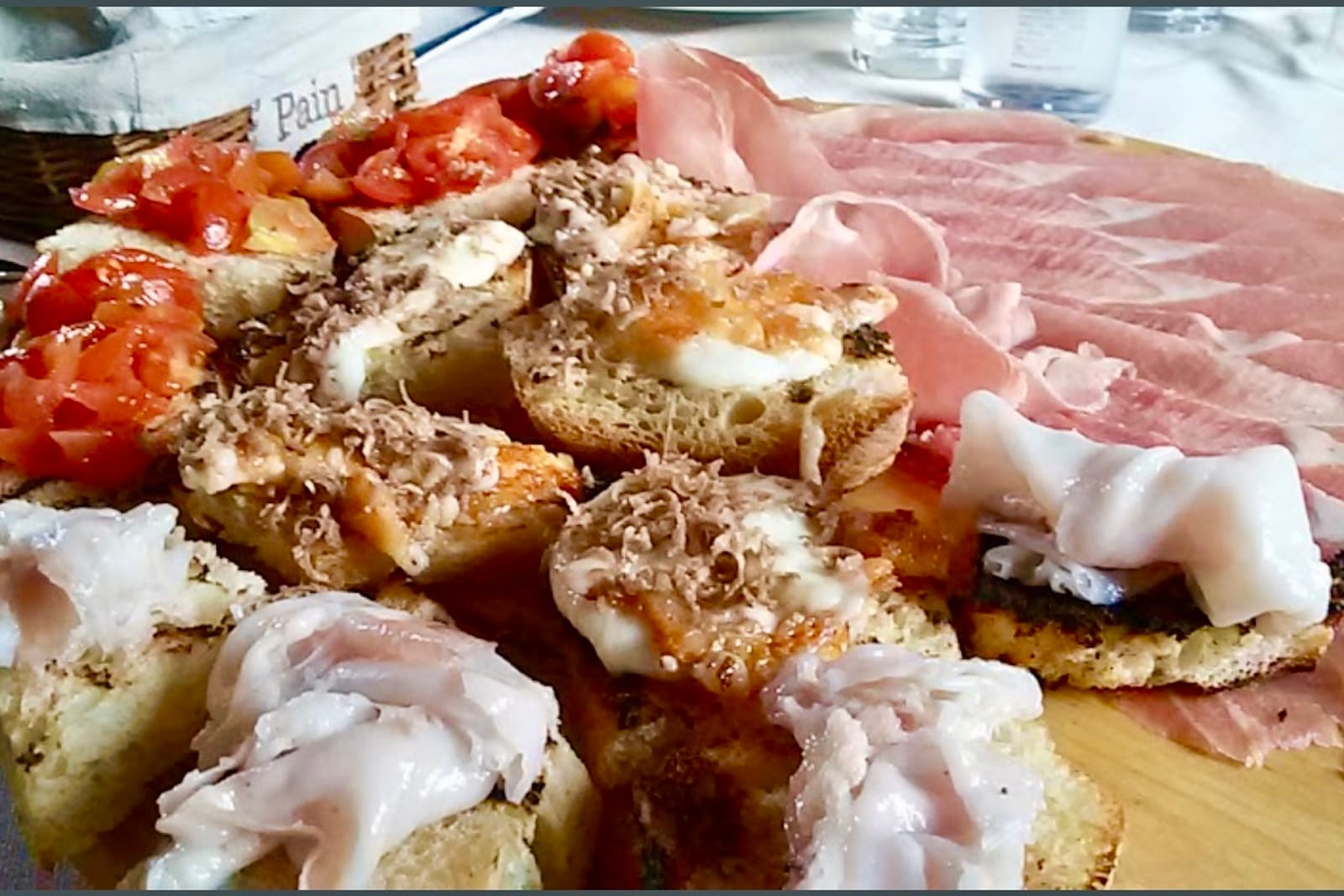
Here too, as with pici, the border blurs rather than holds: fresh truffle shaved over gnocchetti and taglierini carries no single stated origin on our menu, and the truffle carbonara among the pici mixes a Roman recipe once more with an ingredient that belongs to both sides of this particular line.
The lake fish that does not reach our table
Trasimeno has a genuine fish cuisine, still served in the villages along its shore: tegamaccio, a lake-fish stew of eel, tench, pike and perch, cooked slowly in the clay pot that gives it its name; and carpa regina in porchetta, carp roasted with lard, garlic, wild fennel and pepper, built like an Umbrian porchetta with fish standing in for meat.
Honestly, neither dish is on our menu. Our own main courses stay entirely on land, beef, pork and chicken, and anyone wanting lake fish will find it in the restaurants of the villages on the shore, 5 to 10 minutes from here, not with us. We cover this in more detail, islands included, in What to See at Lake Trasimeno.
Fagiolina and saffron, the two products still tied to the lake
Fagiolina del Trasimeno is a tiny bean, no bigger than a grain of rice, grown for generations on the land around the lake and nearly lost after the rural depopulation of the 1950s. It has been a Slow Food Presidium since 2000, and the few remaining growers still sow and harvest it by hand. On our menu it appears as a side dish, dressed simply with extra virgin oil, the plainest version and the one that lets the bean speak.
Saffron has an older story: it was already grown at Città della Pieve in 1279, according to the town's own statute, and today the production area recognised by the consortium "Il Croco di Pietro Perugino", founded in 2002, includes Città della Pieve and several neighbouring comuni, among them Castiglione del Lago, 5 to 10 minutes from here. We use it in risotto allo zafferano del Trasimeno, one dish we have not found elsewhere.
Oil, the same olive under two different designations
Around the property we have roughly 450 olive trees, and the oil we press falls under the Umbria PDO with the Colli del Trasimeno geographic mention, which requires at least 65% Frantoio and Leccino combined, and at least 15% Moraiolo and Dolce Agogia. Cross the border and Tuscan oil answers to different protected designations, with different cultivar percentages: the tree is often the same species, but the rules protecting it change from one region to the next.
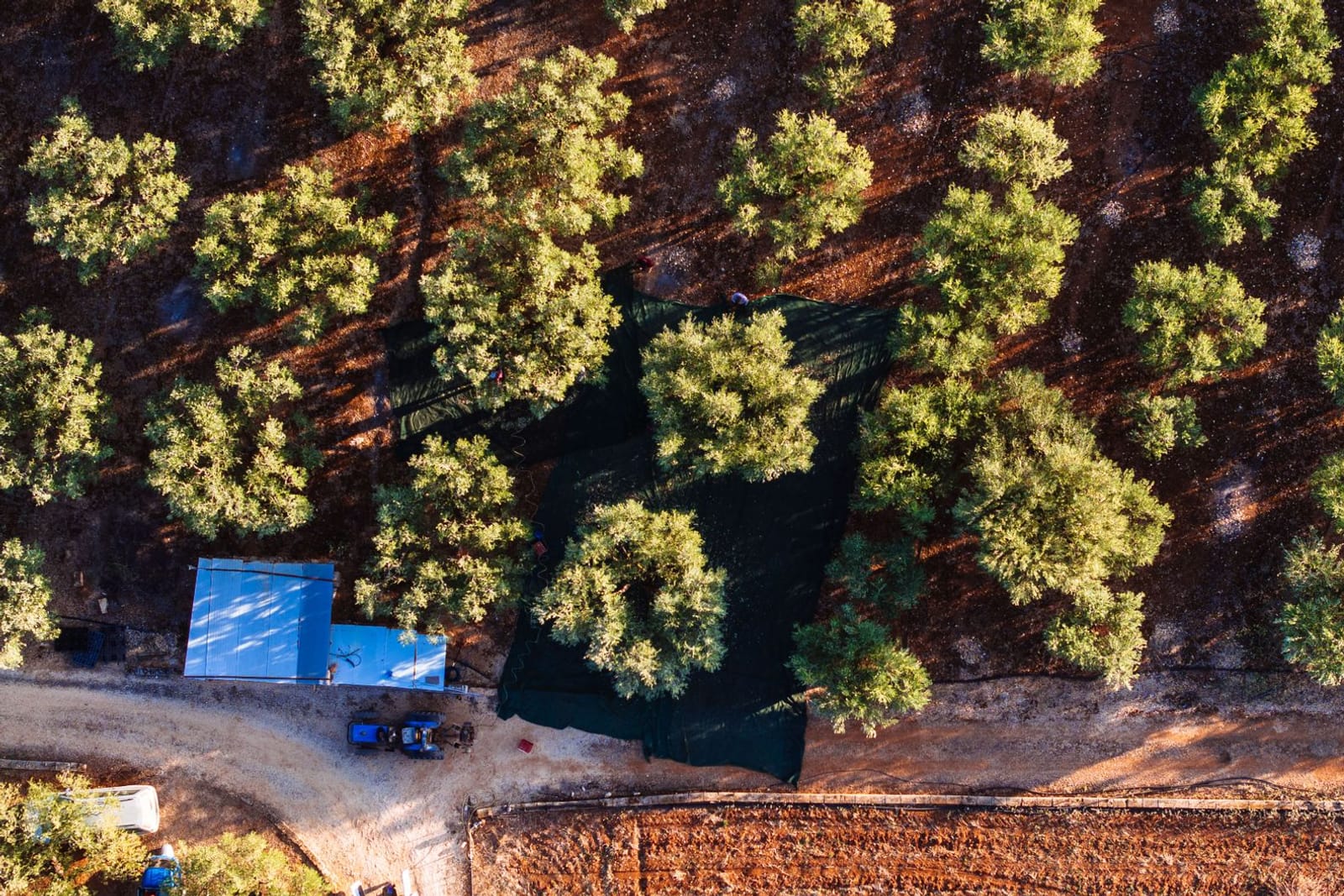
We have written in more detail about the harvest and the best time to see it in What to Do in Umbria in Autumn.
Wine, two cellars half an hour apart
Our own wine list is split by region rather than by pairing, and reading it in order is the quickest way to see the border in a bottle. On the Umbrian side: Sagrantino di Montefalco DOCG, a native grape aged at least 33 months, 12 of them in wood; Rosso di Montefalco; Grechetto; Rubesco Vigna Monticchio from Lungarotti. On the Tuscan side: Chianti Classico, including the Riserva; Rosso di Montepulciano; Nobile di Montepulciano DOCG, from both Poliziano and La Braccesca.
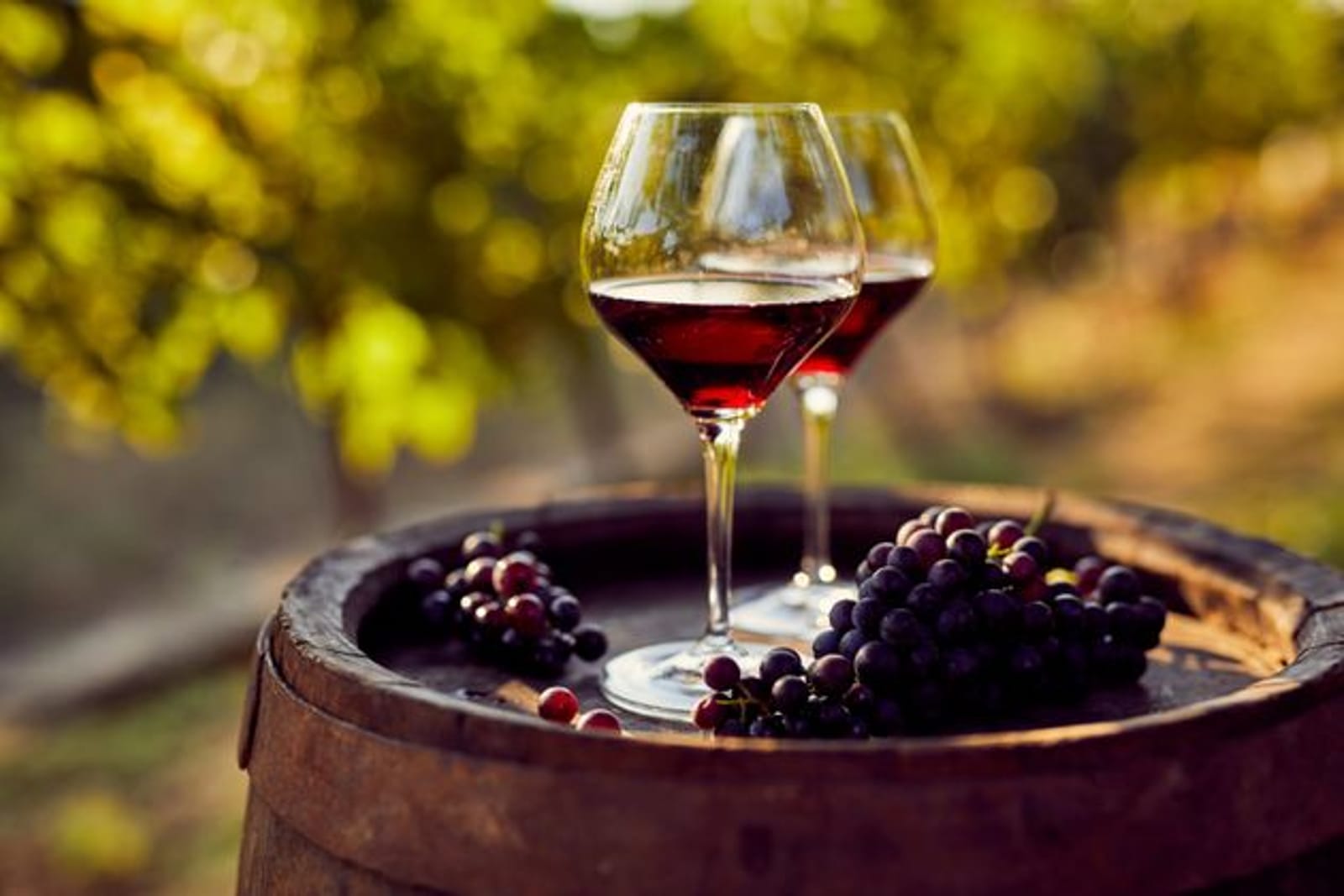
Montepulciano, where much of that second half of the list comes from, is 30 minutes from here: you can drink a Nobile at dinner and see its vineyards the next day without moving your bags.
How to taste the border in one sitting here
An order that follows the logic of this article starts with the Tagliere delle Torri, moves to a plate of pici or taglierini alla norcina, reaches Chianina beef in one of its forms, stops at the pecorino board, and closes with a glass of Sagrantino or Nobile, depending which side you fancy that evening. The full menu and the wine list hold everything else, including the dishes that did not fit this particular story.
Anyone who wants to see where these ingredients actually come from, not just taste them, will find Città della Pieve and Chiusi 20 minutes away, on opposite sides of the same line, and Montepulciano 30 minutes away, where the Nobile on our list has its own vineyards. For the wider region beyond the table, our guide to things to do in Umbria covers the towns, the lake and the seasons in more detail.
Frequently asked questions
What is the difference between Umbrian and Tuscan cooking in this border area?
Mostly the first courses and cured meats change: on the Umbrian side you find norcina, truffle and fagiolina del Trasimeno; on the Tuscan side, a few minutes away, hand-rolled pici, pecorino and Chianina beef take over. The administrative border runs right through this area, so the change happens over very short distances.
What are pici and where do they come from?
A long, hand-rolled pasta, traditionally from Siena and the Val di Chiana, made only with soft wheat flour, water and salt, with no egg. The rolling technique is called appiciare.
Does Pecorino di Pienza carry PDO status?
No. It is a well-known and well-regarded cheese, but the protected designation that exists is the broader Pecorino Toscano PDO, covering an area across Tuscany, Umbria and Lazio, not a specific recognition for Pienza.
Does the restaurant at Le Torri di Porsenna serve lake fish?
No, our main courses are all land-based. Lake fish, such as tegamaccio or carpa regina in porchetta, remains a tradition of the villages on the shore of Lake Trasimeno, 5 to 10 minutes from here.
What is Fagiolina del Trasimeno?
A tiny bean, grown for generations around the lake, nearly lost by the mid-twentieth century and a Slow Food Presidium since 2000. We serve it as a side dish, simply dressed with extra virgin olive oil.
Is an Umbrian or a Tuscan wine better for dinner here?
It depends more on the dish than on the side of the border: a Sagrantino di Montefalco stands up well to grilled meat, and a Nobile di Montepulciano pairs just as well with Chianina beef. Our wine list keeps the two regions separate precisely to make the comparison easier.
- Fagiolina del Trasimeno - Presìdi Slow Food, Fondazione Slow Food
- Pici, Wikipedia
- Aglione della Chiana - Arca del Gusto, Fondazione Slow Food
- Prosciutto di Norcia IGP - Quattrocalici - Tutte le IGP della regione Umbria, Quattrocalici
- Montefalco Sagrantino, Wikipedia
- Vitellone Bianco dell'Appennino Centrale, Wikipedia
- Il cacio pecorino di Pienza, Pienza.org
- Consorzio - Consorzio il Croco di Pietro Perugino, Zafferano di Citta della Pieve
- Il Tegamaccio del Trasimeno della Locanda dei Pescatori, Umbria Tourism
- Umbria DOP - Quattrocalici - Tutte le DOP della regione Umbria, Quattrocalici
Bruno e Marisella Batinti
Owners and hosts of Le Torri di Porsenna
Bruno and Marisella Batinti own Le Torri di Porsenna, the abbey they found derelict in 2014 and brought back as a charme agriturismo on the Umbria-Tuscany border. They live here all year: the roads, villages and seasons L'Almanacco writes about are the ones they drive every week.