
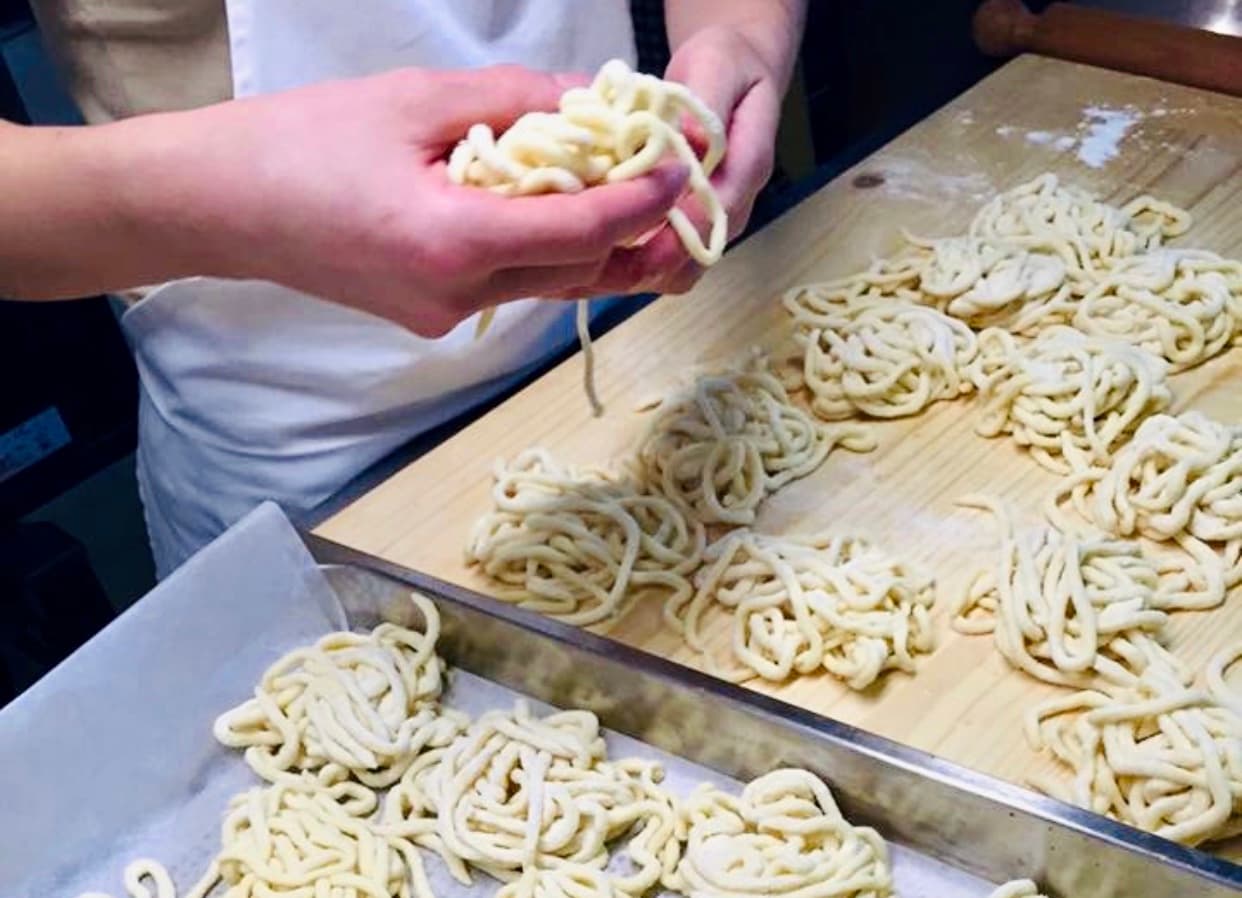

Our own olive harvest covers roughly 450 trees on the grounds, and by late October the work is still going rather than wrapped up in a single weekend. That is what autumn looks like from Le Torri di Porsenna, in Umbria a few minutes from the Tuscan border: mills nearby begin pressing, the lake road slows behind trailers loaded with crates of olives, and Cortona, 22 minutes away, and Montepulciano, 30 minutes away, empty out too once the summer coach parties leave.
In autumn the lake empties out, the light comes in lower and warmer, the olive harvest keeps the property busy for weeks, and the heated indoor pool stops being a fallback from the sun and becomes the actual reason to come. This guide covers what there is to genuinely do in Umbria between October and November: the olive harvest and Frantoi Aperti, white truffle and freshly pressed oil, the art towns with fewer coach parties at midday, what happens to the lake once the summer crowds leave, and what honestly does not work in these two months.
It is written for anyone weighing up a stay in October or November who wants to know what they will actually find here, not a list of events copied from a tourist calendar.
The olive harvest, and Frantoi Aperti
Le Torri di Porsenna is an agriturismo, a working countryside estate combining rooms, a spa and a restaurant, in Umbria on the Tuscan border, in the hills above Lake Trasimeno, roughly midway between Florence and Rome. Our own harvest covers around 450 olive trees on the grounds. In Umbria it generally starts in October, and the useful window, according to mills that work this land all year, runs through to the end of December: the exact date depends on the variety of tree and that year's weather, not on a fixed calendar. With 450 trees, the work here spreads across several weeks rather than a single weekend, so anyone staying during this period may well arrive mid-harvest without it being a coincidence.
The simplest way to see the harvest up close, if you are not staying somewhere that runs its own, is Frantoi Aperti in Umbria: in 2026 it is in its 29th edition, from 17 October to 15 November, five weekends in which mills across the region open to the public to show the pressing of the new oil. You do not need to book months ahead, but the central weekends are also the busiest at the better-known mills.
One practical note before you set off: during the harvest weeks, the country roads around the lake slow down behind trailers loaded with crates of olives. It is not a problem, but anyone with a ferry to catch or a booking at a set time would do well to leave a few extra minutes earlier than usual.
White truffle and new oil: what changes on the menu
Autumn is also the season when Umbrian cooking genuinely changes character. The harvest of the white truffle, the most sought after and the most expensive of the Umbrian truffles, is permitted by regulation from the last Sunday of September to 31 December: that is the window in which restaurants in the area, ours included, actually put it on the menu, not year-round as some menus suggest.
Alongside the truffle comes the new oil, freshly pressed and still sharp on the throat for the first few weeks: it is one of the reasons our own kitchen, which cooks Umbrian and Tuscan dishes side by side, changes its repertoire more in this period than at any other. In the villages around the lake, autumn sagre cluster mostly through October and November, built around chestnuts, mushrooms and other seasonal produce. We are not listing them here with exact dates, because they shift from year to year, but knowing they exist is useful when planning an evening out beyond the property.
The art towns, with fewer coaches at midday
Perugia is 44 minutes from here, Assisi an hour, Cortona 22 minutes, Montepulciano 30: these are the day trips we recommend most often, and in autumn they behave differently. The coach parties that fill the historic centres between late morning and early afternoon in high season thin out, and the same streets that turn into a queue in August become streets again.
Perugia is the exception during Eurochocolate, the chocolate festival that moves from October to November in 2026 and runs from the 13th to the 22nd: on those days the centre fills up as much as, or more than, in peak summer, so anyone after a quiet Perugia would do well to avoid those dates on purpose, not stumble into them.
Beyond that, October and November remain the period in which a morning in Assisi or an afternoon in Cortona goes by without a queue for a parking space. We have written about this in more detail in our guide to things to do in Umbria and in Montepulciano and Vino Nobile.
The lake out of season: quieter, not always at its best
Lake Trasimeno is 5 to 10 minutes from us, and it is the part of Umbria that changes most between August and November. Staffed beaches close their lifeguard service, the pedal boats disappear, and the shoreline that is covered in towels in July empties out almost entirely on weekdays.
It is only fair to say the lake in autumn is not always the postcard scene certain photographs promise: under an overcast sky, which by November is the norm rather than the exception, the water turns grey and flat for days at a time, and this is not the season for anyone chasing a perfect sunset every evening. Swimming, in any case, is off the table: the water cools quickly precisely because the lake is shallow, the same reason it warms up so fast in spring.
From November to March the ferries to the islands also cut back to a skeleton timetable, with schedules that change season by season: anyone aiming for one of the islands in this period needs to check the timetable the day before rather than assume it. We cover this in more detail, islands included, in what to see at Lake Trasimeno.
The heated indoor pool makes more sense in November than in August
Our spa has a heated indoor panoramic pool, a Finnish sauna and a hammam, alongside an outdoor pool in the grounds. In high summer the choice splits between the two pools and the lake shore a few minutes away; by November the outdoor pool simply stops being relevant, and the heated indoor one, together with the sauna and hammam, becomes the part of the day everything else is built around, rather than an extra.
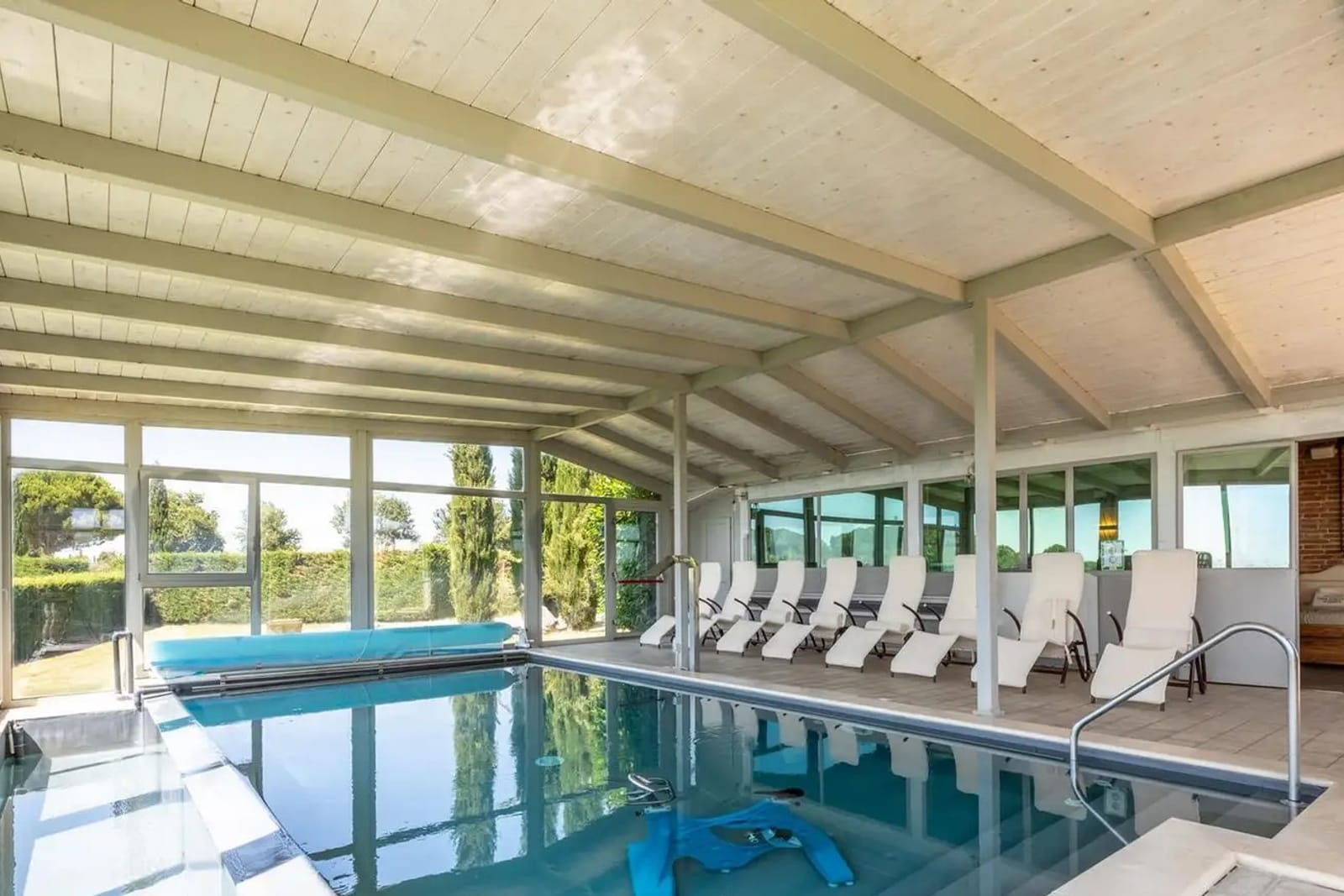
It is also the period when the spa feels less busy: in August it is common to find other guests in the indoor pool at peak times, while in the colder months that happens less often. It is not a promise of guaranteed space, occupancy still depends on how full the rooms are on a given weekend, but the balance shifts.
The real weather: temperatures, rain and shorter days
Better to be precise than vague here. In Perugia, October's average temperature sits around 14°C, with highs reaching 19°C on sunny days; by November the average drops to around 9°C, ranging between a low of 5°C and a high of 13°C. November is also the wettest month of the year here, with roughly 86mm of rain spread across around ten days, and the cloudiest as well.
In practice: October remains a month where the early afternoon is comfortable outdoors, with a light jacket needed for morning and evening. November asks for more effort, with days shortening quickly and a real chance of rain during your stay, not just cloud. Anyone coming during this period should pack a proper coat, not just a jacket, and avoid planning a whole day outdoors without a backup plan.
What honestly does not work in autumn
Not everything that makes autumn special here is convenient. Shorter days leave less time for two stops in one day than June does, so an itinerary built for high season, one town in the morning and another in the afternoon, simply does not fit in November. Some restaurants and small businesses in the surrounding villages cut their hours or close for a few weeks between the end of autumn and the December holidays: this is not a fixed rule, it changes from year to year and from one business to the next, so it is always worth calling ahead for a specific stop rather than trusting an opening time found online months earlier.
And if the whole point of the trip is swimming in the lake or the crowded beaches of July, autumn is simply not the right season: that is the real trade-off, not one we want to hide to sell a stay.
Two or three days in October or November: how to plan them
With two nights, the combination that works best is a day on the lake, with Castiglione del Lago 5 to 10 minutes away and perhaps one of the villages along the shore, plus a day towards Cortona or Montepulciano, which together add up to just 22 and 30 minutes from here and can even be combined into one trip if you set off early.
With three nights you can add Perugia or Assisi, both further away at 44 minutes and an hour, and therefore best treated as a full day of their own rather than an extra stop squeezed into the rest of the itinerary. The rule of thumb we use in every season still holds: one stop per day that takes more than an hour to drive to, not two, and even more so in autumn, when the afternoon light runs out earlier.
When to book, and what to pack
Check-in is from 15:00, check-out by 11:00, the same as the rest of the year. Anyone arriving from a flight or a train in the early afternoon still has time to settle in and a couple of hours of daylight left for a walk around the grounds or a trip down to the lake, before dark falls noticeably earlier than in summer.
Beyond a coat and something waterproof, it is worth packing layers: mornings can be cool near the water while afternoons stay mild in the sun, especially in October. You will need a car, as in every other season here: public transport exists but is built for residents, not for anyone planning two days between the lake and the hills. Anyone comparing rooms before booking can see the property's five categories on the rooms page, and anyone after the spa in detail will find it all on the spa page. For a dinner built around truffle and new oil, our restaurant cooks Umbrian and Tuscan dishes side by side, in exactly the weeks these two ingredients change the most.
If late autumn does not suit your dates, the same quiet stretches happen either side of it: see what changes in Umbria in winter or in spring in Umbria.
Frequently asked questions
Is October or November the better time to visit Umbria in autumn?
October if you still want a few mild afternoons and longer daylight. November if the main draw is the olive harvest, white truffle and the heated indoor pool. By mid-November, shorter days and more frequent rain cut into the time you have outdoors.
Is Umbria cold in autumn?
Not in October, when Perugia's average temperature sits around 14°C, with sunny days reaching 19°C. By November the average drops to around 9°C, and it is also the wettest month of the year, so you need a proper coat, not just a light jacket.
Can you still swim in Lake Trasimeno in autumn?
No. The lake is shallow and the water cools quickly once the weather turns, the same reason it warms up so fast in spring. Staffed beaches close their lifeguard service once summer ends.
What is Frantoi Aperti and when does it run in 2026?
It is the region-wide event dedicated to the olive harvest and the pressing of new oil, with Umbrian mills opening to the public. In 2026 it is in its 29th edition, running from 17 October to 15 November across five weekends.
What is the white truffle season in Umbria?
By regulation, harvesting is permitted from the last Sunday of September to 31 December, though the best months for eating it are October and November.
Does the pool and spa stay open in autumn?
The heated indoor panoramic pool is built for the colder months, along with the Finnish sauna and the hammam. The outdoor pool in the grounds is a summer feature and closes for the season.
- Frantoi Aperti in Umbria 2026, Frantoi Aperti
- Raccolta delle olive: come e quando farla - Il Chiodo Fisso - BLOG, Fraschetti
- Raccolta olive 2026 in Umbria, Marilena La Casella
- Calendario raccolta tartufi in Umbria: regole e divieti., Antonio Fortunati
- Eurochocolate Perugia 2026 | Fate Dolci | 13 - 22 Novembre 2026, Eurochocolate
- Condizioni meteorologiche medie a Perugia, Weather Spark
- Servizio di navigazione sul Lago Trasimeno, Busitalia

Bruno e Marisella Batinti
Owners and hosts of Le Torri di Porsenna
Bruno and Marisella Batinti own Le Torri di Porsenna, the abbey they found derelict in 2014 and brought back as a charme agriturismo on the Umbria-Tuscany border. They live here all year: the roads, villages and seasons L'Almanacco writes about are the ones they drive every week.