
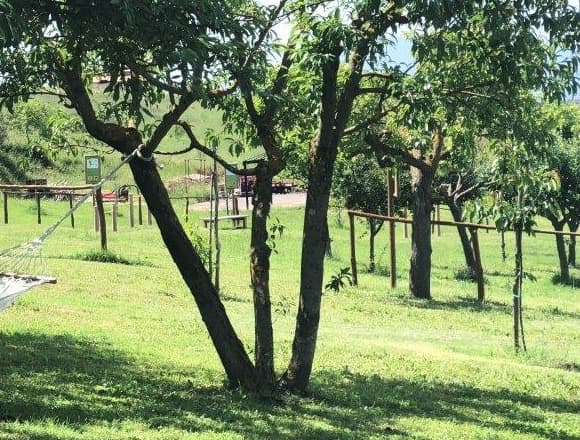

Città della Pieve sits on a hill 509 metres high, built for the most part in exposed brick rather than the stone of most Umbrian hill towns: a detail that stands out from a distance. The main road between Chiusi and Perugia runs through the valley below the walls, and the old centre is a detour of a few minutes that most people driving between Tuscany and central Umbria put off for another day.
In short: Città della Pieve was the birthplace of Pietro Vannucci, known as Perugino, master to Raphael, and it still holds four of his original works across three sites, all within walking distance in the historic centre. This guide covers where to find them, what to check before you go, the alley that claims to be the narrowest in Italy, the local saffron tradition, and how much time the visit really needs.
It is written for anyone staying nearby with a morning or afternoon free for a hill town quieter than Cortona or Montepulciano. Umbria borders Tuscany here, roughly halfway between Florence and Rome, and Città della Pieve is 20 minutes from us by car.
A hilltop of brick on the border
The historic centre sits on a hill 509 metres above sea level, about 4 kilometres from the Tuscan border, looking out over the Valdichiana. The municipality now counts 7,356 residents (as of May 2026). One thing stands out immediately if you have already seen the stone hill towns elsewhere in Umbria: here the houses are built roughly 70 percent in exposed brick, a material more typical of the plain than the hillside.
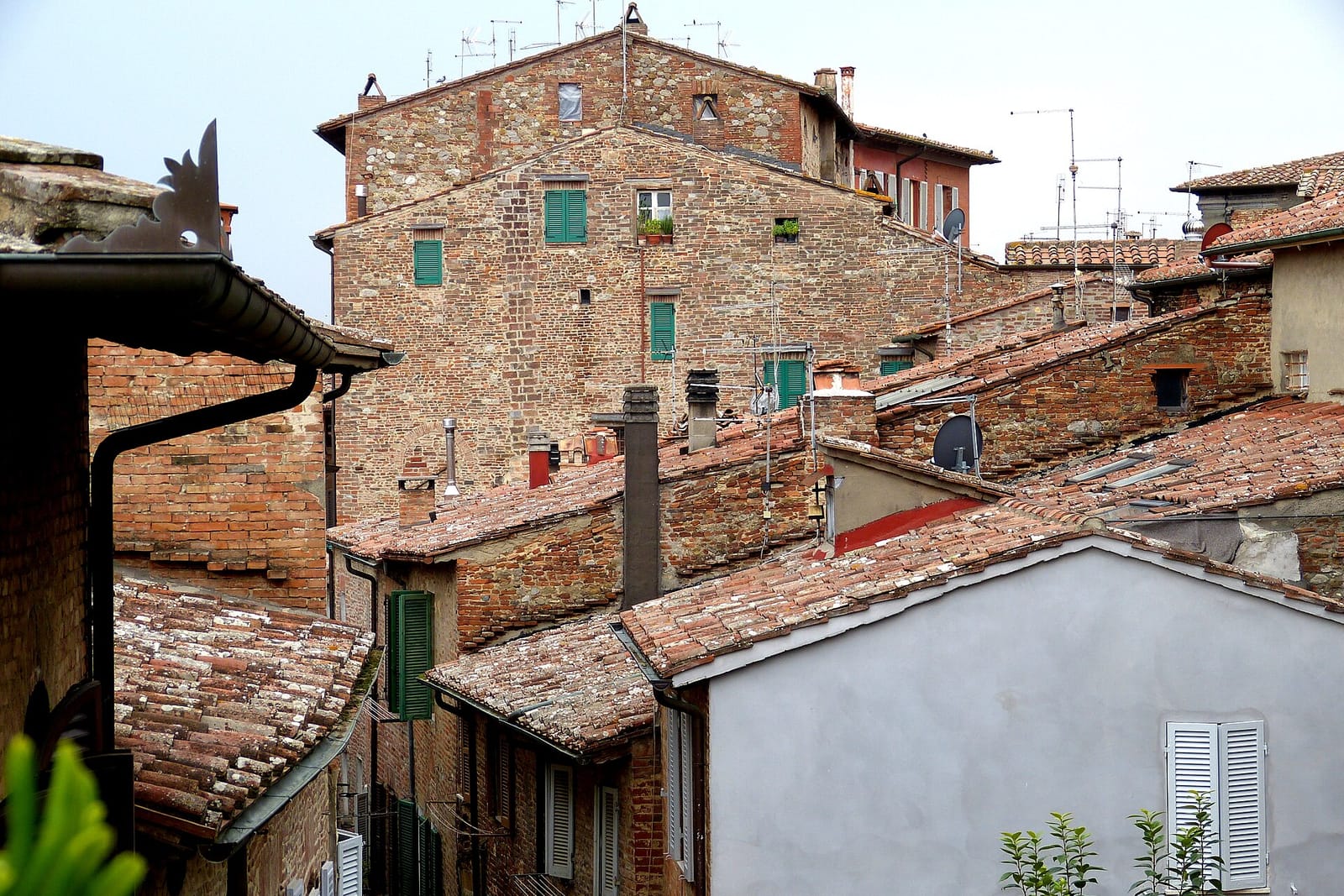
The medieval street plan of the centre is shaped like an eagle facing Rome, and the eagle's three parts correspond to the town's three historic terzieri, or thirds: Castello (the head, the noble class), Borgo Dentro (the stomach, the merchant class) and Casalino (the rural class). The terzieri are documented as early as 1250, in the act by which the town, until then a free commune under Frederick II, submitted to Perugia. The current name, Città della Pieve, and its city status arrived together in 1600.
Pietro Vannucci, known as Perugino
Pietro Vannucci was born here, almost certainly around 1450: the exact year is unknown, and sources place it anywhere between 1445 and 1452. The nickname "il Perugino" came from his years training and working in Perugia, but this small Umbrian town is where he was born.
He became one of the most sought-after painters of the early Italian Renaissance, running a workshop in Perugia where, among others, the young Raphael trained, before his pupil's fame went on to eclipse his own. Perugino died in February 1523 of the plague, at Fontignano, a hamlet of the municipality of Perugia not far from here: he was around 75.
The Adoration of the Magi, and the haggling over the fee
In the Oratorio di Santa Maria dei Bianchi, home since the 1200s to the confraternity of the Disciplinati known as the Bianchi, Perugino frescoed the Adoration of the Magi in 1504: an entire wall, with around thirty life-sized figures set against a landscape that opens out towards Lake Trasimeno and the Valdichiana.
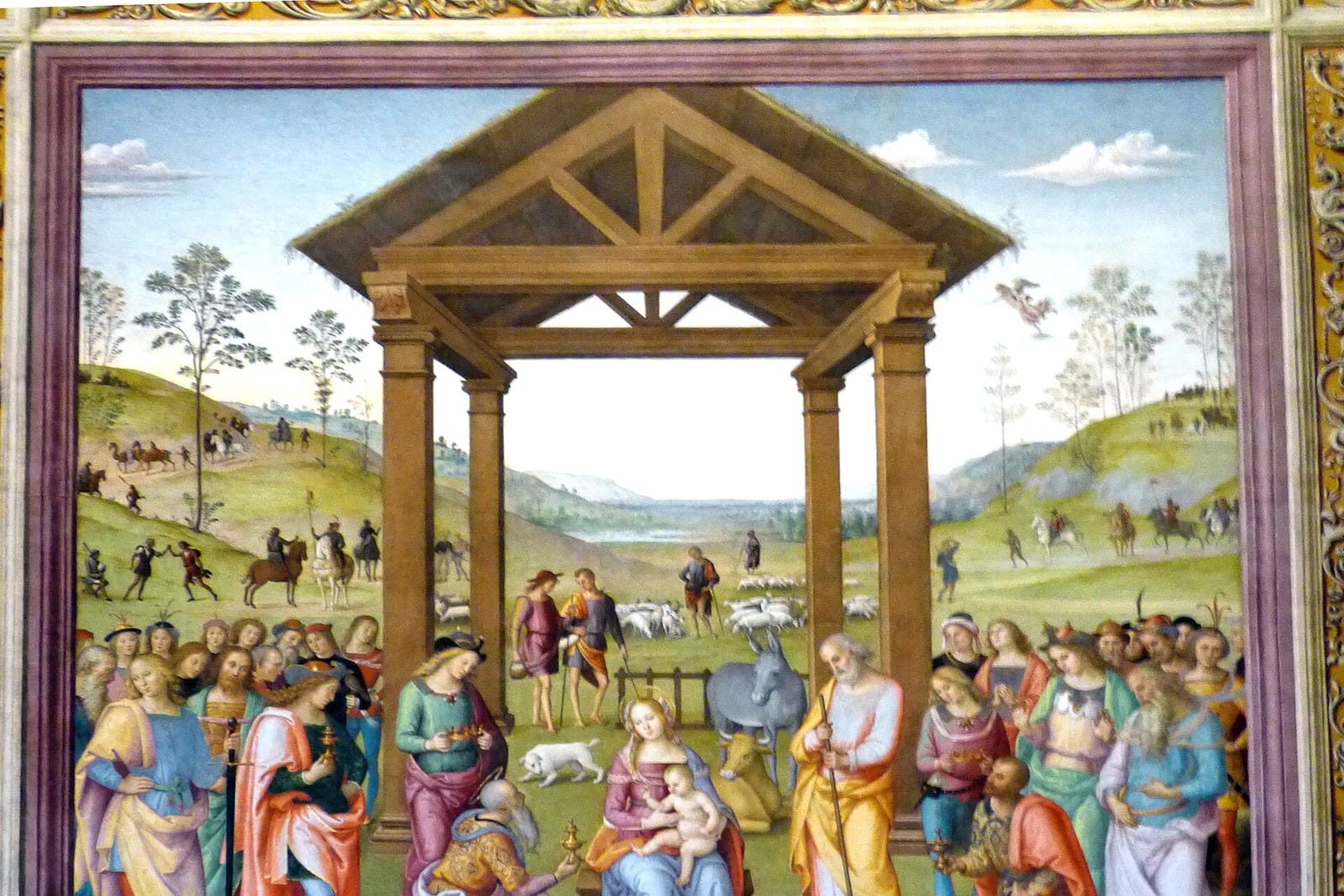
The negotiation over his fee is documented, and it is worth telling because it says something about the man. Perugino first asked for 200 florins, said he would accept 100 "as a fellow townsman", and finally settled for 75 after the head of the confraternity pushed back. He also asked for a mule and an escort to be sent to collect him in Perugia, in a manner fitting a great master. The letters recording the negotiation were found in 1835 during drainage works and are now reproduced on marble plaques inside the oratory, which was itself renovated in 1818.
The Duomo's two paintings, chapel by chapel
In the co-cathedral of Saints Gervasio and Protasio, the town's Duomo, Perugino left two altarpieces. The Baptism of Christ, painted around 1510 for the chapel of St John the Baptist, the first on the left: damp and temperature swings have damaged the wood panel over the centuries, so much so that it has been restored three times, in 1921, in 1962 and again in 2010.
The second altarpiece, the Madonna in Glory with Saints Gervasio and Protasio and Saints Peter and Paul, painted slightly later, around 1514, hangs in the most prominent spot of all: behind the high altar, at the centre of the apse. The Duomo's other artworks, from the 1600s onward, are by other hands, so take care not to confuse them with Perugino's two.
The Deposition, hidden for three centuries
The third work is the hardest to see, and the one most marked by time. It is the Deposition from the Cross, painted in 1517 for the Compagnia della Stella in what was then the church of Santa Maria dei Servi. During renovation work on the chapel in the 1600s, the fresco was sealed behind a false wall, where it stayed for two centuries: it only came back to light in 1834. Part of the work had already been lost when a doorway was cut through the wall, so what survives today is fragmentary, not complete.
Said plainly: the building, now the Museo Civico Diocesano, only opens to visitors by appointment, not to anyone passing by. Arrive without checking beforehand and you will still see the Adoration of the Magi and the Duomo's two altarpieces, but not the Deposition. Opening arrangements and booking details change through the year, so confirm with the town's InfoPoint before you set off, rather than relying on what is written here or anywhere else.
The alley that claims to be Italy's narrowest
Vicolo Baciadonne narrows, at its tightest point, to just over half a metre: reported measurements range from 50 to 70 centimetres depending on the source. For years it was billed as the narrowest alley in Italy; in fact at least one other alley elsewhere in the country is narrower still. It remains one of the tightest squeezes you can walk through anywhere in Italy, and the name, according to local tradition, comes from the fact that two people passing each other inside it cannot help but brush against one another.
It is a two-minute curiosity, not a reason on its own to leave the main road: better to fold it into a longer walk around the centre than to go looking for it as the only reason to stop.
Saffron, from medieval crop to modern consortium
Less well known than Perugino, but just as deeply rooted, is saffron. Cultivation here goes back at least to 1279: that year's Statute of Perugia banned outsiders from sowing it on the Pieve's land, a sign of just how protected and profitable the crop already was. It appears again in the 1530 Statuti del Danno Dato.
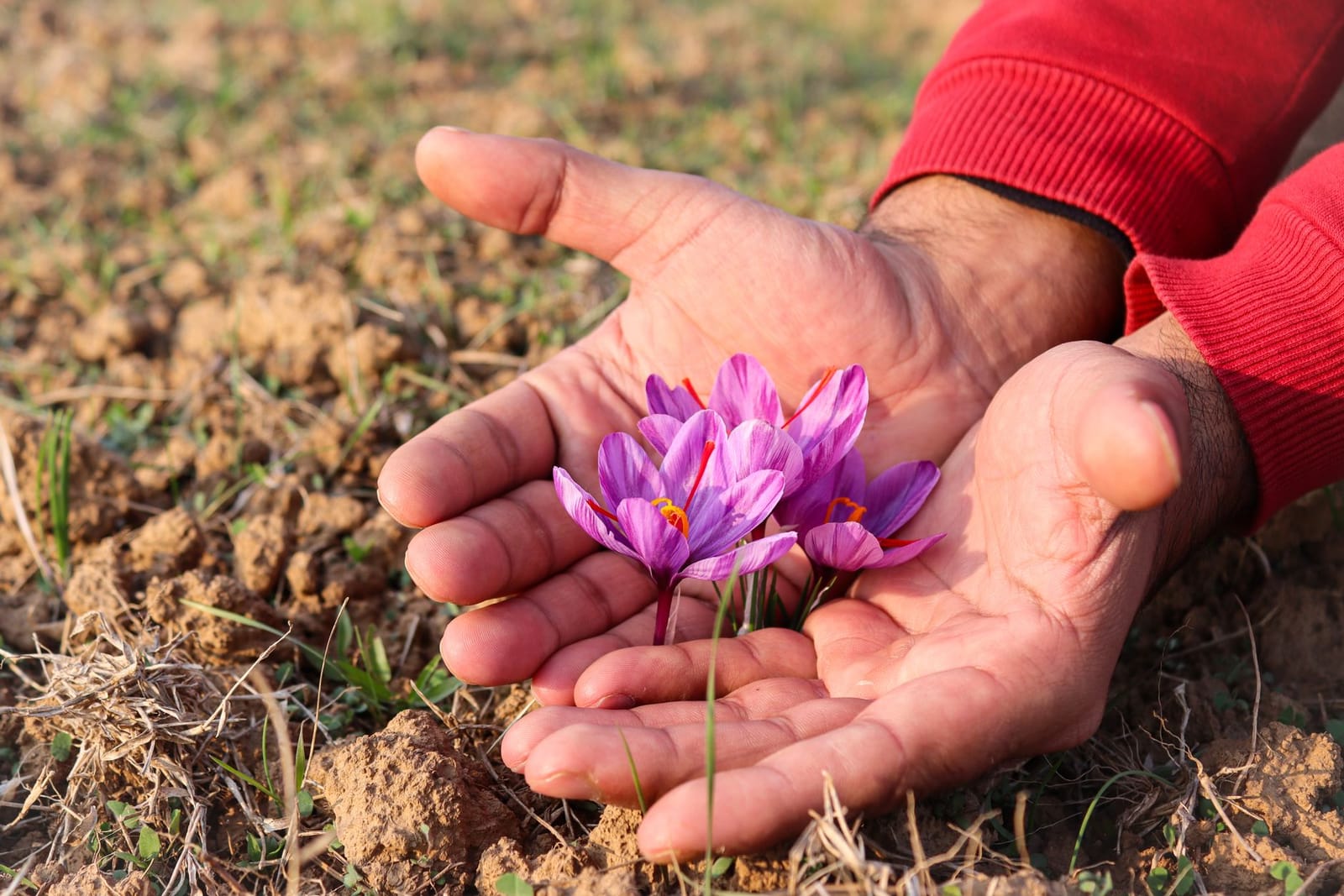
The tradition later died out, and was only reintroduced in the late 1970s, when the agronomist Alberto Viganò planted bulbs brought from Spain on his own land. Other local growers followed, and in June 2002 the consortium "Il Croco di Pietro Perugino, Zafferano di Città della Pieve" was founded, now with around thirty members. In 2013 the product was added to the Umbria region's list of Traditional Agri-Food Products. It does not carry DOP status: that is, for clarity, a separate and different recognition.
The Palio dei Terzieri, and when it happens
Every August the three terzieri take centre stage again in the Palio dei Terzieri, the town's historical re-enactment, running in its modern form since 1973. The programme lasts around twelve days and builds to the first Sunday after 15 August, with a historical procession, the Battaglia della Farina (flour battle) and the Caccia al Toro, an archery contest fought on moving bull-shaped targets, descended from a real hunt once practised here between the 1400s and 1500s.
If your stay falls in that window, it is the best time to see the town at its liveliest. The rest of the year, especially on weekdays and out of season, Città della Pieve is quieter than Cortona or Montepulciano, and it is only fair to say so: anyone hoping for a buzzing evening scene, with plenty of places open late, will be disappointed. Here, the evening winds down early.
How much time it takes, and how to get here from us
For the three Perugino stops alone, at an unhurried pace, two to three hours are enough: the easiest order is the Oratorio, then the Duomo, then the Museo Civico Diocesano, if you have booked ahead. Add a walk through the centre, Vicolo Baciadonne and a stop at one of the shops selling local saffron, and half a day is the realistic budget.
From Le Torri di Porsenna, Città della Pieve is 20 minutes by car, the same distance as Chiusi, so it is easy to combine the two in a single day. As with the rest of this area, you need a car: public transport here is built around residents, not visitors.
Città della Pieve, Cortona and Montepulciano: three towns, three speeds
Cortona is 22 minutes from us, Montepulciano 30 minutes: these are the two hill towns Città della Pieve is naturally measured against, since they sit close by, on the same stretch of the border between Umbria and Tuscany. The difference shows in the traffic and the shopfronts: Cortona and Montepulciano, especially in high season, draw more visitors, keep more restaurants open late and queue for more parking spaces. Città della Pieve does not: you can walk it without crowds even in August, outside the days of the Palio.
For a stay that takes in all three, two other guides are worth reading: Cortona in a Day and Montepulciano and its Vino Nobile. Anyone who prefers to stay closer to the lake can also read Castiglione del Lago: a Guide to the Old Town, the other town just minutes from here. To plan your route, the surroundings page lists every distance from here, and our rooms remain the most convenient base for visiting all three towns without moving your luggage. For the rest of Umbria beyond this corner, see things to do in Umbria.
Frequently asked questions
Is Città della Pieve quieter than Cortona or Montepulciano?
Yes, especially on weekdays and out of season. You can walk the centre without crowds even in August, outside the days of the Palio. Cortona and Montepulciano, both busier hill towns nearby, keep more restaurants open late and queue for more parking.
Which Perugino works can you see in Città della Pieve?
Four, across three sites. The Adoration of the Magi (1504) in the Oratorio di Santa Maria dei Bianchi, the Baptism of Christ and the Madonna in Glory with Saints Gervasio and Protasio in the Duomo, and the Deposition from the Cross (1517) in the Museo Civico Diocesano.
Can you see the Deposition from the Cross without booking?
No. The building that houses it, now the Museo Civico Diocesano, only opens to visitors by appointment. Hours change through the year, so check with the town's InfoPoint before you set off.
Is Vicolo Baciadonne really the narrowest alley in Italy?
It is local tradition more than a settled record. At its narrowest, Vicolo Baciadonne measures somewhere between 50 and 70 centimetres depending on the source, but at least one other Italian alley is narrower still.
When does the Palio dei Terzieri take place in Città della Pieve?
In August, in its modern form since 1973. The programme runs for around twelve days and culminates on the first Sunday after 15 August, with a historical procession, the flour battle and the bull hunt archery contest.
How far is Città della Pieve from Le Torri di Porsenna?
20 minutes by car, the same distance as Chiusi. It is one of the closest towns to us, alongside Lake Trasimeno and Castiglione del Lago.
- Città della Pieve, Wikipedia
- Città della Pieve, Wikipedia
- Perugino, Wikipedia
- Oratorio di Santa Maria dei Bianchi, Wikipedia
- ORATORIO DI SANTA MARIA DEI BIANCHI - Città della Pieve, Citta della Pieve
- Battesimo di Cristo (Perugino Città della Pieve), Wikipedia
- Duomo di Città della Pieve, Aletes
- Museo civico - diocesano ex Chiesa di Santa Maria dei Servi, Ministero della Cultura
- Fragments of the fresco Deposition from the Cross, Secret Umbria
- Zafferano - Città della Pieve, Citta della Pieve
- La Storia - Consorzio il Croco di Pietro Perugino, Zafferano di Citta della Pieve
- Consorzio - Consorzio il Croco di Pietro Perugino, Zafferano di Citta della Pieve
- Palio dei Terzieri, Ministero della Cultura
- Palio dei Terzieri - Città della Pieve, Citta della Pieve
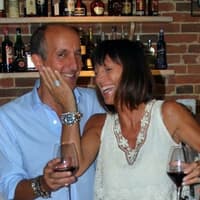
Bruno e Marisella Batinti
Owners and hosts of Le Torri di Porsenna
Bruno and Marisella Batinti own Le Torri di Porsenna, the abbey they found derelict in 2014 and brought back as a charme agriturismo on the Umbria-Tuscany border. They live here all year: the roads, villages and seasons L'Almanacco writes about are the ones they drive every week.