

In January, the first business open in Castiglione del Lago is usually the bakery. The restaurant windows along the lakefront stay dark for longer than in any other month, some closed for weeks with no sign explaining when they will reopen, and anyone expecting the same village life seen in July finds near empty streets on a Tuesday morning.
In short: winter here is the hardest season to describe honestly, because it genuinely is hard. The lake can stay grey for days, several village businesses close with no fixed pattern, and short days leave less room for two stops in the same day. But it is also the season when the villages belong again to the people who live in them, the heated indoor pool stops being a fallback from the sun and becomes the reason for the stay, the kitchen changes with black truffle, and the December festive period remains a genuine reason to come. This guide covers what actually works between December and February, what does not, and who it suits.
It is written for anyone weighing up a winter stay who wants to know, before booking, whether it genuinely suits them, not for anyone chasing only a promise of festive atmosphere.
What actually happens in the villages in winter
Le Torri di Porsenna is an agriturismo, a working countryside estate combining rooms, a spa and a restaurant, in Umbria on the Tuscan border, roughly midway between Florence and Rome. Around the lake, between December and February, not every restaurant and shop stays open every day. Some close for a week or two of holiday, others cut their hours at lunch or in the evening, and the timing shifts from one business to the next and from one year to the next: there is no single calendar of winter closures.
What tends to stay open is the shops and bars that live on everyday custom, not tourism: the bakery, the newsstand, the bar where people getting to work stop for a coffee. They are what keeps the square alive when the businesses built for visitors are shut, which is also why a village like Castiglione del Lago, 5 to 10 minutes from us, shows more of what it is really like the rest of the year.
The lake and the islands, cut back to a minimum
Lake Trasimeno is 5 to 10 minutes from us, and it is the part of the area that changes most between August and February. Under an overcast sky, more the norm than the exception in winter, the water turns flat and grey for days at a time. Anyone coming for the turquoise lake of the summer photographs is nearly always disappointed.
Ferries to the islands follow the same logic. From November to March, services cut back to a minimum, and in some periods they can stop running altogether: we cover this in more detail, island by island, in our guide to the Lake Trasimeno islands. Always check the current status a few days before you travel: the window of available crossings is narrower in winter than in any other season.
The art towns, without the queues but with shorter hours
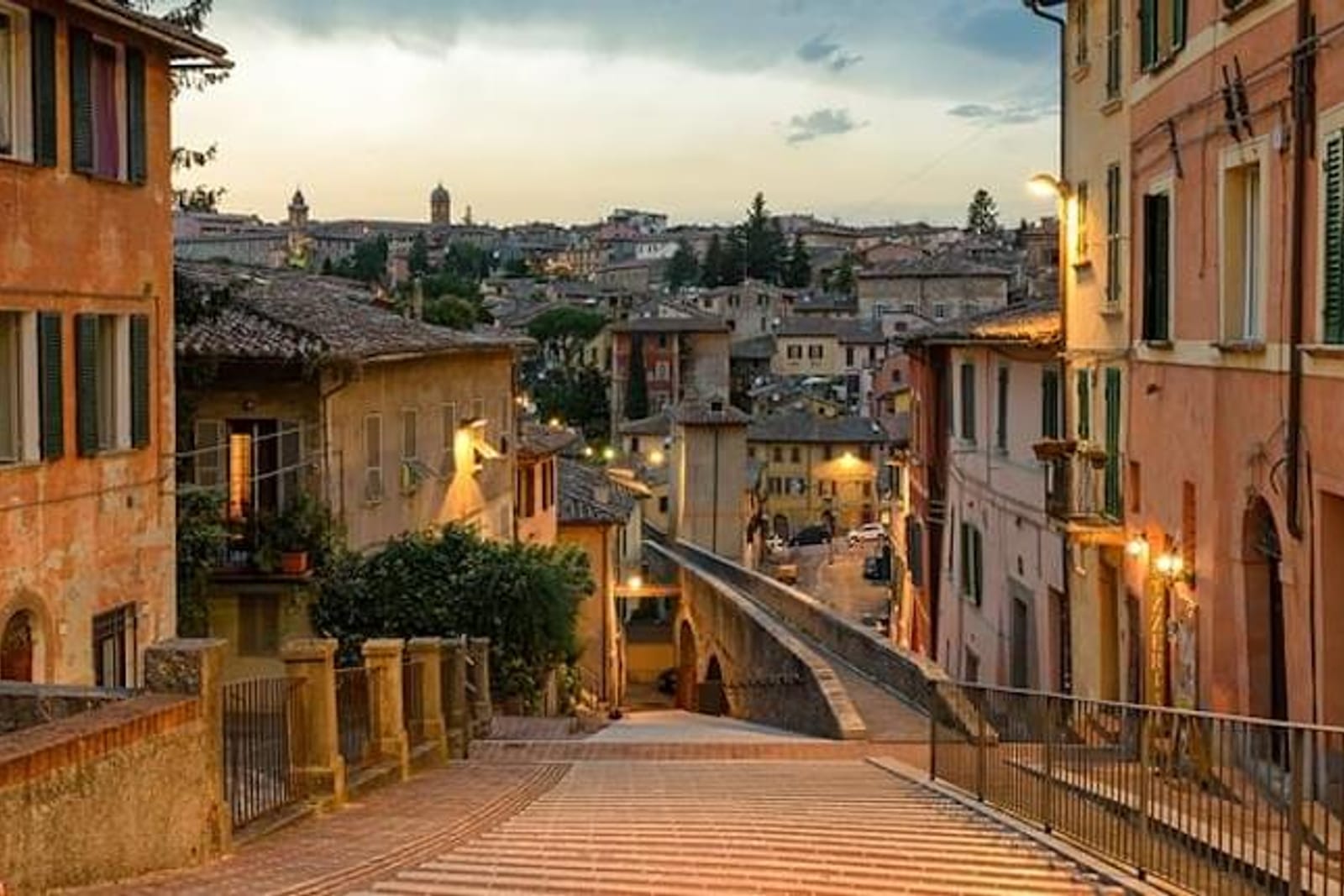
Perugia is 44 minutes from here, Assisi an hour, Cortona 22 minutes: these are the easiest day trips even in winter, and they behave differently than the season suggests. The coach parties that fill the historic centres in high season thin out almost completely, the car parks that fill up by mid morning in August stand empty, and the same streets go back to being streets used by people going to work, not visitors passing through.
Some museums and sites reduce their hours over winter and the exact hours change from year to year, so the rule is to check online the day before, not the month before. We cover this in more detail in our guide to what to see in Umbria.
Umbria Jazz Winter in Orvieto, the crowded exception
There is one precise exception to all this quiet, and it is in Orvieto, 54 minutes from us. From 30 December 2026 to 3 January 2027 the town hosts Umbria Jazz Winter, its 33rd consecutive edition since it began in 1993: days of concerts across several venues in the historic centre, right over the New Year.
On those days Orvieto fills up as much as, or more than, in peak summer, so anyone after a quiet visit would do well to avoid those dates on purpose. For anyone staying with us over that same period, it is one of the few chances for an Umbrian winter evening with a fixed programme, not just scenery.
What changes in the kitchen: black truffle and winter cooking
White truffle, which dominates autumn and the menus of October and November as we cover in our guide to autumn in Umbria, goes out of season by regulation on 31 December. Black truffle, by contrast, can be harvested from 1 December to 15 March: for the whole of December the two seasons overlap, then from January onward only black truffle remains on the menu.
It is a different truffle, more assertive, built for heartier dishes. Our own kitchen, which cooks Umbrian and Tuscan dishes side by side, moves towards pulses, game and soups in this period, alongside the new oil from the October and November harvest, still very much present on the table in January. We cover this in more depth, dish by dish, in our guide to Umbrian-Tuscan cooking.
The indoor pool and spa, the real difference in winter
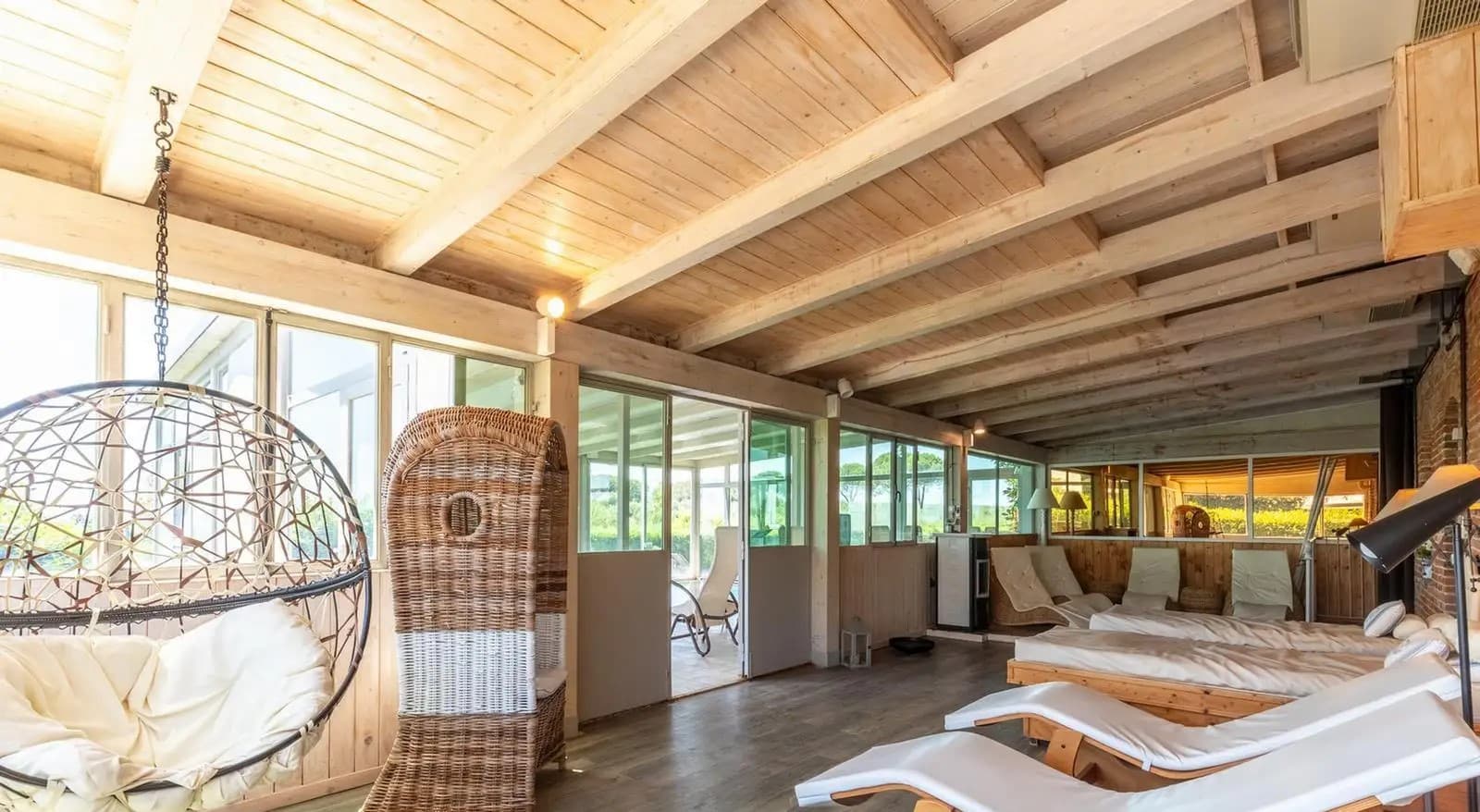
Our agriturismo spa has a heated indoor panoramic pool at 35°C all year round, with chromotherapy, a waterfall and a counter-current section, oxygen-purified water with no chlorine, plus a Finnish sauna, a hammam and a relaxation area. In August this pool competes with the lake a few minutes away and with the outdoor pool in the grounds, a seasonal feature. In January or February that choice does not exist: the indoor pool, sauna and hammam become the part of the day everything else is built around, not an extra.
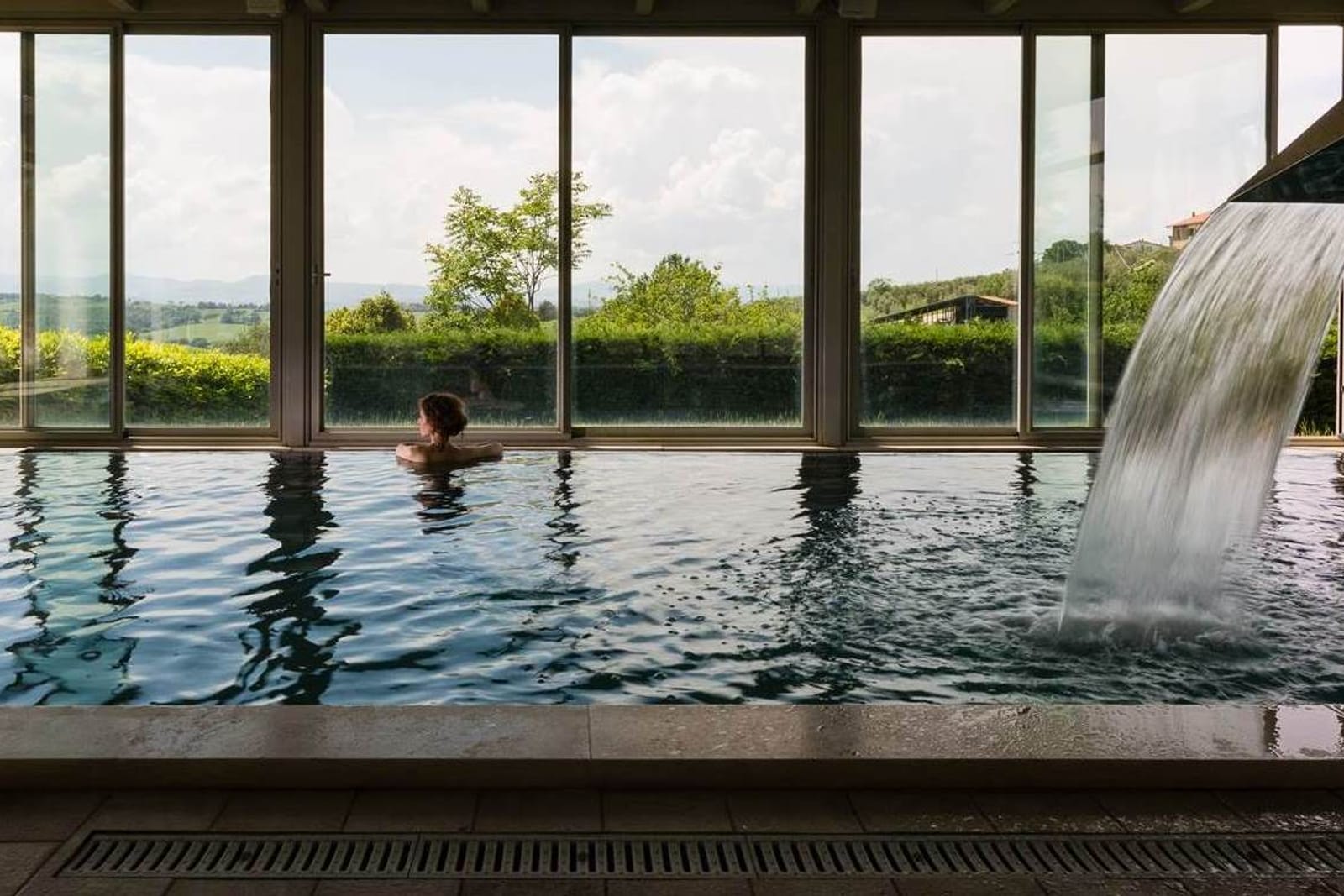
We cover this in more detail, shared use included, in our guide to what to actually expect from an agriturismo spa: it remains a facility shared among the property's thirteen rooms, not a private pool. Children accompanied by an adult can use the indoor pool until 5pm; the sauna and hammam stay built for adults. The indoor pool page has more photos if you want to see the space before booking.
Christmas and New Year, the genuinely busy part of winter
There is also an exception on the booking side, not only in the towns: the two or three weeks around Christmas and New Year remain the period of winter when the property genuinely fills up. We have run a Christmas Eve dinner, a Christmas Day lunch with traditional dishes, and a New Year's Eve party with live music and a midnight toast for years, alongside the spa available throughout the stay.
It is the part of winter that most resembles high season, with the difference that demand here comes from the festive calendar, not the weather: anyone after a quiet December is better off choosing the weeks before or after the festive period, not the middle of it. Details of the packages that include the spa are on the wellness packages page.
How cold it actually gets: temperatures and rain
Better to be precise than vague here too, as with autumn. In Perugia the average temperature sits around 5°C in December, drops to around 4°C in January, the coldest month, and returns to around 5°C in February, with lows of 0 to 1°C in the early morning. Rain is more frequent in December, around 57mm, while January is the driest of the three months, with around 38mm. The sky stays overcast just over half the days each month.
Snow is rare, not the norm here, though an isolated snowfall can happen in any given winter. Anyone arriving expecting a white landscape is likely to be disappointed; anyone arriving knowing they will find mostly rain, grey sky and temperatures close to freezing in the morning arrives genuinely prepared.
What does not work in winter, said honestly
Not everything winter offers here makes up for what it takes away. A grey lake for days is not a one off to plan around, it is a real possibility for the whole stay, and anyone coming specifically for a sunset over the water risks not seeing one at all. Ferries cut back to a minimum, or suspended in some periods, take the islands off the list for anyone with only two days: if the main reason for the trip is Isola Maggiore or Polvese, spring or summer is the better choice.
Short days genuinely reduce what you can fit in: a plan built for June, one town in the morning and another in the afternoon, simply does not work in January, because the usable daylight runs out sooner. And closures at restaurants and shops in the smaller villages, with no fixed calendar, mean a specific stop always needs checking before you set off: you can arrive with a particular place in mind for lunch and find it closed.
If the reason for the trip is swimming in the lake, the beaches, or the busy village life you see in August, winter simply is not the right season. This is the part winter does not solve, and it is fair to know it before booking, not after arriving. The quiet works differently again once the season turns: see what changes in spring in Umbria.
Two days in winter: how to plan them, what to pack, who it suits
With two nights, the rule we use in winter is to stay within 30 minutes' drive: Castiglione del Lago at 5 to 10 minutes, Città della Pieve at 20, Cortona at 22, Montepulciano at 30, all fit well with an afternoon that ends earlier than usual. Perugia and Assisi, 44 minutes and an hour, remain longer trips: with darkness arriving early, it is better to save them for a stay of at least three nights.
Check-in is from 15:00, check-out by 11:00, the same as the rest of the year. Beyond a proper coat and something waterproof, it is worth packing layers and shoes suited to wet streets: mornings near the lake are the coldest part of the day. You will need a car, as in every other season here: public transport exists but is built for residents, not for two days between the lake and the hills. To plan the stay, the rooms page shows the property's five categories.
Winter suits anyone genuinely after quiet, a spa without summer's competition, a different kitchen from high season, or anyone who specifically wants the December festive period. It suits less anyone with only two days who wants to see as much as possible, or anyone picturing the lake, the islands and the villages the way they look in July photographs: that experience exists, just in another season, not this one.
Frequently asked questions
Is Umbria worth visiting in winter?
It depends what you are after. Anyone wanting genuine quiet, a spa without summer's crowds and a different kitchen will find it works well. Anyone picturing the turquoise lake, easy island ferries and villages full of life is better off waiting for spring or summer.
How cold does it get in Umbria in winter?
Perugia's average temperature drops to around 4 to 5°C between December and February, with lows near freezing in the early morning. January is the coldest month, December the wettest. Snow stays rare, not the norm.
Do the ferries to the Lake Trasimeno islands run in winter?
From November to March, services cut back to a minimum, and in some periods they can stop running altogether. Always check the current status a few days before you travel, rather than assuming it months ahead.
Do restaurants and shops in the villages stay open in winter?
Not all, and not always. A number of businesses close for a week or two of holiday at a point that shifts from year to year, with no fixed calendar. For a specific stop, call the day before rather than assume the usual hours.
Does the spa and indoor pool stay open in winter?
Yes, and this is when they make the most sense. The indoor pool stays heated to 35°C all year, alongside the Finnish sauna and hammam. The outdoor pool in the grounds, by contrast, is a seasonal feature.
Is it better to come for Christmas and New Year, or for January and February?
They are two different stays. The weeks around the festive period are the busiest part of winter, with a Christmas Eve dinner, a Christmas Day lunch and a New Year's Eve party. January and February, by contrast, are the quietest months of the year, and suit anyone looking for exactly that.
- Condizioni meteorologiche medie a Perugia, Weather Spark
- Umbria Jazz Winter, Umbria Jazz
- Calendario raccolta tartufi in Umbria: regole e divieti., Antonio Fortunati

Bruno e Marisella Batinti
Owners and hosts of Le Torri di Porsenna
Bruno and Marisella Batinti own Le Torri di Porsenna, the abbey they found derelict in 2014 and brought back as a charme agriturismo on the Umbria-Tuscany border. They live here all year: the roads, villages and seasons L'Almanacco writes about are the ones they drive every week.