
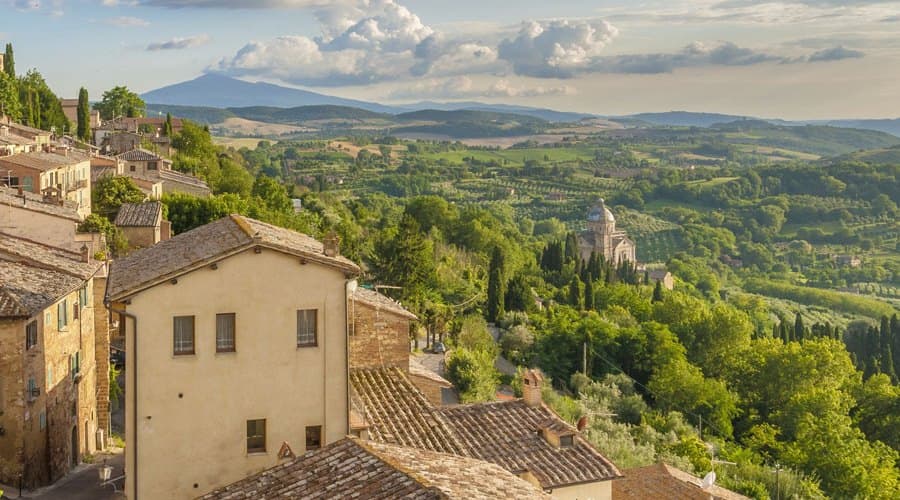

Camucia-Cortona station sits about three kilometres from the old town and lower down the hill, so the last stretch needs a bus, a taxi or a car, whichever way you arrive. That is the detail the postcard version of Cortona, the stone farmhouse and the grape harvest of a film from 2003, tends to leave out: this is a proper hill climb, not a stroll past a restored villa.
In short: Cortona works well as a day trip on foot, but it helps to know beforehand what is true of the film and what is not, how steep the climb really is, and which two museums are worth the entrance fee. This guide walks the old town from Piazza della Repubblica to the MAEC, from the Diocesan Museum to the Fortezza del Girifalco at the top of the hill, taking in the main churches and the festival that fills the Parterre gardens in mid-August.
It is written for anyone with a free day from Le Torri di Porsenna, an agriturismo in Umbria roughly halfway between Florence and Rome. Cortona is 22 minutes away by car, just across the border in Tuscany, and this guide is for seeing it as it actually is, not only as the film's backdrop.
The book, the film, and what is true of both
Bramasole is real. It is the villa Frances Mayes bought near Cortona, in the hamlet of Torreone, and restored between the late 1980s and the early 1990s, an experience she wrote about in the 1996 memoir that became the 2003 film starring Diane Lane. Know this before you go: Bramasole is still privately owned by the Mayes family and cannot be visited. For the film, a different villa near Cortona was used, one Frances Mayes found specifically to stand in for a Bramasole that had not yet been restored.
That said, it would be wrong to write Cortona off as a film set. The town existed for more than two thousand years before the book came out, with an Etruscan history, a Renaissance centre and two museums that would stand on their own without a single line written about them. It is equally true that part of the centre now lives off that fame: some shopfronts sell the film's name harder than they sell anything local, and in high season you hear more English than Italian along the main street. That is neither a flaw nor a virtue. It is simply how a place behaves once it becomes famous for a reason that is not its own history.
The climb, and how much time it actually takes
Cortona is a hill town, and that is the first thing visitors underestimate. There is no funicular: Camucia-Cortona station, on the Florence-Rome line, sits about three kilometres from the old town and lower down the hill, so getting the rest of the way needs a bus, a taxi or a car. Arriving by car, as you would from here, gets you most of the way, but once you have parked outside the walls the climb on foot is still steep, much of it on stone.
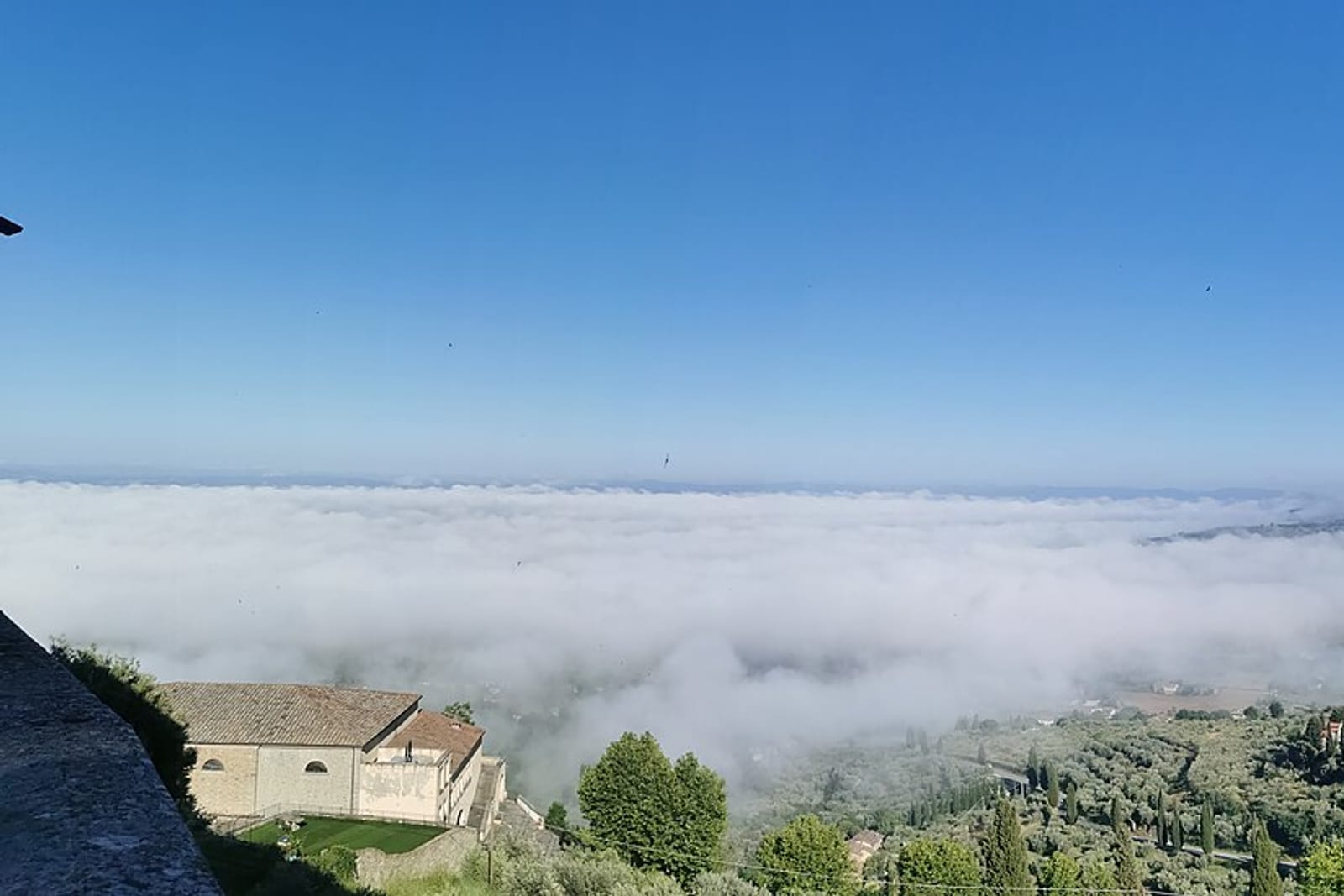
A practical rule: if the goal is to actually see the MAEC and the Diocesan Museum, not just walk the main street, budget at least three hours inside the walls. Anyone who struggles with walking should work out in advance which parts of town are reachable, because several streets in the centre have no flat alternative.
Piazza della Repubblica and the Palazzo Comunale steps
The heart of the town is Piazza della Repubblica, dominated by the sandstone staircase of the Palazzo Comunale, built between the twelfth and thirteenth centuries over the remains of the old Roman forum. Beside the staircase stands a column topped by the Marzocco, the lion that symbolises Florence, added in the sixteenth century when Cortona came under Florentine control. The building still houses the town's council offices today.
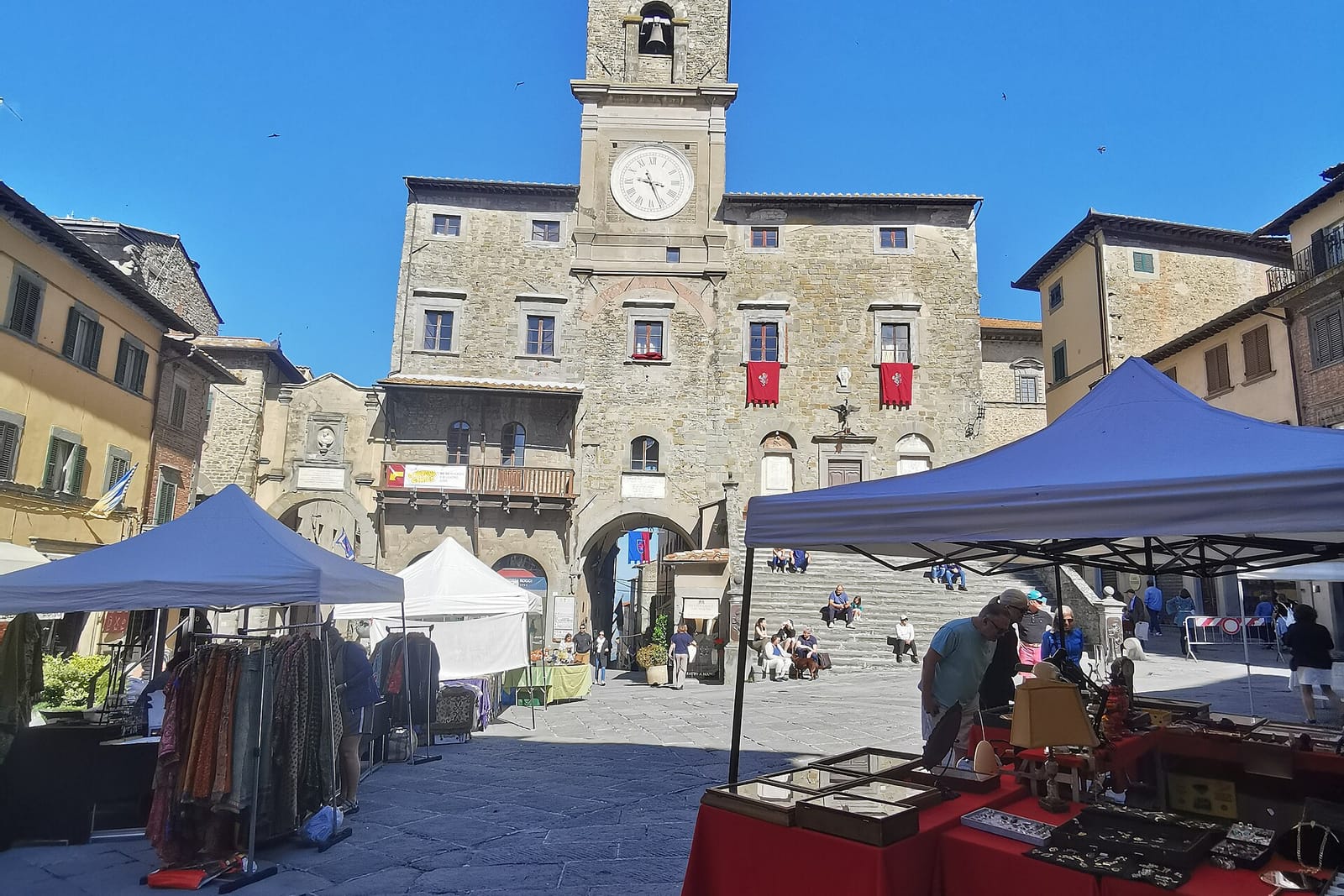
It is the point where nearly everyone stops for the first photograph, and it is also the best place to understand the shape of the town: from here you can see how the old centre climbs towards the fortress, the streets narrowing as they rise.
The MAEC, the Etruscan museum inside Palazzo Casali
The MAEC, the Museum of the Etruscan Academy and the City of Cortona, occupies Palazzo Casali, built for the Casali family during their lordship of the town, between 1325 and 1409. The museum has existed in its current form since 2005, but its collection is much older: the Etruscan Academy was founded in 1726 by the Venuti brothers, who went on to publish an Italian edition of Diderot's Encyclopédie, a detail that says a good deal about the institution's ambitions.
Among the pieces that justify the climb on their own are the Etruscan bronze chandelier, found in 1840 near Fratta close to Cortona, with sixteen arms decorated with mythological figures, and the Tabula Cortonensis, a bronze tablet carrying one of the longest Etruscan inscriptions ever found. Both reward the visit regardless of any film.
The Diocesan Museum and Fra Angelico's Annunciation
The Diocesan Museum stands in Piazza del Duomo, in the former Church of Gesù, and was founded in 1945 to bring together works from churches across the diocese. The reason to make the detour is a single piece, but the kind that justifies a trip on its own: Fra Angelico's Annunciation, painted around 1430 and moved here from the church of San Domenico, complete with its original predella. The same collection includes work by Luca Signorelli, a painter born in Cortona, and by Bartolomeo della Gatta.
It is the museum most visitors skip when time is short, because it is smaller than the MAEC and less advertised. We would not skip it. It is the part of Cortona the film never told you about.
The Fortezza del Girifalco, the highest point on the hill
At the top of the hill, above the rest of the town, stands the Fortezza del Girifalco, built in 1549 for Cosimo I de' Medici on the site of earlier fortifications. Today the fortress hosts exhibitions and events, including the Cortona On The Move photography festival, launched in 2011. Opening times change with the season, so check before you climb up specially, especially outside the busier months.
Even without going inside, the stretch of path leading up there gives the widest view over the whole Val di Chiana, the broad valley shared between Tuscany and Umbria, and on a clear day you can see Lake Trasimeno too.
The churches: Santa Margherita and San Francesco
The Basilica of Santa Margherita, higher up than the centre, holds the remains of the town's patron saint, who died in 1297. The first church, attributed to Giovanni Pisano, was completed in 1304. The current building is the result of a nineteenth-century rebuild, with the façade finished in 1896, and it was raised to the rank of minor basilica in 1927.
The Church of San Francesco, lower down, was begun in 1246 on land donated by the town council to Frate Elia, who succeeded Saint Francis as head of the Franciscan order. It holds a tenth-century reliquary containing a fragment of the True Cross, donated in 1244, along with works by Pietro da Cortona, the Baroque painter and architect born in the town in 1596.
Etruscan Cortona: walls about three kilometres long
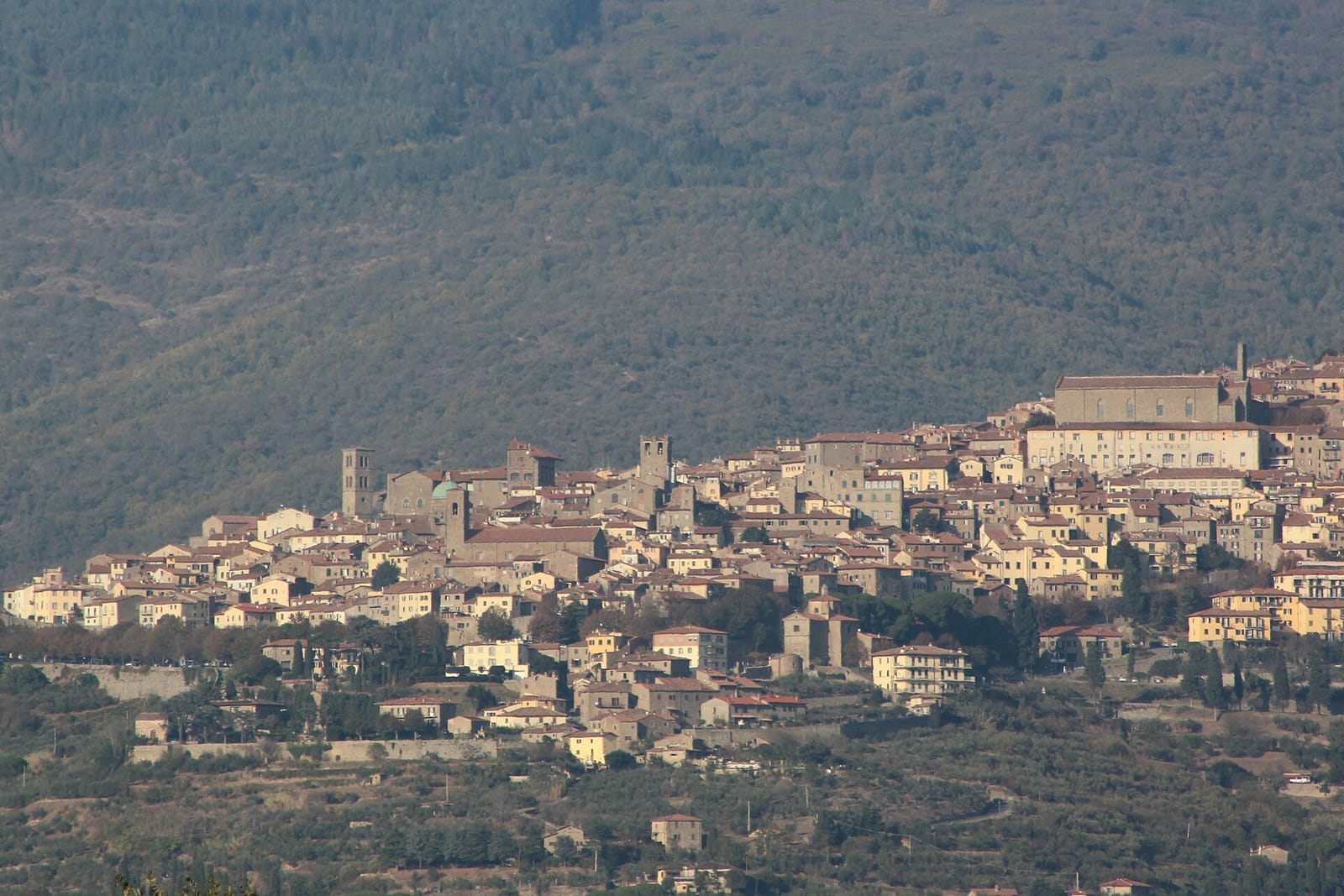
Long before it was Tuscan, and longer still before it was Roman, Cortona was an Etruscan lucumonia, one of the twelve cities of the Etruscan League. The name Curtun already appears in a bronze votive inscription from the third century BC. The walls that still enclose part of the old town date from the fourth century BC and run for around three kilometres, one of the best-preserved Etruscan perimeters in Italy.
Outside the walls, at the foot of the hill, the Sodo archaeological area holds two large Etruscan burial mounds from the seventh and sixth centuries BC, built for aristocratic families. Almost no one passing through in a day adds it to the itinerary, but anyone with more than a single day should consider it.
The Sagra della Bistecca, if your stay falls in mid-August
Every year, for a few evenings in mid-August, the Parterre gardens fill up for the Sagra della Bistecca, a steak festival organised by the local football club, Cortona Camucia. The stalls open in the evening, usually from six until midnight, and it is open to everyone, not just club members.
It is not an event built for the film's visitors. It is the town's own party to itself, and it is probably the moment when Cortona looks least like the photographs you see online.
When to come, and from here to Cortona
Cortona gets busy at the same hours as Montepulciano and the other hill towns nearby: late morning and early afternoon, in the busier months of the year. Arriving early, before ten, or in the late afternoon means seeing the same streets without the crowds, and with better light for photographing the Val di Chiana from the viewpoints.
From Le Torri di Porsenna, Cortona is 22 minutes away by car. It is one of the simplest day trips from here, alongside what to see at Lake Trasimeno and Montepulciano, both covered in the other guides on this almanac. Anyone staying more than a day can give Cortona the morning and spend the rest of the day exploring what else is nearby, or head back in time for dinner at our restaurant, which cooks Umbrian and Tuscan dishes side by side. For the wider region, our guide to things to do in Umbria covers the towns and the lake in full.
Frequently asked questions
How far is Cortona from Le Torri di Porsenna?
A 22-minute drive, one of the simplest day trips from here.
Can you visit the real Bramasole, the house from Under the Tuscan Sun?
No. It is still privately owned by the Mayes family, near Cortona in the hamlet of Torreone. The film used a different villa, not the real one.
How much time do you need to see Cortona in a day?
At least three hours inside the walls if you want to see the MAEC and the Diocesan Museum properly, not just walk the main street. With less time, choose one of the two.
Is it worth seeing both the MAEC and the Diocesan Museum?
If time allows, yes. They complement each other rather than repeat: the MAEC covers the Etruscan story, the Diocesan Museum the religious Renaissance, including Fra Angelico's Annunciation.
Is Cortona manageable for anyone with mobility difficulties?
Only in part. The old town is built on a slope and many streets have no flat alternative. Piazza della Repubblica is the most accessible point, the fortress the most demanding.
What is the best time to visit Cortona without the crowds?
Before ten in the morning or in the late afternoon, the same hours that work for Montepulciano and the other hill towns nearby. May and September help even more.
- Cortona, Wikipedia
- Cortona, Wikipedia
- Home MAEC, MAEC Cortona
- Sagra della bistecca, Comune di Cortona
- Museo diocesano (Cortona), Wikipedia
- Under the Tuscan Sun: Will the Real Bramasole Please Stand Up?, Dream of Italy
- Basilica di Santa Margherita (Cortona), Wikipedia
- Chiesa di San Francesco (Cortona), Wikipedia
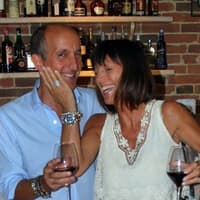
Bruno e Marisella Batinti
Owners and hosts of Le Torri di Porsenna
Bruno and Marisella Batinti own Le Torri di Porsenna, the abbey they found derelict in 2014 and brought back as a charme agriturismo on the Umbria-Tuscany border. They live here all year: the roads, villages and seasons L'Almanacco writes about are the ones they drive every week.