
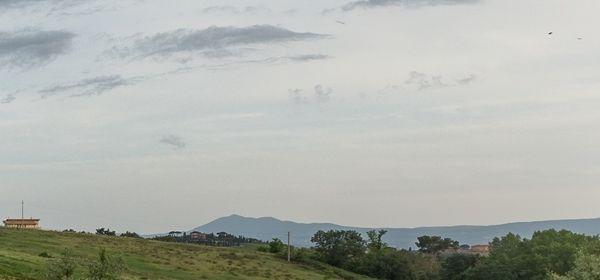

The Trasimeno cycle path is almost always described as a flat, family-safe loop around the lake, fifty-eight kilometres of it. That's true for most of the route, but not for the stretch between Sant'Arcangelo and Castiglione del Lago: there the loop leaves the dirt track, runs alongside the provincial road with cars for a couple of kilometres, and takes on a narrow double hairpin bend with a gradient the official notes put at 25 to 30 per cent. It's the section closest to us, and also the one where most cyclists expect something else.
In short: the Trasimeno cycle path is a 58.4 kilometre loop in seven stages, officially rated medium difficulty, with a modest but real elevation change and two or three points where you share the road with cars. This guide sets out the stages with exact distances, where it makes sense to start from if you're staying with us, the most technical stretch, the points where you ride alongside traffic, the surface and where it worsens, what we know about bike hire and about bicycles on the island ferries, and when to ride.
It's written for anyone who already has a bike, their own or hired, and wants to know what they'll find along the way before they set off, not halfway round a hairpin bend.
Lake Trasimeno sits on the Umbria side of the border with Tuscany, five to ten minutes from us by car, within reach of the rest of the region too: see things to do in Umbria for what else is nearby. If you don't know the lake at all, the general guide linked further down places it on the map properly; this piece assumes you already know roughly where you're going and just want the cycling details.
The loop in numbers: 58.4 km, seven stages, an award in 2026
The Ciclovia del Trasimeno measures 58.4 kilometres and is a closed loop, according to the official cycle-tourism page maintained for the Umbria region. The total elevation change is around 110 metres of climbing and the same again in descent across the whole loop: modest, but not zero, spread across a handful of short ramps rather than one long climb. Difficulty is officially classed as medium, not easy.
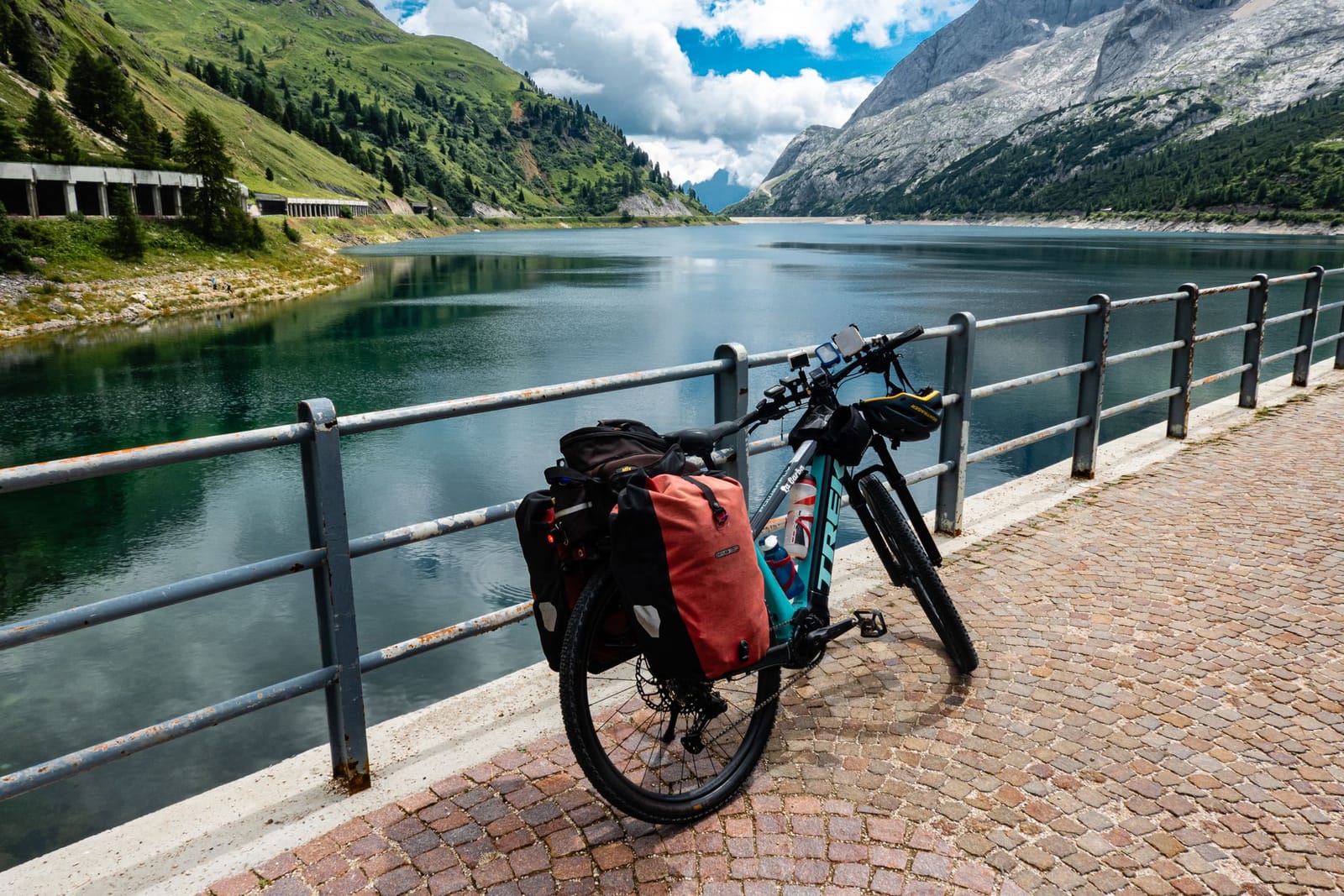
In 2026 the route won the Green Road Award, the national prize the trade press calls "the Oscar of cycle tourism," beating 33 entries from across Italy at the award's eleventh edition. That's a good sign the route is well kept, not a guarantee it suits anyone regardless of preparation.
The seven stages, kilometre by kilometre
The official route is split into seven stages, designed to be ridden clockwise. Passignano sul Trasimeno to Torricella is 6 km, Torricella to San Feliciano 6.8 km, San Feliciano to Sant'Arcangelo 7.3 km. Then comes the longest stage, Sant'Arcangelo to Castiglione del Lago, 16 km, which also includes the most technical stretch of the whole loop, covered in detail further down. Castiglione del Lago to Borghetto is 10.25 km, Borghetto to Tuoro sul Trasimeno 6 km, and the final 6 km close the loop from Tuoro back to Passignano.
Added together, that's the 58.4 km of the full ring. The six stages outside the Sant'Arcangelo to Castiglione one are shorter and simpler, averaging around 8 kilometres each.
Where to start if you're staying with us
The starting point given on the official route sheet is Passignano sul Trasimeno, at the car park on Via Eduardo Acton, with a recommendation to ride the loop clockwise: the official guidance explains that in this direction there are fewer crossings and some of the steeper sections are less hazardous. But it's a loop, and you can join it in any town it passes through.
From where we are, the most convenient joining point is Castiglione del Lago, one of the seven official stage points, 5 to 10 minutes from us. Anyone starting there will still meet the Sant'Arcangelo to Castiglione del Lago stage, sooner or later depending which way they ride: it's the longest and most technical stretch of the whole loop, described in detail below, and take it carefully whichever direction you approach it from.
The surface: dirt, asphalt, and the stretch to avoid in the rain
The surface alternates dirt track, asphalt, dedicated cycle lanes and country lanes, with some mixed-use sections open to vehicles, according to the official route sheet. Local sources that describe the route in more detail put it at a little over half unpaved, the rest asphalt: an indicative split, since maintenance changes from year to year, but useful for understanding this isn't a fully smoothed-over path.
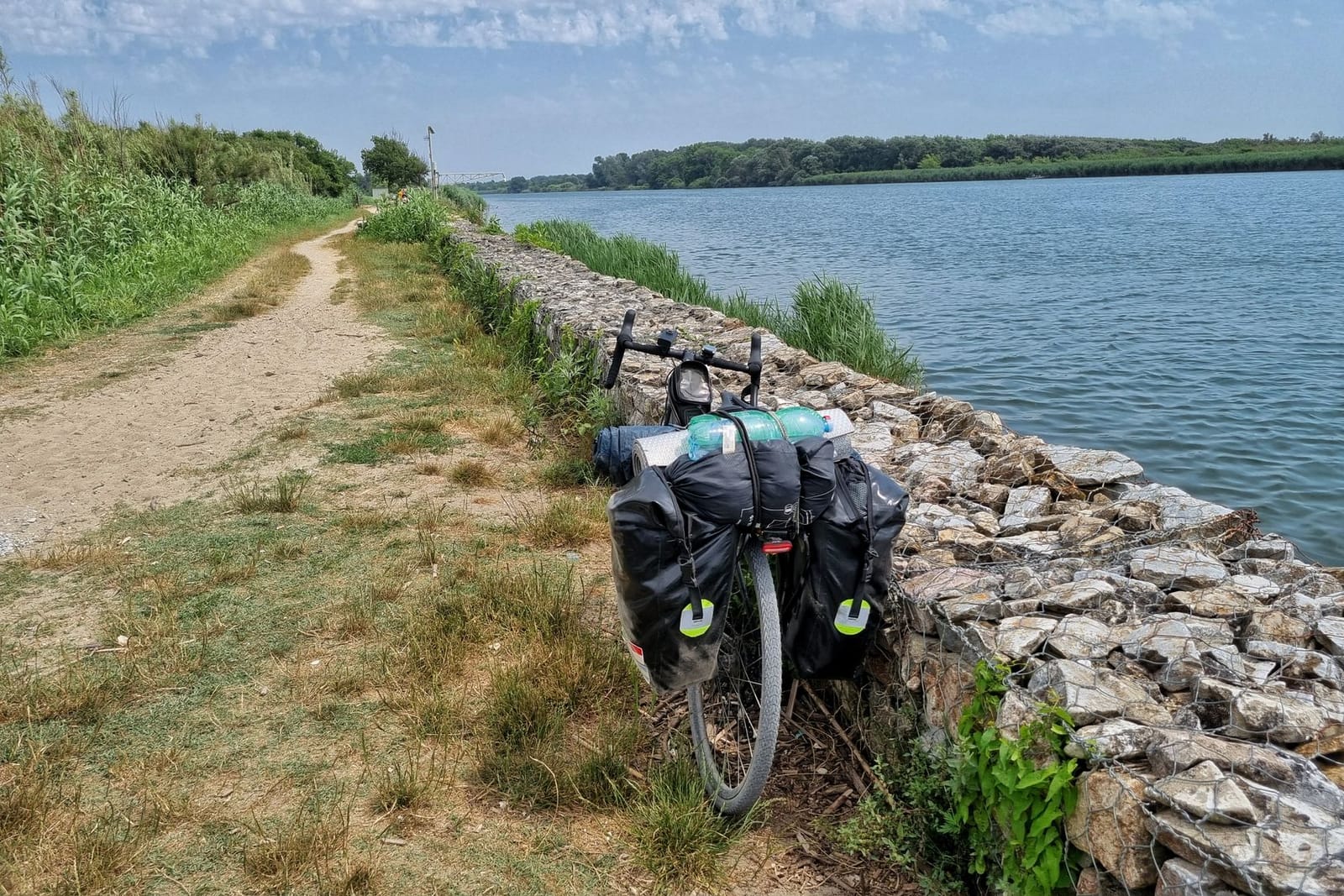
One specific stretch needs flagging separately: around 1.6 kilometres between Castiglione del Lago and Borghetto have a rather rough surface, with deep potholes. In the rain, the same official notes say, mud makes the small bridges along this stretch slippery, and in winter they can ice over. This isn't a route for a road bike; a gravel bike, a mountain bike or a sturdy city bike all work.
The most technical point: the hairpins between Sant'Arcangelo and Castiglione del Lago
The stretch the official notes flag with the most care is between Sant'Arcangelo and Castiglione del Lago, on the loop's longest stage. There's a very narrow double hairpin bend, on an asphalt surface scattered with gravel, with a gradient the official notes put at 25 to 30 per cent: it can't be bypassed, and has to be ridden if you're doing the full loop through that point.
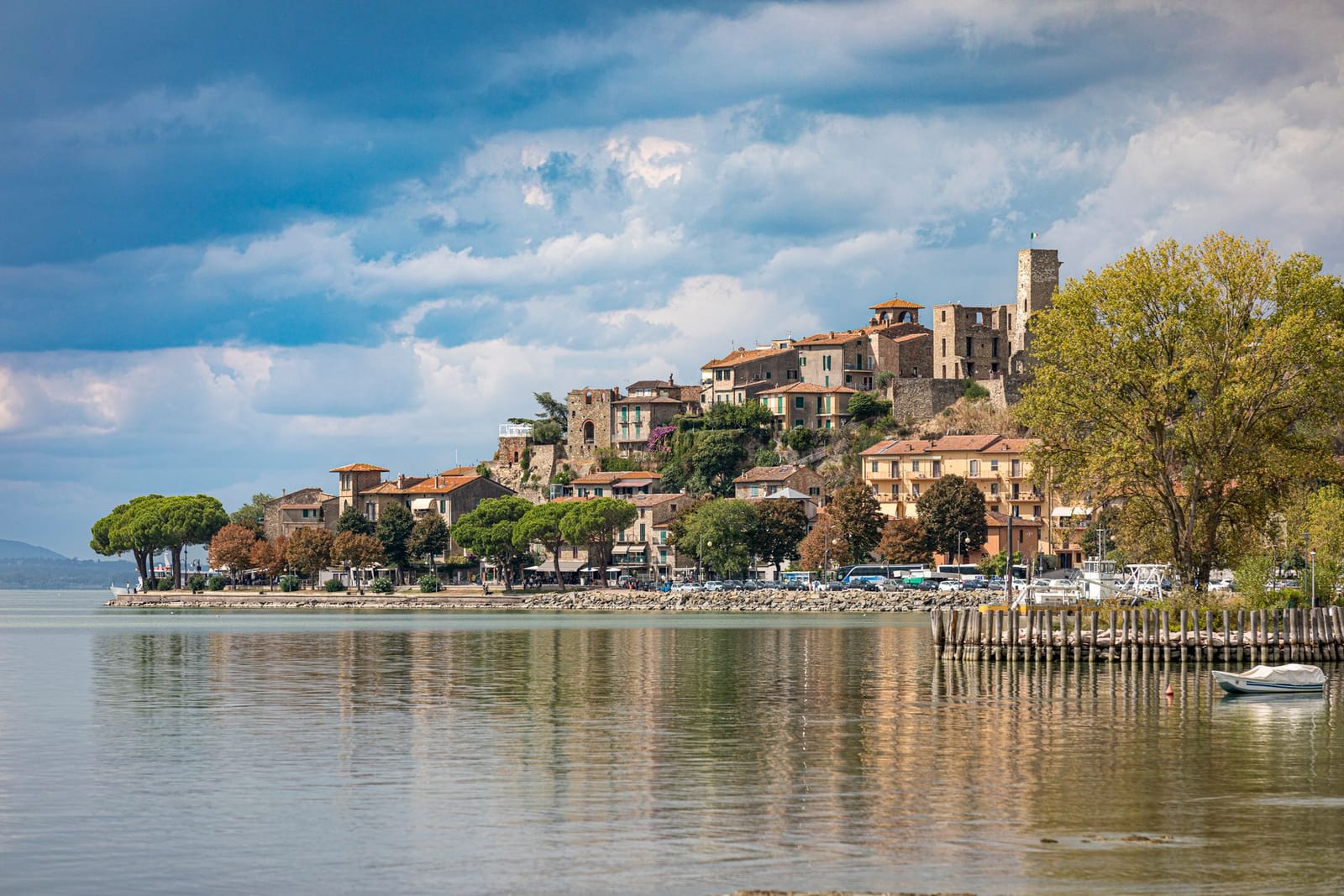
It's the kind of stretch a drone photo or a generic "flat loop" description doesn't prepare you for. It isn't dangerous for anyone riding with care and getting off the saddle at the tightest points, but it isn't the right place for a child riding alone, or for anyone who has never taken a gravel or mountain bike off city asphalt. Anyone staying with us who wants to skip it entirely can stick to the stages between Passignano, Torricella, San Feliciano and Sant'Arcangelo, which stay simpler and don't include it.
Where you ride alongside cars: the Romea and the Folaga
Beyond the technical stretch, two points on the loop share the carriageway with normal traffic, according to the official route sheet. Near Castiglione del Lago, around two kilometres run along the road known locally as "Romea," with traffic described as heavy. Near Sant'Arcangelo, at the spot called La Frusta, the cycle path joins the SR599 for a few hundred metres, again with heavy traffic and reduced-visibility bends.
These are short stretches against the 58.4 km total, but they're also where a distracted cyclist, or a child riding ahead of parents, is most at risk. Ride them by the same rules as any road open to traffic: lights if it isn't full daylight, extra care on the bends, and no sudden stops on the carriageway for a photo.
The real difficulty: why "medium," not "for everyone"
Plenty of tourist write-ups describe the cycle path as suitable for everyone, including families with young children. The official classification, though, is medium, not easy, and the stretches described above explain why: two points with real traffic, a steep hairpin that can't be bypassed, a rough stretch of surface. For an adult in ordinary physical shape, on a suitable bike, none of this is a serious obstacle. For a child riding alone, for anyone who has never left city asphalt, or for anyone who tires easily, breaking the loop into shorter stages makes more sense than tackling it all at once.
There's also something no technical sheet flags, because it isn't a safety issue: the route is largely exposed to the sun, with almost no shade. On a July or August afternoon that's noticeable, far more than on a hillside stretch with olive trees overhead. Setting off early, with enough water, changes the experience considerably in those months.
The islands by bike: what the ferry policy says
The loop skirts the lake but doesn't reach the islands: adding Isola Maggiore or Isola Polvese to the ride means taking the ferry, run by Busitalia. In normal conditions bicycles travel on every line, for a daily supplement, only on specific sailings and not on public holidays. Under the 2026 water emergency Busitalia suspended boarding with bicycles and unfolded pushchairs, so it is one of those things to check rather than assume. We're not listing timetables or fares here, for the same reason the guide to the Trasimeno islands doesn't: they change several times a year, and need checking on the Busitalia website the day before you go.
Honestly, once you're ashore, the islands aren't built for cycling around: Isola Maggiore has a village with narrow lanes, and Isola Polvese has dirt paths better suited to walking. Taking a bike on the ferry mostly makes sense for saving the ride back along the shore, not for cycling around the island itself.
Hire, and what we offer
Bicycle hire, including e-bikes, is a widespread service around the lake: the local tourism consortium lists several independent hire points, particularly in Castiglione del Lago. We're not naming a specific supplier here: anyone looking for one can check locally or online, since what's on offer changes from season to season.
At Le Torri di Porsenna we don't have bicycles for hire or a bike store on site. Anyone wanting to ride the loop needs to sort this out beforehand, either bringing their own bike or booking one in Castiglione del Lago, 5 to 10 minutes from us.
When to ride
Because of the heat and the almost total lack of shade along the route, the best months for cycling around Lake Trasimeno are the same ones we recommend for the rest of the lake in the general guide to Lake Trasimeno: May, June and September, when temperatures are more manageable and traffic on the shared sections is lighter than in August. July and August remain rideable, but only setting off early in the morning.
Anyone combining the ride with a longer stop in the village can also read the guide to Castiglione del Lago, which is both a starting and finishing point of the loop. To organise the stay, there are the rooms and the surroundings page with exact distances to the rest of the area.
Frequently asked questions
How long is the Lake Trasimeno cycle path?
It is a closed loop of 58.4 kilometres around the lake in seven stages, with a total elevation change of about 110 metres and a difficulty officially classed as medium.
Is the Trasimeno cycle path suitable for children?
Mostly, but not everywhere. The stretch between Sant'Arcangelo and Castiglione del Lago has a narrow, steep hairpin bend, and two points on the loop share the road with traffic. For a child riding their own bike, a simpler stage such as Passignano to Torricella to San Feliciano is a better choice than the full loop.
Is there shade along the Trasimeno cycle path?
Almost none. The route is largely exposed to the sun for its full length, unlike a hillside stretch under olive trees, so the heat is far more noticeable in July and August. Setting off early with plenty of water matters more here than it would on a shaded route.
Can I take a bicycle on the ferry to the Trasimeno islands?
Normally yes, on every line run by Busitalia, for a daily supplement, only on specific sailings and not on public holidays. In the summer of 2026, under the water emergency, Busitalia suspended bicycle boarding: check before setting out. Timetables and fares need checking on the Busitalia website before you go, since they change several times a year.
Where can I hire a bicycle near Lake Trasimeno?
There are several independent hire points around the lake, particularly in Castiglione del Lago, including e-bikes. Le Torri di Porsenna does not have bicycles for hire on site, so arrange one before you arrive.
When is the best time to cycle around Lake Trasimeno?
May, June and September, for the same reason they're the best months for the rest of the lake: milder temperatures and less traffic. The route is almost entirely exposed to the sun, so in July and August set off early. Our guide to [spring in Umbria](/almanacco/cosa-fare-umbria-primavera) covers why the season works so well here.
- Ciclovia del Trasimeno - Bike in Umbria - Umbriatourism, Bike in Umbria
- Trasimeno Cycle Route - Bike in Umbria - Umbriatourism, Bike in Umbria
- La Ciclovia del Trasimeno vince il Green road award 2026: «Un autentico gioiello», Umbria24
- La Ciclovia del Trasimeno conquista il Green Road Award 2026. Simona Meloni: 'Premiata..., Quotidiano dell'Umbria
- La pista ciclabile del Lago Trasimeno, Trasimeno.ws
- Rental Service by Lake Trasimeno in Umbria | Lago Trasimeno Consorzio URAT, LagoTrasimeno.net
- Servizio di navigazione sul Lago Trasimeno, Busitalia
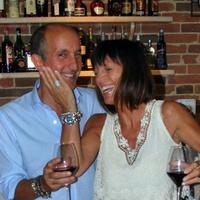
Bruno e Marisella Batinti
Owners and hosts of Le Torri di Porsenna
Bruno and Marisella Batinti own Le Torri di Porsenna, the abbey they found derelict in 2014 and brought back as a charme agriturismo on the Umbria-Tuscany border. They live here all year: the roads, villages and seasons L'Almanacco writes about are the ones they drive every week.