
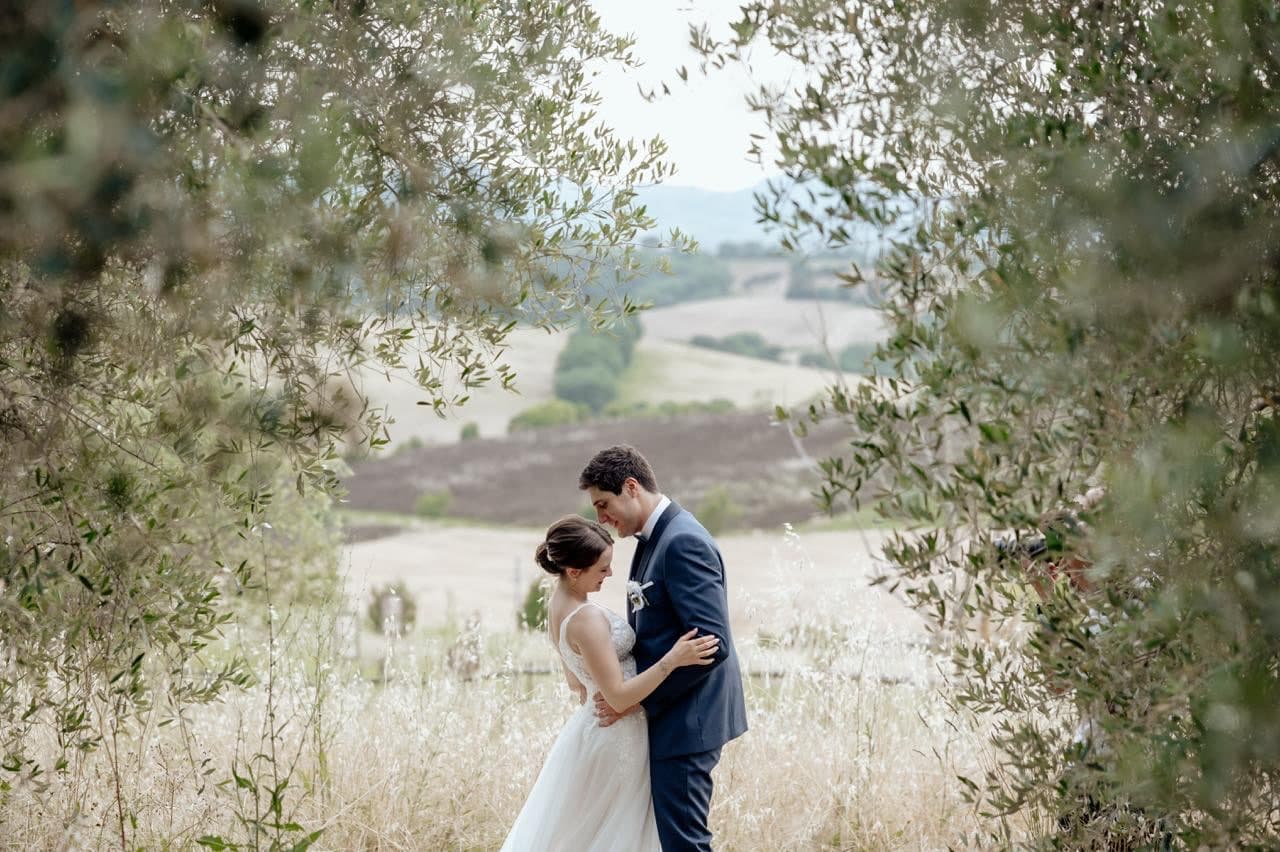

The most searched phrase for this part of Italy is "wedding venue in Tuscany", and the map behind that search pulls together addresses across the provinces of Siena, Arezzo and Perugia, with a regional border running straight through them that nobody flags. Le Torri di Porsenna is one of those addresses, and it is in Umbria: at Petrignano del Lago, a hamlet of Castiglione del Lago, in the province of Perugia. We are not writing this to correct anyone who found us while searching for Tuscany. We are writing it because it is true, and because the rest of this page only makes sense once that is settled.
Cortona is 22 minutes away, Montepulciano 30: the closeness to Tuscany is real, even though our region is not. This guide covers what it actually means to plan a wedding right on this border: how many guests genuinely fit in the venue, what the property is like, where the couple and guests sleep, what to check for a civil or religious ceremony, when it makes sense to marry here, and how to move people around over the wedding weekend.
It is written for a couple weighing up this area for their wedding, particularly if you are coming from outside Italy and are still working out the difference between a venue in Tuscany and one a short drive from it.
Why "wedding venue in Tuscany" leads here too
Anyone typing that phrase, or its German equivalent, is describing a landscape, not an administrative line: hills planted with olives and vines, stone hill towns, the light over the Val di Chiana. That landscape does not stop at the regional boundary, and a fair number of the venues answering that search sit exactly where we do, straddling the border rather than sitting inside Tuscany.
The trouble starts when an Umbrian property markets itself as Tuscan to catch that search. We do not do that: we are an agriturismo in Umbria, and we stay one even when the enquiry that reaches us mentions Tuscany. What we can genuinely offer is the distance: a few minutes from Cortona, half an hour from Montepulciano, the same landscape that anyone searching "Tuscany" has in mind, reachable by car faster than it takes to cross Florence by taxi.
Where we actually are, and what you can reach from here
Lake Trasimeno is 5 to 10 minutes away, Castiglione del Lago much the same. Cortona, the first Tuscan town you reach from here, is 22 minutes. Montepulciano is 30, Chiusi and Città della Pieve 20. On the Umbrian side, Perugia is 44 minutes and Assisi an hour. Further into Tuscany, Pienza is 46 minutes, Val d'Orcia 52, Orvieto 54.
The Val di Chiana, the farmed plain that sits half in Umbria and half in Tuscany, is right next to the property. That is the practical reason this base works for a wedding with guests arriving from both sides of the border, or for a couple who want their formal photographs in a Tuscan hill town in the morning and to be back here for the reception that afternoon, without losing two hours to driving.
How many guests: 70 seated, 120 standing
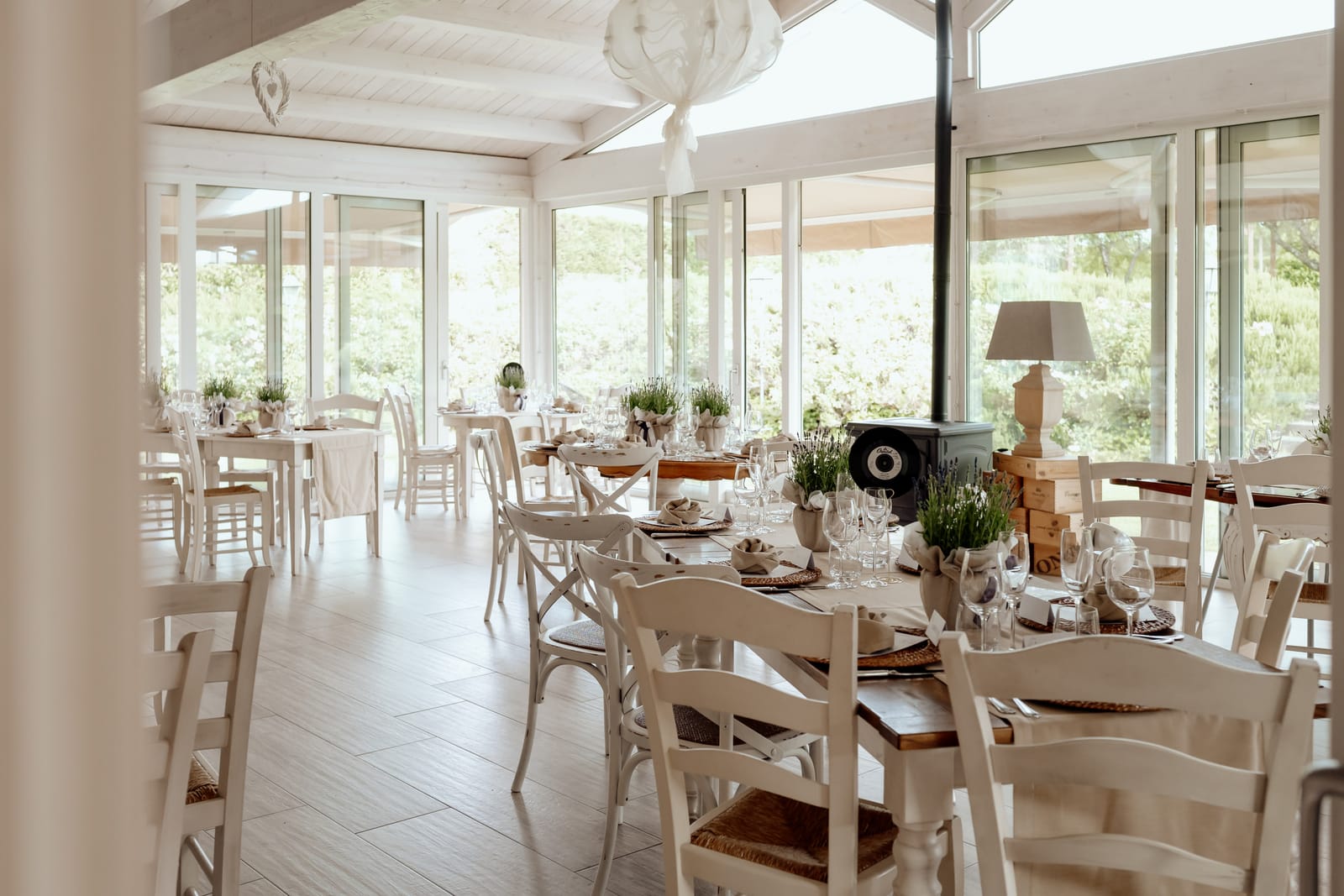
This is the number to check before falling for the photos. The venue seats up to 70 guests for the ceremony and the wedding dinner, or holds up to 120 for a standing reception. These are two different setups, not one party with extra chairs added: a table-served lunch or dinner for 70, or a more informal standing reception for up to 120.
It needs saying as plainly as everything else here: a seated wedding for 150 does not fit, and forcing it in makes the day worse for the couple and the guests alike. Anyone with a long guest list would do well to count names before booking a site visit, not after.
What the venue is like: a former monastery in an olive grove
The property is a former monastery, set in a park with roughly 450 olive trees. There is a heated indoor panoramic pool, an outdoor panoramic pool in the grounds, a Finnish sauna and a hammam: spaces built for the rest of a stay, not only the day of the ceremony. The in-house restaurant serves Umbrian and Tuscan cooking, the same dual identity that describes the property's position on the map.
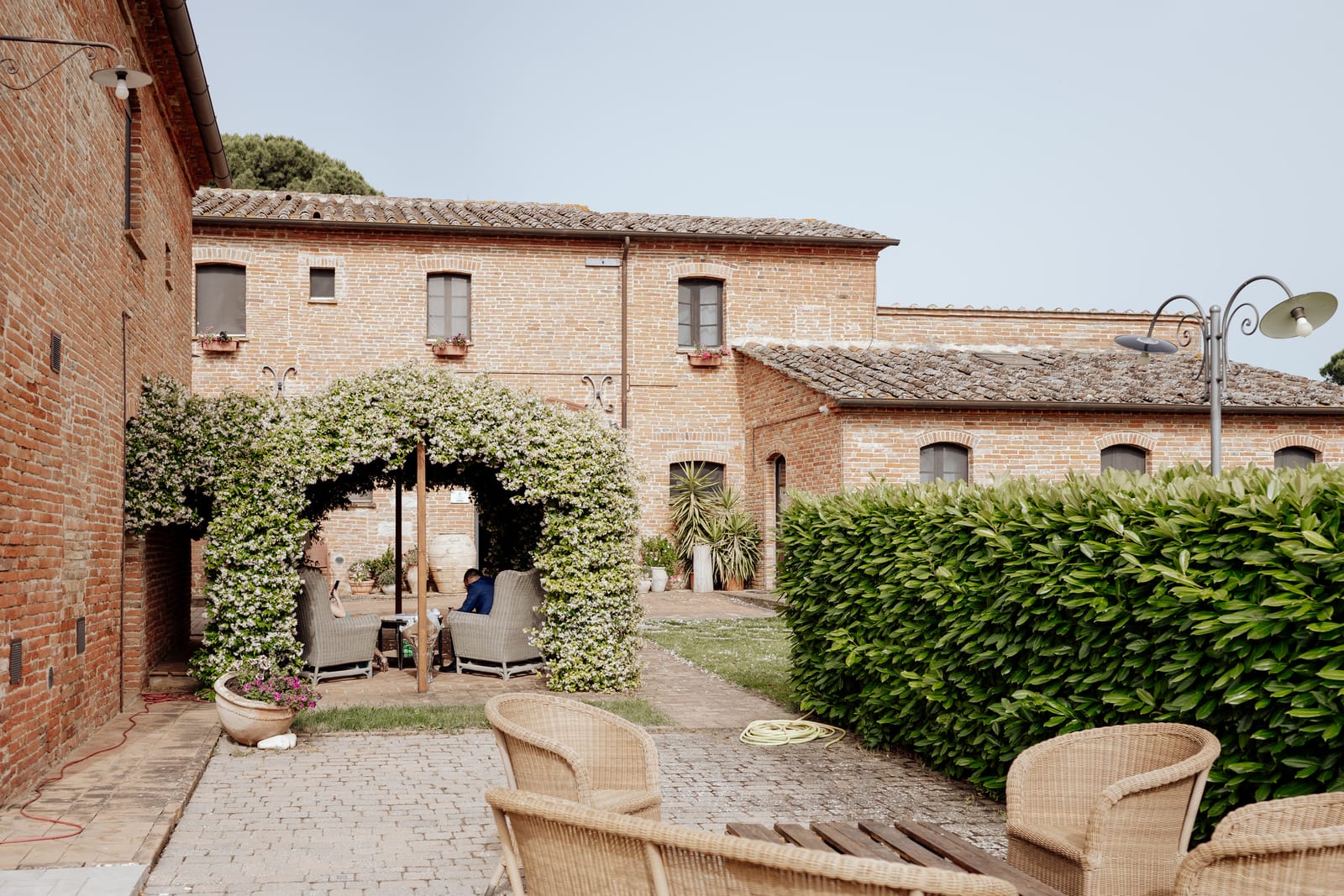
We are not going to list, room by room, exactly what is used for the ceremony and what for the reception: it varies from wedding to wedding, and our wedding venue near Tuscany page has the current detail. What we can say with confidence is that these are the working spaces of a real agricultural property, not an events hall dressed up from scratch.
Where the couple and guests sleep: the 13 rooms
The property has 13 rooms across five room types. That is enough for the couple and a tight circle of family and close friends, not for the full guest list of a 120-guest standing reception: do the maths before you plan, not during. Anyone who wants to see the room types can do so on the rooms page.
Guests who do not fit into the 13 rooms need a car or an organised transfer, because we are in the countryside and the area has no taxi service built for people who do not live here. Parking at the property is free, which helps anyone arriving by car, but it does not solve the problem for a guest who flies or takes the train and does not drive. Couples marrying here sometimes choose the treehouse for their own two nights: see our treehouse stay between Umbria and Tuscany for what it involves.
Civil, symbolic or religious ceremony: what to check, and with whom
This is the one section where we are being deliberately cautious, because getting it wrong costs more than any other detail of the day. We are not going to set out what documents are needed, what deadlines apply, or what steps a couple has to follow with an Italian comune to marry here: these change with the couple's nationality, the type of ceremony chosen and the specific comune involved, and a wrong answer here is worse than no answer at all.
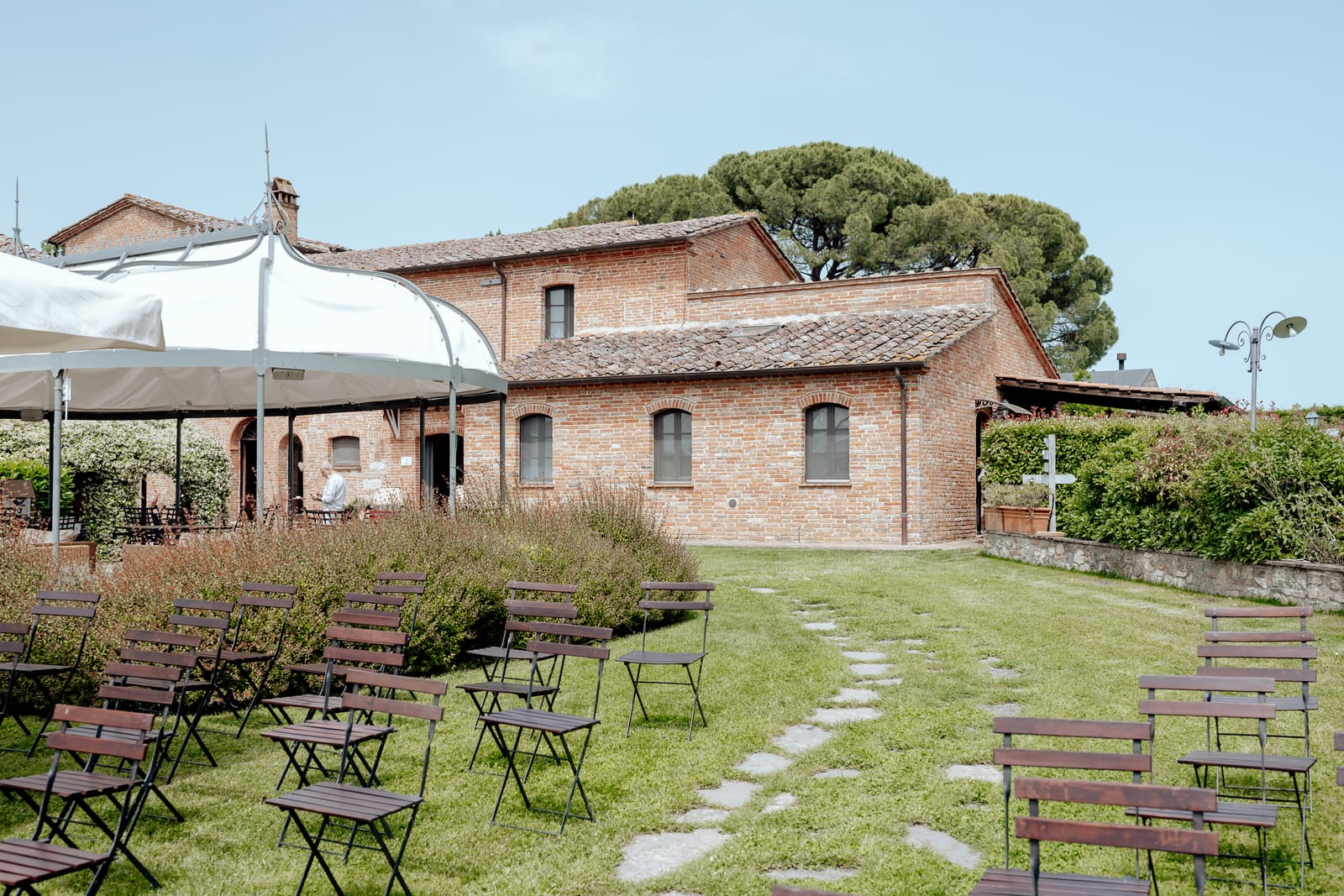
What we can say: always check with the relevant Italian comune and with your own consulate or embassy, well ahead of the date you have in mind, before treating any detail as fixed. To find out which ceremony formats the property itself can host, the weddings page is the right place to start, not this article.
When to marry here: seasons, light and the July and August heat
May, June and September are the months when the countryside around us photographs best: green in late spring, golden by the end of summer, with temperatures that stay manageable even for an early-afternoon ceremony outdoors.
July and August are a different matter. The Trasimeno basin holds onto the heat, and an outdoor ceremony at two in the afternoon in high summer is hard on the couple and just as hard on guests in suits and formal dresses. Anyone set on these months does well to move the ceremony to late afternoon, around five or six, and leave the middle of the day for the pool or the spa.
Getting around the wedding weekend: why a car matters
We are not within walking distance of a train station, and the area is not built for anyone moving around without their own transport. The nearest station is Chiusi, 20 minutes away by car. For a wedding with guests coming from outside the region or from abroad, that means planning ahead: hire cars, a private minibus for the main journeys, or both, depending on how many guests drive.
It is a detail that glossy photographs of countryside venues tend to leave out, but it genuinely changes the experience for the people attending: a countryside wedding needs more transport planning than one in a city with a metro station outside the door.
What to do nearby, before and after the wedding
Couples planning a wedding here often stretch the stay by a few extra days, for themselves or for guests travelling a long way. Cortona works well as a full day out, and it is the natural first stop: our guide to Cortona in a day covers what to see without getting caught in the old town's busiest hours. Montepulciano, with its Vino Nobile cellars, is another half-day well spent, covered in our guide to Montepulciano and Vino Nobile. Anyone who wants to stay on the Umbrian side can visit Castiglione del Lago, 5 to 10 minutes away and easily done in an afternoon. Couples who turn the wedding into a longer stay often follow our romantic weekend guide for the days either side of the ceremony.
Planning a first visit
The photos and the numbers on this page are enough to work out whether the area is right for you, not enough to book a date. The next step is seeing the property in person, with a rough guest list already sketched out and your questions about capacity, spaces and ceremony formats ready to ask. The weddings page is the right place to start arranging a visit and to get the current detail on the property.
Frequently asked questions
Is Le Torri di Porsenna in Tuscany or in Umbria?
It is in Umbria, at Petrignano del Lago, a hamlet of Castiglione del Lago (province of Perugia). Cortona, the first Tuscan town you reach from here, is 22 minutes away; Montepulciano is 30. The closeness to Tuscany is real, but our region stays Umbria.
How many guests can you host for a wedding?
Up to 70 guests seated for the ceremony and the wedding dinner, or up to 120 for a standing reception. These are two different setups, not the same capacity with more chairs squeezed in.
Do guests need a car?
Yes. We are in the countryside, the nearest station is Chiusi, 20 minutes away, and the area has no taxi service built for visitors. For a wedding with a lot of guests, it is worth arranging hire cars or a private minibus.
Can we hold a civil, symbolic or religious ceremony here?
Which formats the venue can host is covered on the wedding page of the property. For the legal side, particularly if you are a couple from abroad, always check with the relevant comune and your own consulate before you commit to a date.
When is the best time of year to marry here?
May, June and September, when temperatures stay manageable even outdoors. July and August work better with a late-afternoon ceremony, to avoid the heat of the middle of the day.
Where do guests stay if they do not fit in the 13 rooms?
There is other accommodation in the area; it is worth checking availability well ahead, especially in high season. The property's 13 rooms, across five room types, cover the couple and a tight circle of close guests.
- Val di Chiana, Wikipedia

Bruno e Marisella Batinti
Owners and hosts of Le Torri di Porsenna
Bruno and Marisella Batinti own Le Torri di Porsenna, the abbey they found derelict in 2014 and brought back as a charme agriturismo on the Umbria-Tuscany border. They live here all year: the roads, villages and seasons L'Almanacco writes about are the ones they drive every week.