

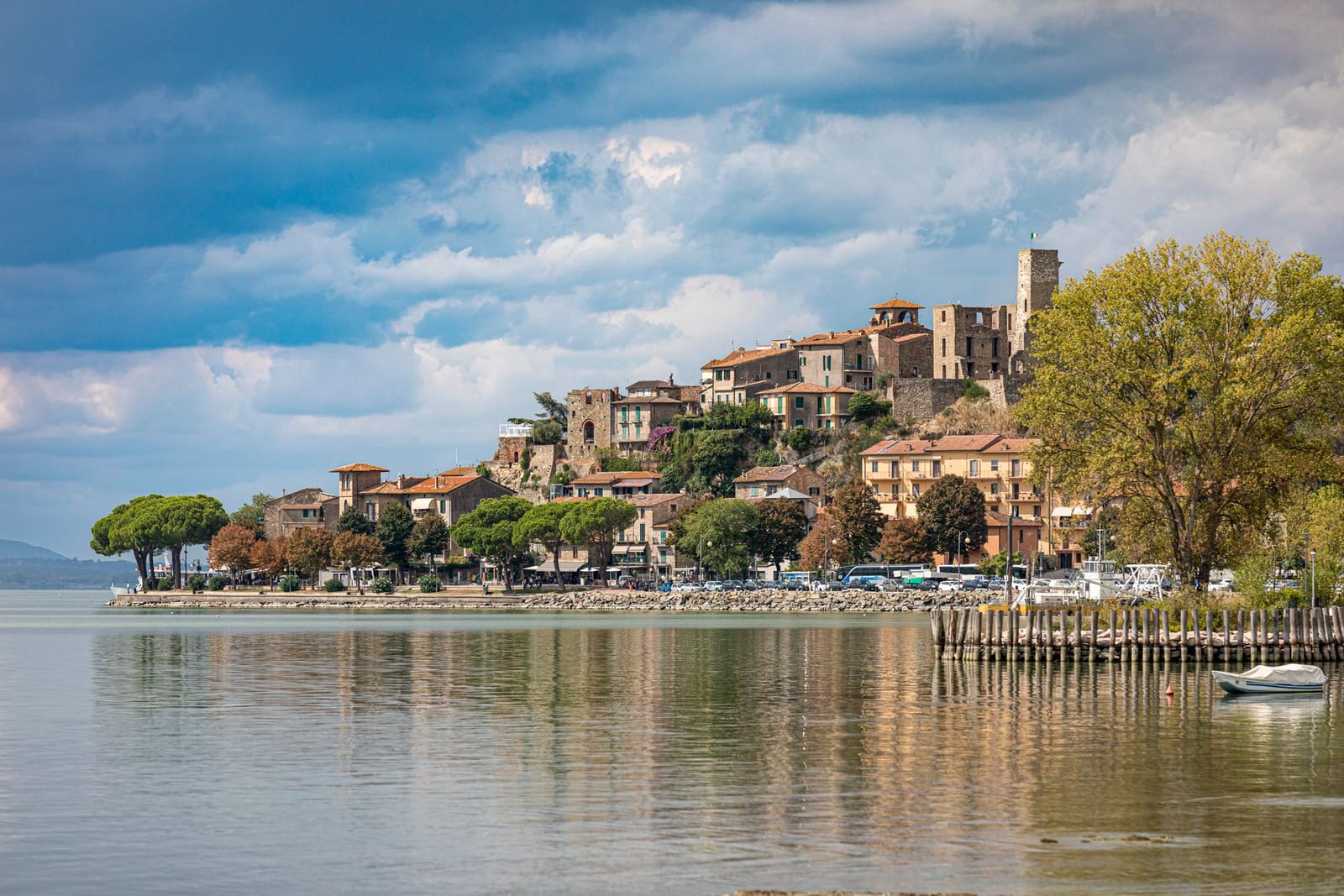
The ferry for Isola Maggiore leaves from a jetty in Passignano sul Trasimeno, and for anyone stepping off the train or parking near the port that jetty tends to be the only stop: ticket, boarding, return. The town stays behind, a skyline of roofs beyond the car park, while most lake guides focus on where the ferry takes you next.
In short: this guide covers the town above the jetty, not the crossing. Passignano climbs steeply from the lake to a Rocca that has been demolished and rebuilt more than once, with a museum holding boats carved from a single oak trunk, the last traditional boat still afloat on Lake Trasimeno, and a station from 1866 that makes it one of the few points on the lake reachable without a car. This guide covers the Rocca, the boat museum, the churches, the lakefront, the beach and the train.
Umbria sits inland between Florence and Rome, and Passignano is on the northern shore of Lake Trasimeno, on the Umbrian side of the border with Tuscany. This is written for anyone who has already read about the islands and the Palio elsewhere on this site, and wants to know what is left to see in Passignano once they step off the ferry, or before they get on it. A car is effectively required for the rest of the lake and the hill towns; Passignano itself is the exception.
The old town that climbs from the port
Passignano now counts 5,691 residents, on the northern shore of Trasimeno. The medieval core still has the look of a fortified village: walls, a gatehouse, narrow lanes climbing from the lakefront towards the highest point of the town. It is not a centre rebuilt for tourism: among its workshops, wrought-iron craftsmanship is still practised, a trade passed down through generations.
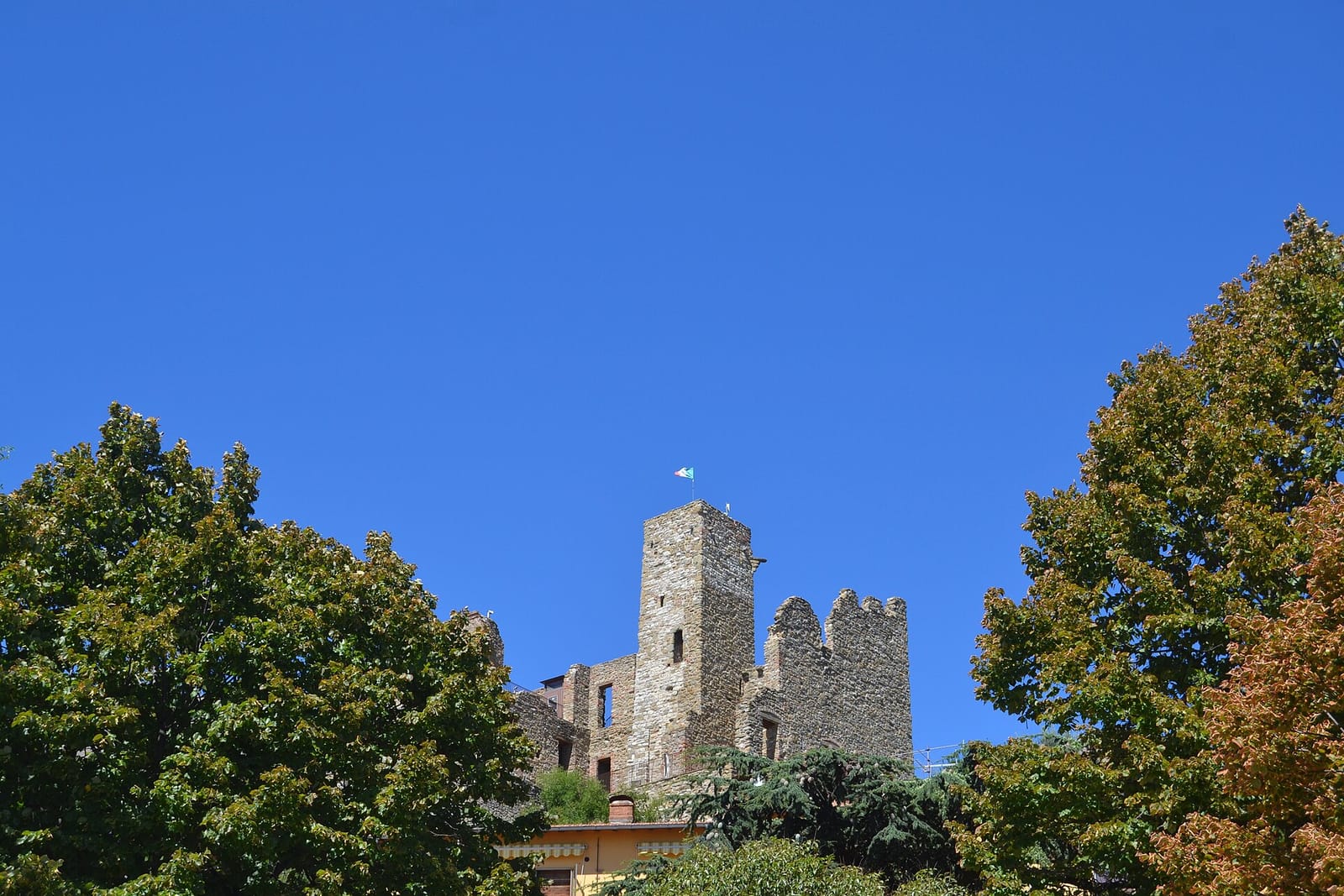
The way up is the Scalette di San Bernardino, 104 steps that are also one of the hardest stretches of the Palio delle Barche at the end of July, when the carriers run up them with a boat on their shoulders. The steps lead to the Torre dell'Orologio, the keep of the castle's second fortified phase, tall and without direct ground-level access for defensive reasons, and then on up to the Rocca. Nearby stands the Torre Triangolare, from the fourteenth century, a triangular plan rare in Italy that made it onto the town's coat of arms: during Palio week it hosts the Incendio del Castello, a fireworks display recalling the actual 1495 siege between the Oddi and the Baglioni.
The Rocca, demolished and rebuilt more than once
The Rocca has Longobard origins, between the fifth and sixth centuries, when it stood in a dominant position above the first settlement. The marquises of Tuscany, who held it until the eleventh century, built the first square walls; in 1202 Perugia enlarged it into a proper defensive castle on the Tuscan edge of its territory. During the Renaissance it was fought over by the Della Corgna, the Baglioni and the Oddi, the same family and the same 1495 episode told in our guide to the Palio delle Barche.
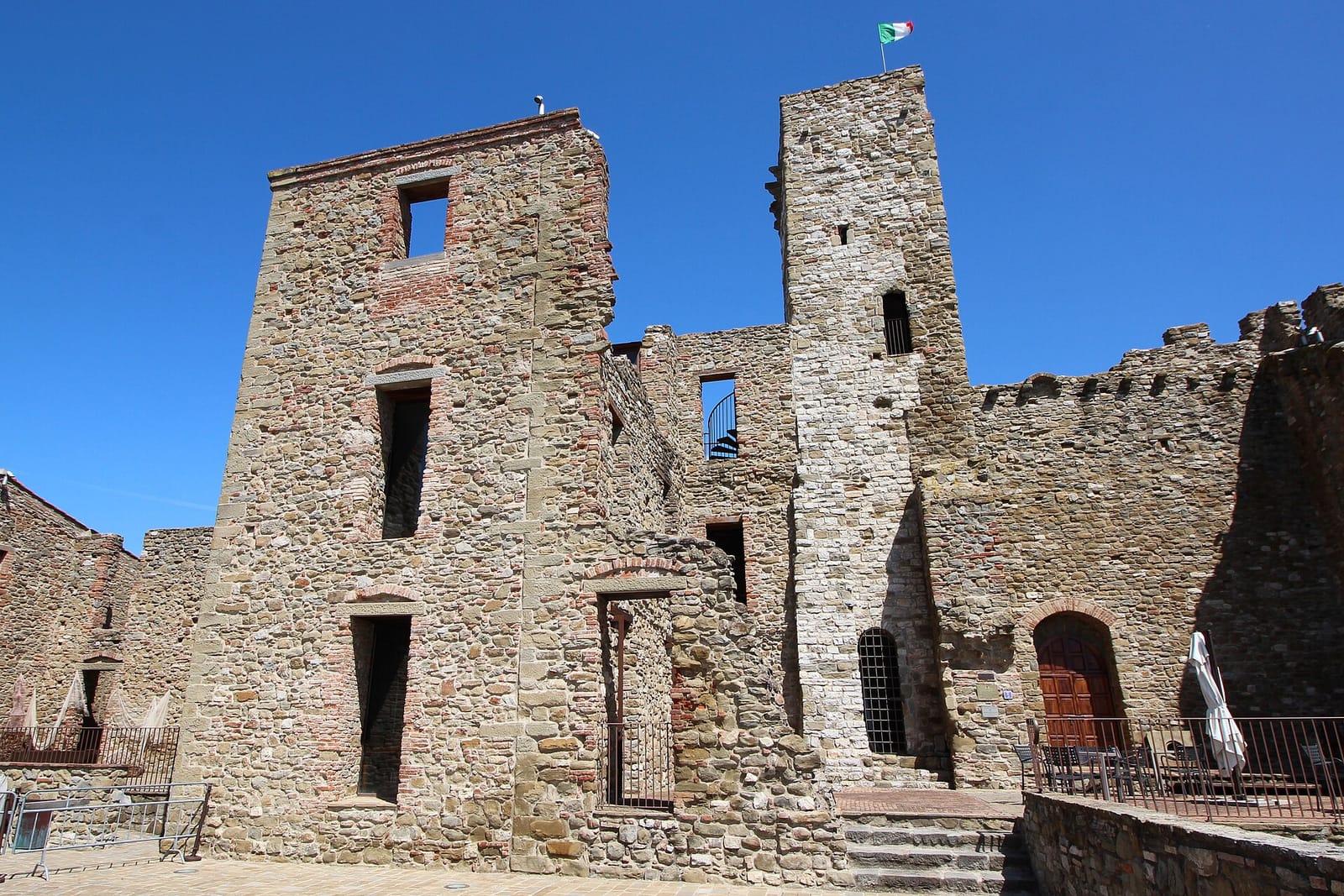
What stands today is only part of that story. In 1816 to 1817 the Papal government ordered it demolished, and the stone was used to raise the town's roads, which had been damaged by the lake's floods. It stayed a ruin for a long time, restored more than once over the twentieth century, and reopened to the public only in 2008. One thing needs saying plainly: it only opens on Saturdays and Sundays, so anyone staying nearby on a weekday cannot get inside, only see it from outside on the way up the steps.
The boat museum inside the walls
Inside the Rocca, since July 2004, is the boat museum, a documentation centre for the traditional boats of Italy's inland waters. The most important pieces are dugouts: boats carved from a single oak trunk, found along the shore near Passignano during dredging and dated to around the year 1200. There is also a reconstruction of the barchetto del gorro, used until the 1930s for fishing with the large drag net that gave it its name, plus panels on lake fishing before it became a marginal trade.
It is a small museum, not built to fill a whole afternoon: two rooms, few pieces, but pieces you will not find elsewhere on the lake. It keeps the same hours as the Rocca, so the same weekend rule applies here too.
The last wooden boat on Trasimeno
The lake's traditional boats show themselves in precise details: a pointed prow called the bécco, a flat bottom for moving through reed beds and shallow water, a blunt stern called the culaccio. One detail even gives away where a boat is from: the position of the oarlock, called the kavijone, at the centre of the boat. On the right, the boat is from Isola Maggiore or Passignano; everywhere else on the lake it sits on the left.
Construction, built around a base raft called the uscio, with side planks called sponde, cross beams called dragoni and ribs called peducci, stopped in the 1950s and 1960s, when professional fishing went into decline here too. Passignano still moors the last traditional boat in use on the lake today: red, built in 1985 by boatbuilder Roberto Baldoni to the pattern of San Feliciano's boats, iroko sides and a larch bottom. Its owner, Gisberto Pierella, maintains it himself, sanded back to bare wood, never covered in fibreglass.
The churches of the old town
Three churches tell the town's story away from the lake. The parish church of San Cristoforo predates the year 1000, built on the ruins of a pagan temple: it is the oldest of the three and the least visited. San Rocco dates from the sixteenth century. The Santuario della Madonna dell'Oliveto, also sixteenth century, holds a Madonna and Child attributed to Ascanio da Cortona, the same sculptor who appears again in the Rocca's own history.
None of the three competes with the great churches of Perugia or Assisi, and it is worth saying plainly: anyone looking for museum-grade frescoes will not find them here. These are village churches, small, still used as such, open more for Mass than for visitors.
The lakefront, not just the crossing point
Passignano's lakefront is not only the point where the ferry to Isola Maggiore leaves, one of three ports along with Tuoro Navaccia and Castiglione del Lago, as our guide to what to see at Lake Trasimeno explains. It is also a proper promenade, with bars, restaurants and a piece of music history few people know: at the Ristorante Lidò, on a deck over the water, Franco Migliacci wrote the first words of Una rotonda sul mare, the song later dedicated to Senigallia instead. Passignano keeps only the anecdote and the table.
In the evening, with the town's lights reflecting on the water and the restaurant tables full, the lakefront is the part of Passignano closest to what you would expect from a lake town. By day, out of season, it is far quieter, almost empty between one ferry and the next.
The beach, and swimming in the lake
For swimming there is Sualzo Beach, on the lakefront, a few minutes from the centre: an equipped beach with pedalo, canoe and SUP hire, beach volleyball and five-a-side football courts, a bar. It is one of the lake beaches already mentioned in our general guide to the lake, with one extra detail here: the management concession runs to 2037, so this is not a passing operation but a facility built to last.
The same rule that applies to the whole lake applies here: Trasimeno has no natural outflow, so by late summer, as the level drops, the shallow margin widens and the lake bed near the shore gets muddier. That is not a fault of the beach, it is Trasimeno in September, as our general guide to the lake explains.
The station, and what arriving without a car actually means
The railway station at Passignano sul Trasimeno opened in 1866, with three tracks, on the Terontola-Foligno line. For nine years, until 1875, that line was the main stretch of the Florence-Rome route, the most important railway connection in Italy at the time; then the opening of the Terontola-Chiusi line downgraded it to a cross-country connection, the role it still plays today towards Perugia in one direction and towards Cortona and Tuscany in the other.
One detail worth knowing: the station is about 700 metres from the historic centre, a few minutes on foot, closer than the station at Castiglione del Lago, which is a kilometre out, as our guide to that town explains. For the town itself, the Rocca and the beach, the train genuinely is enough. For everything else, meaning the hillside agriturismi and the rest of the lake, a car remains necessary, as it does across the whole of Trasimeno.
The Saturday market and the Palio, briefly
Passignano's weekly market is on Saturdays, in the historic centre. The Palio delle Barche, always on the last Sunday of July, with its four rioni and carriers running boats on their shoulders up the very Scalette di San Bernardino mentioned earlier: the full guide, with the 2026 date and the rest of the rules, is in our article on Trasimeno's markets and festivals.
One detail that guide does not cover: during Palio week, the Torre Triangolare hosts the Incendio del Castello, a fireworks display recalling the same 1495 siege told above.
When to come, and where the town looks out from
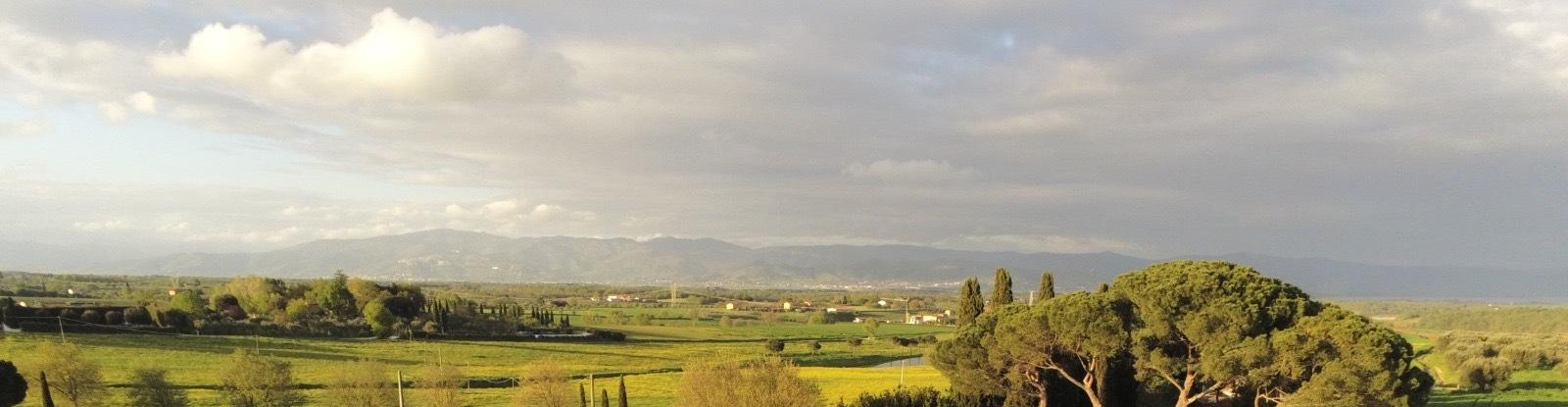
Passignano sits on the northern shore of Trasimeno, the side opposite us: from Le Torri di Porsenna the lake is 5 to 10 minutes away, but the southern and northern shores remain two different parts of the loop, as our general guide to the lake explains, along with how to plan the full circuit in a single day. Anyone preferring two wheels to a car for this side of the lake will find the full route in Lake Trasimeno by bike.
For the town itself, spring and early autumn remain the best months: less crowding on the lakefront, the Rocca open at weekends without a queue. In summer Passignano fills up, especially when the Saturday market and Palio week overlap with the beach crowds. To plan the stay, our surroundings page has every distance from here, and our rooms are the starting point for anyone wanting to explore this side of the lake too.
Frequently asked questions
What is there to see in Passignano sul Trasimeno beyond the ferry port?
The medieval Rocca with its boat museum, the old town climbing via the Scalette di San Bernardino to the Torre dell'Orologio and the Torre Triangolare, the churches of San Cristoforo, San Rocco and the Madonna dell'Oliveto, the lakefront promenade and a proper swimming beach.
Can you visit the Rocca of Passignano every day?
No. The Rocca only opens on Saturdays and Sundays, and the boat museum inside it keeps the same days. Anyone staying nearby on a weekday sees it only from outside, on the way up the Scalette di San Bernardino.
How do you reach Passignano sul Trasimeno by train?
On the Terontola-Foligno line, opened in 1866. The station is about 700 metres from the historic centre, a few minutes on foot, and connects towards Perugia in one direction and towards Cortona and Tuscany in the other.
What is in the boat museum at Passignano?
Dugout boats carved from a single oak trunk, found during dredging near the shore and dated to around the year 1200, plus a reconstruction of the barchetto del gorro fishing boat used until the 1930s.
Where do you swim at Passignano sul Trasimeno?
At Sualzo Beach, on the lakefront, an equipped beach with pedalo, canoe and SUP hire. By late summer, when the lake level drops, the shallow margin near the shore gets muddier, as it does across the whole of Trasimeno.
Do the market and the Palio delle Barche happen in Passignano?
Yes, the market every Saturday and the Palio delle Barche on the last Sunday of July. The full guide to both is in our article on Trasimeno's markets and festivals.
- Passignano sul Trasimeno, Wikipedia
- Stazione di Passignano sul Trasimeno, Wikipedia
- Ferrovia Terontola-Foligno, Wikipedia
- Comune di Passignano sul Trasimeno - Rocca Medievale, Comune di Passignano sul Trasimeno
- Comune di Passignano sul Trasimeno - Museo delle barche, Comune di Passignano sul Trasimeno
- Rocca e Museo delle Barche | GranTourTrasimeno, Grand Tour Trasimeno
- La Barca del Lago Trasimeno | GranTourTrasimeno, Grand Tour Trasimeno
- Al Trasimeno c'è ancora una barca in legno, quella rossa di Gisberto, Associazione Arbit
- Triangular Tower, Experience Trasimeno
- Torre dell'Orologio, Experience Trasimeno
- Cosa vedere a Passignano sul Trasimeno e dintorni, Souvenir di Viaggio
- Sualzo Beach - Spiagge Lago Trasimeno, Trasimeno Land
- Lago Trasimeno, stabilimento balneare di Passignano cerca un nuovo gestore: concessione..., PerugiaToday

Bruno e Marisella Batinti
Owners and hosts of Le Torri di Porsenna
Bruno and Marisella Batinti own Le Torri di Porsenna, the abbey they found derelict in 2014 and brought back as a charme agriturismo on the Umbria-Tuscany border. They live here all year: the roads, villages and seasons L'Almanacco writes about are the ones they drive every week.