

With two days here, the moment an over-ambitious plan usually falls apart is departure morning: bags already in the car, check-out done, and a free hour that feels too short for a second town and too long to sit still. It is the sign that the previous day and a half already tried to do more than the time really allowed, and that the bill always arrives eventually.
With two days here the real time you have is one arrival afternoon, one full day and one departure morning: not enough for two towns, enough to do one properly, or to give the whole day to Lake Trasimeno instead of an Umbrian city. This article explains how to choose that one day, what genuinely fits into the arrival afternoon and the departure morning, and what is worth leaving out without a second thought.
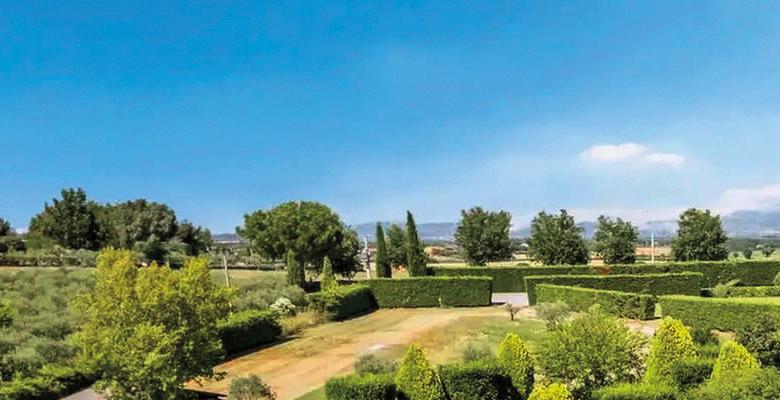
Le Torri di Porsenna sits in Umbria, on the border with Tuscany, in the countryside between Florence and Rome, a few minutes from Lake Trasimeno. This is written for anyone with exactly two days, not three, and a car, staying or about to book one of our rooms: better to learn your real time budget from an article than while queuing for a car park with two stops still to make. For the fuller range of what the region offers, see our guide to things to do in Umbria; this article narrows that down to what genuinely fits in two days.
Why two days is not three days minus one town
In our guide to three days in Umbria, the third day, the day of departure, still stretches into a real trip to Perugia or Orvieto despite the 11am check-out, because the two days before it leave enough slack to allow it. That is a stay with two full days to spend, not one.
With two days that slack does not exist. The departure day here is only a morning, and it needs treating as one, not stretched by force into a second excursion. Try anyway, chasing two towns in two days, and the result is usually the opposite of what you wanted: two half-done experiences instead of one done well, with more time spent driving than inside the walls of either place.
The arithmetic: one afternoon, one day, one morning
Do this arithmetic before you book, not once you are already here. Between the 3pm check-in on the first day and the 11am check-out two days later, roughly forty-four hours pass, not two whole days as the calendar suggests when a booking site says "2 nights". Dates and rates shift through the year, so check the current rates for the exact two days before you commit.
Take out sleep, and what is left splits into three uneven pieces: one afternoon on day one, one full day on day two, one morning on day three. The question that matters, before even choosing what to see, is how to use that one full day, because it is the only stretch long enough for a proper town.
The arrival afternoon: the lake, without touching the day after
Check-in is from 3pm, so the first afternoon is short by design. Use it for Lake Trasimeno, 5 to 10 minutes away, and for Castiglione del Lago, at the same distance: the Rocca del Leone and the walk along the walls take a comfortable hour and a half, leaving time and light for a drink looking over the water before dinner.
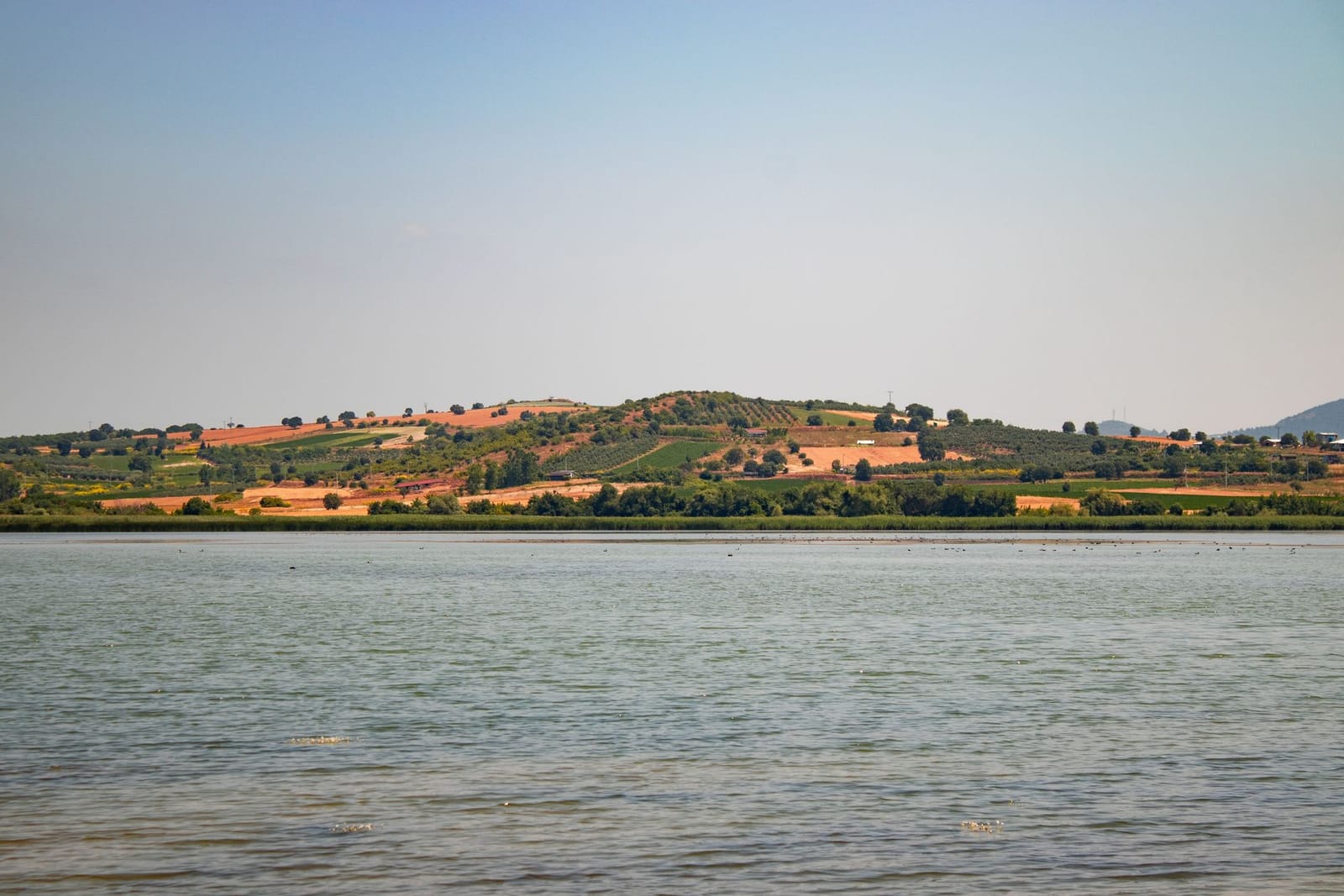
This first afternoon is not a minor stop to make up for the next day. It is designed so it does not touch the full day that follows: anyone arriving here tired from travel has already seen something without having to drive far.
The one full day: the choice that actually matters
The second day, the one without check-in or check-out pressing on it, is the only stretch of time long enough for a proper Umbrian town. One simple rule: choose it before you arrive, not in the car on the morning itself, because turning back halfway through the day to change your mind costs more time than it looks.
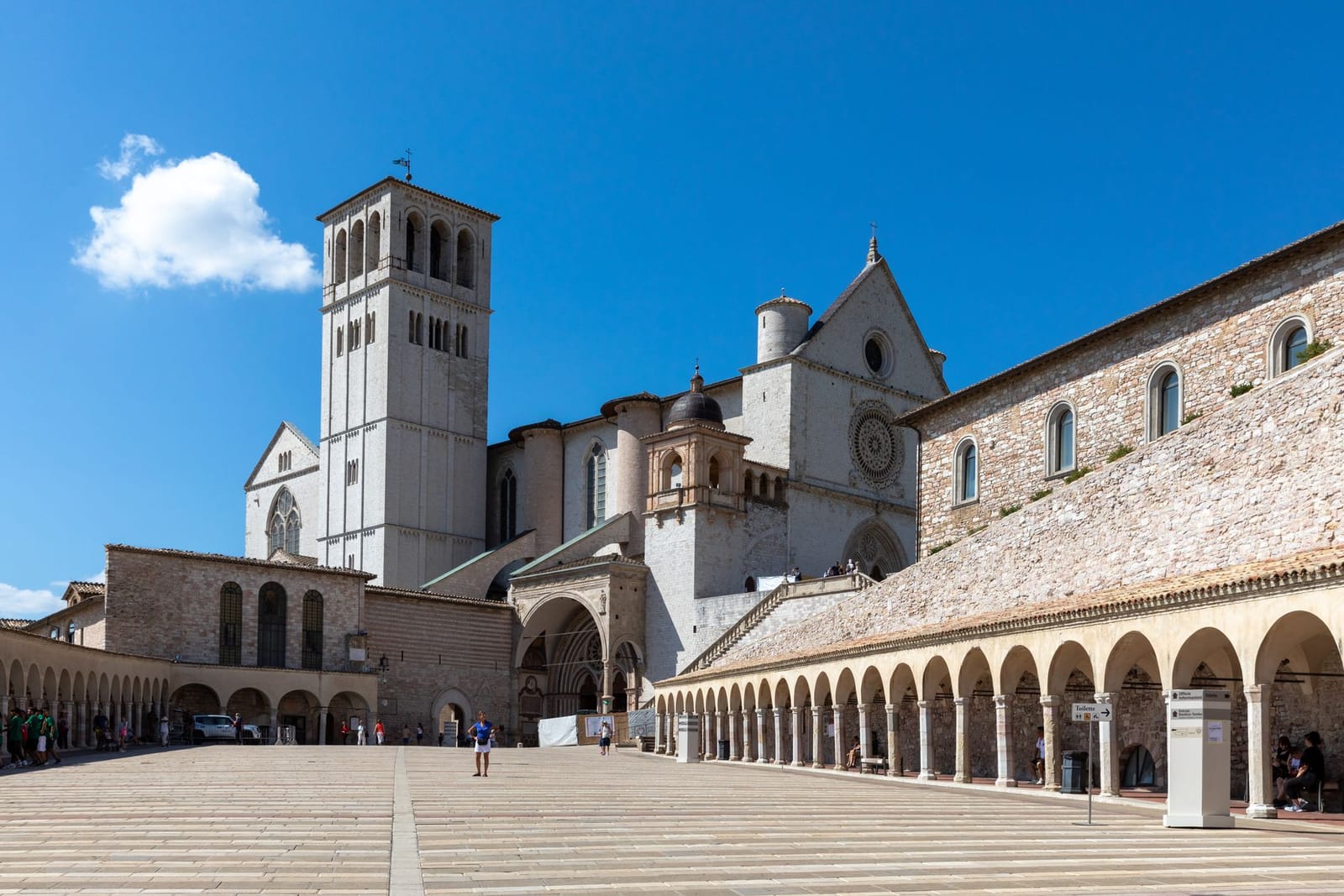
Assisi, if you want the fullest day
Assisi is an hour from here, the furthest of the three and the one that asks for a whole day: the Basilica di San Francesco and the climb up to the Eremo delle Carceri, on Monte Subasio, do not work well squeezed into a couple of hours borrowed from another stop. The historic centre is a restricted traffic zone, so drivers park at Porta Nuova, linked to the centre by escalators, or in the underground car park at Piazza Matteotti. Setting off early, before the coach groups arrive mid-morning, makes the difference between an empty square and a full one.
Perugia, if you want a livelier, closer city
Perugia is 44 minutes away, the closest of the three Umbrian cities and the easiest to fit into a single full day: park at Piazza Partigiani and go up to Piazza Italia through the Rocca Paolina, a sixteenth-century fortress with an escalator system running through it in place of the old stairs. Choose it and the day fills with shops, restaurants and daily life around the monuments, not just old stone, but you are choosing it over Assisi's basilicas and Orvieto's underground city: on two days there is no return trip to pick up either.
Orvieto, if you want the clifftop and the quiet
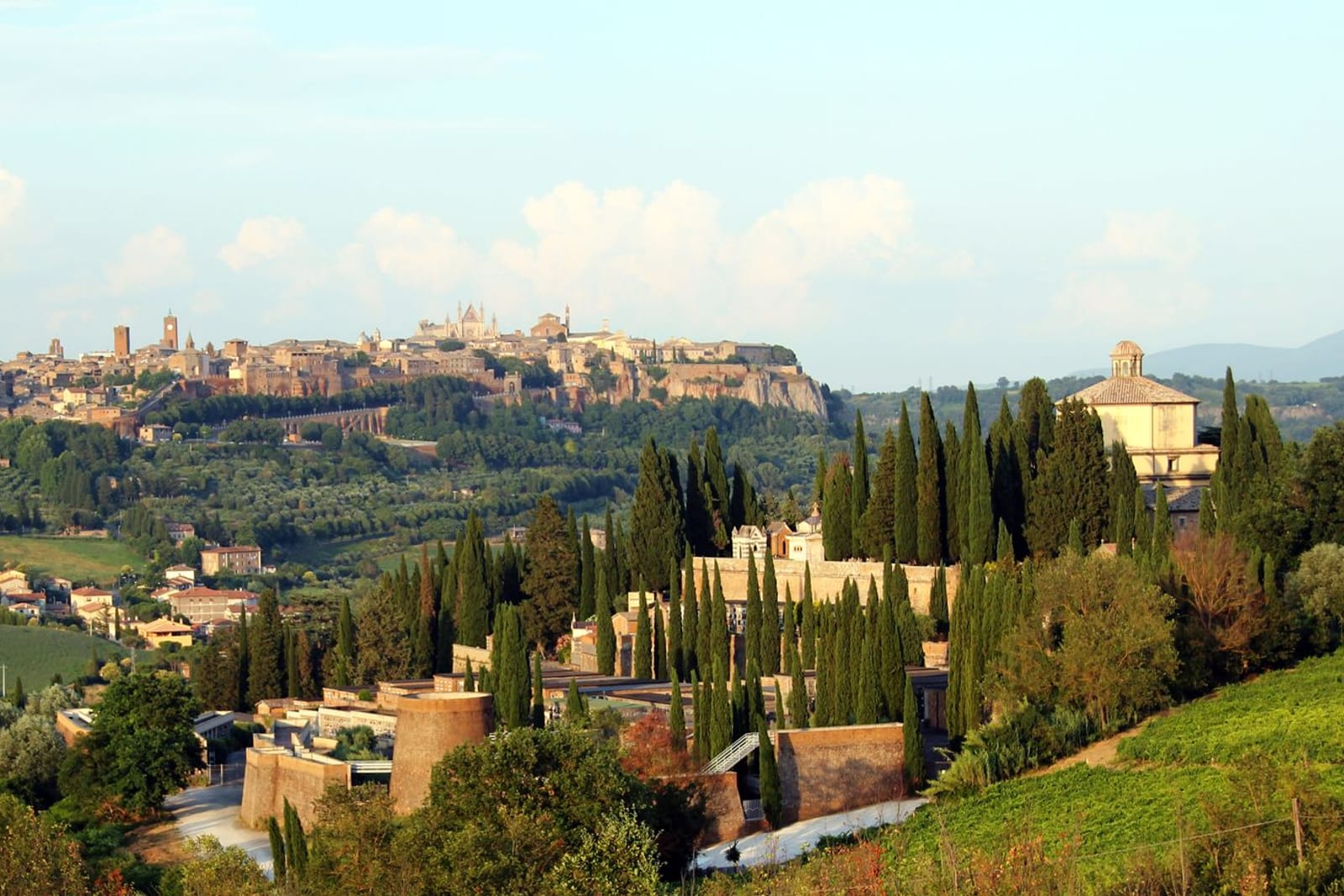
Orvieto is 54 minutes away, perched on a cliff of tufo rock visible from a distance. Drivers who leave the car at Campo della Fiera go up by lift and escalator into the centre, or park near the train station, down in the valley, and take the funicular up to Piazza Cahen. It is the quietest of the three, but picking it for the one full day means the trip stops there: Assisi and Perugia both wait for another visit, not this one.
Or a full day at the lake, instead of a town
There is a second option, and it is worth weighing as seriously as any town: giving the one full day to Lake Trasimeno itself, rather than a trip out. The same rule applies here too: on a single day you choose either an island or a tour of the shoreline towns, not both.
Isola Maggiore, the only inhabited one of the lake's three islands, is also reachable by ferry from Castiglione del Lago, 5 to 10 minutes from here, on the navigation service run by Busitalia. Alternatively, a tour of two or three shoreline towns, perhaps Passignano and San Feliciano, fills the same day with fewer ferries and more coastal driving. Our guide to what to see at Lake Trasimeno and the one dedicated to the islands of Lake Trasimeno go into the detail of both routes.
This is the most honest point in this article, and it deserves saying plainly: anyone who picks the lake for the one full day will not see any of the three Umbrian cities on this trip, not even Perugia at 44 minutes. There is no way to do both well in two days, and anyone who tries to squeeze them in ends up seeing the lake in a rush and the city barely at all.
Departure morning: what fits, and what does not
Check-out is by 11am, and this morning needs treating for what it is: a morning, not a compressed day. What genuinely fits is a slow breakfast, bags packed without rushing, and maybe a walk among the property's roughly 450 olive trees before loading the car.
What does not fit, and this is the part our three-day guide can allow that this one cannot, is a second stop outside the property. In the three-day stay the third day still turns into a real trip before leaving, because the rest of the stay leaves the slack for it. Here that slack does not exist: even the closest destination, the lake at 5 to 10 minutes, risks turning a calm morning into a race against the check-out clock.
What to leave out, and why that is the hardest part
This is the part most short guides skip: anyone wanting to tick off several places in one trip will not be satisfied by a two-day itinerary built this way. If the goal is seeing as many places as possible, our guide to three days in Umbria, or a longer stay planned with the general guide to what the region offers, fits better.
The Tuscan border is a few minutes from here, and Cortona, 22 minutes away, is the most real temptation of all. On these specific two days we leave it out on purpose: the one full day is not enough for an Umbrian town and a Tuscan one together, and anyone who tries arrives at both tired and clock-watching. Città della Pieve, 20 minutes away, is left out for the same reason: it is a half-day that does not fit here without stealing time from the main choice.
The right weekend for it
On a stay this short, with no spare day, timing matters more than usual: if the one full day goes wrong because of weather or crowds, there is no second attempt. April, May, June and September remain the safest months, with temperatures that allow hours of walking in Assisi or along the lake without hunting for shade every ten minutes.
July and August work well if the one full day goes to the lake, with its beaches and already-warm water. They work less well for a town like Assisi or Perugia, where midday heat adds to the high-season crowds.
Why a car matters here, even for two days
We are in open countryside, and even the closest destination, the lake at 5 to 10 minutes, is out of walking reach: with only one full day to work with, a car lets you decide between a town and the lake on the morning itself, rather than fixing a train time in advance that shapes the rest of the day. Anyone arriving without one can read our guide to how to reach Lake Trasimeno for the routes in from Rome, Florence and Perugia.
Frequently asked questions
Is two days enough to see Umbria?
Enough to see one thing well, one city, Assisi, Perugia or Orvieto, or a full day at Lake Trasimeno. Not enough to see two: try that and you risk seeing neither properly. For a fuller programme, see our guide to three days in Umbria or the general guide to the region.
Should the one full day go to a city or to the lake?
It depends what you are after. A city if you want a specific monument and a story to follow, Assisi, Perugia or Orvieto. The lake, with an island or a tour of two or three shoreline towns, if you want less driving and a slower pace.
What can you actually do on departure morning?
Not much, and it helps to know that before you book. A slow breakfast, packing, maybe a walk through the property's olive grove. Check-out is by 11am, and there is no time left for a stop outside the property, not even the closest one.
Can this trip include a piece of Tuscany too?
Better not to, on these specific two days. Cortona is 22 minutes away and the pull is real, but the one full day is not enough for an Umbrian town and a Tuscan one together. Anyone wanting Cortona can read our dedicated guide and plan it as a trip of its own, not squeezed in here.
Assisi, Perugia or Orvieto for the one full day?
Assisi if you have time for the climb up to the Eremo delle Carceri and do not mind an hour's drive. Perugia if you want a livelier, closer city, 44 minutes away. Orvieto if you want the clifftop and less crowd, 54 minutes away. None of the three works well paired with another on the same day.
Should you hire a car for such a short stay?
Yes. The lake is only 5 to 10 minutes away but still out of walking reach, and with just one full day to work with a car is what lets you decide between a city and the lake on the morning itself, instead of being tied to a train timetable fixed in advance.
- Limitazioni al traffico, Assisi OnLine
- Parcheggi, scale mobili e panorama - Itinerari e escursioni a Perugia, PaesiOnline
- Mappe e Trasporti Orvieto, Orvieto Viva
- Servizio di navigazione sul Lago Trasimeno, Busitalia

Bruno e Marisella Batinti
Owners and hosts of Le Torri di Porsenna
Bruno and Marisella Batinti own Le Torri di Porsenna, the abbey they found derelict in 2014 and brought back as a charme agriturismo on the Umbria-Tuscany border. They live here all year: the roads, villages and seasons L'Almanacco writes about are the ones they drive every week.